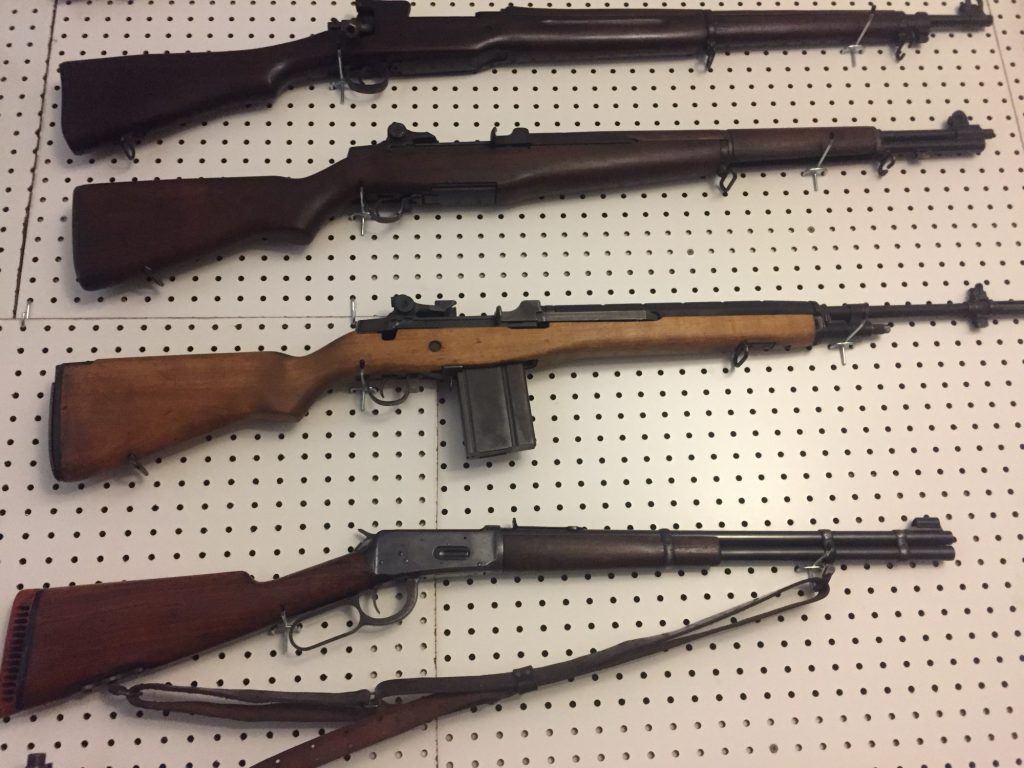
Pennsylvania Game Wardens Need a Warrant Now Posted Land Is No Longer Government Property

The Pennsylvania Supreme Court has ruled that game wardens generally cannot enter clearly marked private land without a warrant, consent or a recognized exception to the warrant requirement.

The July 21, 2026 decision in Punxsutawney Hunting Club v. Pennsylvania Game Commission is a major victory for Pennsylvania hunters, gun owners and landowners.

For years, the Pennsylvania Game Commission relied on state statutes allowing its officers to enter private property—“posted or otherwise”—while enforcing the Game and Wildlife Code. A locked gate, fence, No Trespassing sign or line of purple paint did not necessarily keep a government officer from walking onto the property and conducting surveillance without a warrant.

That was an outrageous amount of power.

The state Supreme Court finally said so.

Private property does not become public property because deer live there. A hunting license is not a blanket waiver of constitutional rights. A game warden’s job may be important, but importance does not create an exemption from the Pennsylvania Constitution.

What Did the Pennsylvania Supreme Court Rule?

In a unanimous decision, the Pennsylvania Supreme Court overturned its own 2007 precedent and rejected the federal “open fields doctrine” under Article I, Section 8 of the Pennsylvania Constitution.

The court’s complete opinion in ⁠Punxsutawney Hunting Club v. Pennsylvania Game Commission⁠ holds that private land can receive constitutional protection even when it is located beyond the home and its immediate surroundings.

The court concluded that government officials must generally obtain a warrant based on probable cause before entering private land when the owner has taken sufficient steps to exclude intruders.

Those steps can include:

  • Posting No Trespassing signs
  • Installing fences
  • Closing or locking gates
  • Using legally compliant purple paint markings
  • Otherwise clearly indicating that the property is private

The court struck down portions of Sections 303(c) and 901(a)(2) of the Pennsylvania Game and Wildlife Code because those provisions purported to authorize entry onto posted private property without a warrant.

That authority was too broad and violated Pennsylvania’s constitutional protection against unreasonable searches.

Why Did the Hunting Clubs Sue the Game Commission?

This case was not based on a game warden accidentally stepping across an uncertain property line.

According to the court’s opinion, Pennsylvania Game Commission officers entered land belonging to the Punxsutawney Hunting Club and Pitch Pine Hunting Club without consent, a warrant or probable cause at least 15 to 22 times beginning in 2013.

A warden also installed a trail camera on Punxsutawney Hunting Club property while attempting to develop probable cause for alleged illegal elk feeding.

The camera remained there for 78 days.

Read that again.

A government agent entered posted private land without a warrant, installed surveillance equipment and left it there for more than two months while attempting to find evidence that might justify charges.

The state’s theory effectively placed the investigation before the probable cause. It treated private land as a convenient government observation platform until officers could discover something useful.

That is precisely why warrants exist.

The government is supposed to establish probable cause and then ask a neutral judge for permission to search. It is not supposed to wander around private property until it finds enough evidence to justify the wandering.

What Was the Open Fields Doctrine?

The federal open fields doctrine generally holds that the Fourth Amendment does not protect land beyond the “curtilage,” meaning the area immediately associated with a home.

Under that rule, fields, woods and other undeveloped private acreage can receive far less protection from government searches than a house, vehicle or other protected space. The property can be fenced and posted against trespassing yet remain vulnerable to warrantless government entry under federal constitutional law.

Pennsylvania previously followed that reasoning.

The state Supreme Court’s 2007 decision in Commonwealth v. Russo held that Article I, Section 8 of the Pennsylvania Constitution did not provide additional protection for open fields.

The court has now admitted that Russo was wrongly decided.

The crucial difference is that Pennsylvania’s Constitution protects people in their “persons, houses, papers and possessions.” The court examined the historical meaning of “possessions” and determined that the term includes land.

That is not a creative loophole. It is the actual language of Pennsylvania’s Constitution being applied instead of treated like decorative text surrounding government authority.

Does a Game Warden Always Need a Warrant Now?

No.

The ruling is important, but it is not an automatic force field around every acre of privately owned land.

The court specifically explained that game wardens may still:

  • Enter private land that is not posted, fenced or otherwise marked to exclude intruders
  • Observe violations or evidence visible from a lawful location
  • Obtain a search warrant based on probable cause
  • Search under a recognized exception to the warrant requirement
  • Enter with the owner’s consent

The ruling protects landowners who have taken meaningful steps to establish that their property is private.

It does not prevent the Game Commission from investigating poaching, illegal baiting or other violations. It requires the agency to investigate within constitutional limits.

The Pennsylvania Game Commission’s official response⁠ acknowledged that its officers must now enforce wildlife laws under the new constitutional standards.

Obtaining a warrant is not an impossible burden. Courts issue warrants every day. If an officer has probable cause to believe somebody is violating a wildlife law on posted property, he can present that evidence to a judge.

The Constitution does not disappear because completing that process is less convenient than climbing over a gate.

Pennsylvania Landowners Should Clearly Post Their Property

The practical lesson is simple: if you want the strongest protection recognized by this ruling, make it unmistakably clear that the public is excluded.

Pennsylvania permits landowners to use signs, fencing and purple paint. Under the state’s official Purple Paint Law guidance⁠, a compliant mark must be:

  • A vertical purple line
  • At least eight inches long
  • At least one inch wide
  • Positioned with its bottom between three and five feet above the ground
  • Readily visible to someone approaching
  • No more than 100 feet from the next mark

Purple paint is not woodland decoration. It means No Trespassing.

Landowners should inspect boundaries regularly. Replace missing signs, repaint faded markings, repair damaged fences and photograph how the property was posted. Gates should remain closed when access is not permitted.

The court did not announce that every privately owned blade of grass automatically receives identical protection. It focused on land where owners demonstrated an intention to exclude intruders.

Make that intention obvious.

Hunters Still Need Permission to Enter Private Land

This decision restricts government searches. It does not give hunters permission to ignore private-property boundaries.

A hunter who crosses a fence, walks past a No Trespassing sign or ignores purple paint without authorization may still face trespassing charges and hunting-license consequences.

Pennsylvania’s expansion of Sunday hunting does not change that. As I explained in Pennsylvania Sunday Hunting Is Finally Here—Government Only Took 153 Years⁠, additional hunting opportunities do not convert farms, hunting camps and private woods into public land.

Ask permission.

Know the boundaries.

Do not assume that access granted five years ago remains valid today. Do not follow a wounded deer across posted land without considering the applicable law and contacting the property owner. Do not become the slob hunter whose behavior is used to justify another round of restrictions on everybody else.

Private gun ownership and private property rights belong together.

This Ruling Does Not Legalize Poaching

The predictable argument is that requiring warrants will somehow cripple wildlife enforcement and turn Pennsylvania into a poaching carnival.

That is nonsense.

Poaching was illegal before this decision and remains illegal afterward. So are unlawful baiting, hunting without the required license, taking game out of season and other violations of the Game and Wildlife Code.

The decision changes how government agents may gather evidence on clearly marked private land. It does not repeal Pennsylvania’s hunting laws.

Law enforcement agencies regularly investigate serious crimes while complying with warrant requirements. The Game Commission is not entitled to weaker constitutional standards because its officers wear green uniforms and investigate deer instead of stolen cars.

Responsible hunters have every reason to support enforcement against poachers. Someone illegally taking wildlife is stealing from every lawful hunter who buys licenses, follows seasons and accepts bag limits.

Supporting wildlife enforcement does not require supporting warrantless surveillance.

Both ideas can fit inside the same adult brain.

What About Trail Cameras and Other Surveillance?

The 78-day government trail camera in this case should concern every landowner.

A trail camera can document who enters a property, when they arrive, what they carry and how frequently they return. Modern cameras may transmit photographs remotely, operate for months and monitor locations that a landowner reasonably considers private.

Government installation of surveillance equipment on posted land is not comparable to an officer seeing something from a public road.

It is a deliberate physical intrusion performed to collect evidence over time.

People searching YouTube for “Pennsylvania game warden warrant,” “open fields doctrine overturned” or “can game wardens enter private property” will encounter plenty of absolute claims. Some videos will say wardens can never enter private property again. Others will pretend the ruling changed nothing.

Both claims are wrong.

The real rule depends upon whether the land was clearly marked, whether the officer had consent, whether a warrant existed and whether a recognized exception applied.

A dramatic Garand Thumb video title cannot replace reading the decision.

Pennsylvania’s Constitution Provided the Stronger Protection

The Second Amendment is indispensable, but it is not the only constitutional protection that matters to gun owners.

The right to keep and bear arms becomes considerably less secure if government agents can enter posted hunting property at will, install cameras and search for violations without first demonstrating probable cause.

Pennsylvania’s Constitution is particularly direct about armed self-defense. Article I, Section 21 states that the right of citizens to bear arms in defense of themselves and the state “shall not be questioned.”

The Punxsutawney Hunting Club decision was ultimately decided under Pennsylvania’s search-and-seizure provision, not its right-to-bear-arms clause. Still, the broader principle matters: constitutional protections are supposed to limit government even when those limits make enforcement less convenient.

Hunting clubs are not government property.

Gun owners are not presumptive criminals.

Buying a hunting license is not consent to unlimited surveillance.

Posted land means something.

The Game Commission Can Enforce the Law Without Ignoring It

Pennsylvania game wardens still have substantial legal authority. They can patrol public land, investigate reported violations, interview witnesses, observe conduct from lawful locations and seek warrants when the evidence supports one.

What they can no longer do is rely on a statute claiming private property was open to government entry merely because it sat beyond the immediate area surrounding a house.

Good.

The Pennsylvania Supreme Court did not create a special privilege for hunters. It restored a basic protection for every landowner who makes clear that his property is private.

The government may dislike needing permission to search.

That is generally a sign the Constitution is working.
When a 3×600 Match Turns Into an Ammunition Repair Job

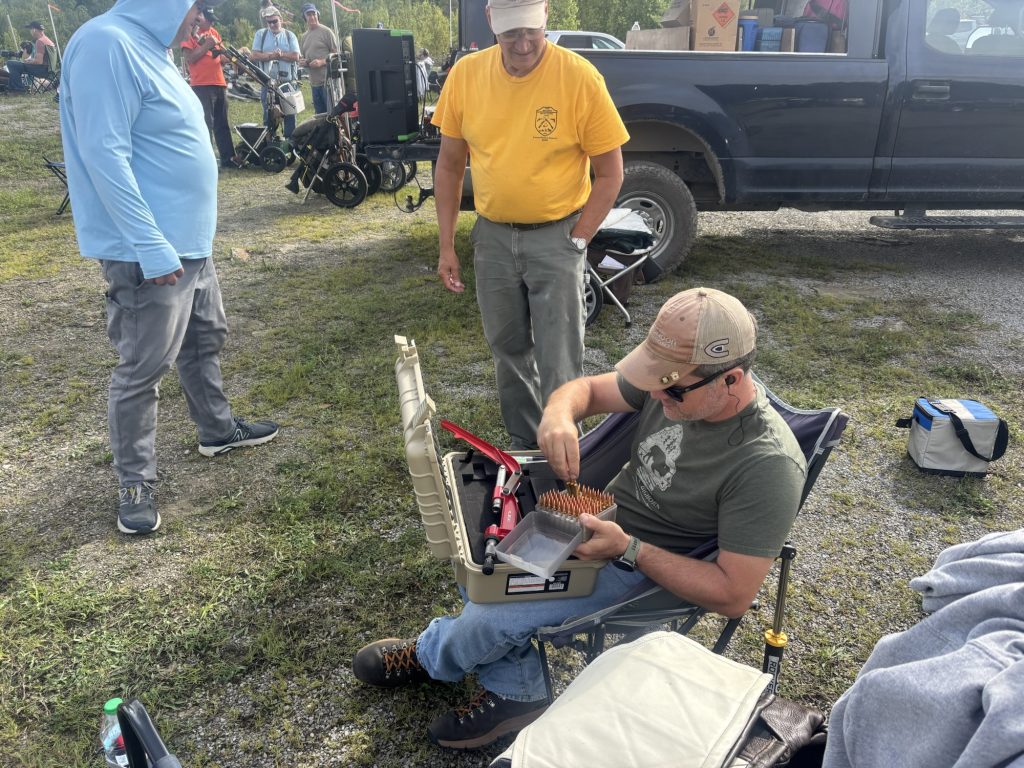
During the Pennsylvania Mid-Range Championship at Reade Range, part of the Riflemen’s Weekend competition, the shooter was working through the first string of a 3×600 match.

Three rounds turned out to be too long to chamber properly. Rather than force the issue and turn a minor ammunition problem into a major rifle problem, the rounds had to be beaten back out of the rifle.

That is when the scorer—and what looked like an entire reloading department—went into action.

The shooter dealt with the rifle while the scorer worked on the ammunition and helped get everything sorted out. High-power rifle competition is usually associated with precision, discipline, and carefully prepared equipment. It is also occasionally associated with tools scattered everywhere while somebody asks, “Who has a press?”

At 600 yards, every shot matters. A 3×600 match requires 60 record shots from the prone position, along with wind calls, sight adjustments, position management, rifle function, and ammunition that actually agrees with the chamber. There is not much room for a cartridge that decides it would rather remain outside the rifle.

A round that is slightly too long may not sound like a serious problem, but it can bring a match rifle to a complete stop. The shooter has to recognize the issue, keep the rifle safe, remove the ammunition, and decide whether the rounds can be corrected or need to be retired from competition. Losing time during a string can hurt almost as much as losing points on the target.

Fortunately, the firing line apparently had access to enough reloading equipment to handle the emergency. That is one of the benefits of shooting with experienced competitors: somebody usually has the exact tool needed, even if it is buried beneath three ammunition boxes, a spotting scope, and enough miscellaneous gear to open a small machine shop.

The score will record the points and center shots, but it will not record the interruption, the ammunition problem, or the scorer’s efforts to get everything back on track.

A 3×600 match may be built around precision, but it still includes the occasional reminder that even carefully prepared ammunition can develop an attitude—usually at the worst possible time, during the final string, with the clock running.

Posted in XTC

The NFA Just Lost in Federal Court: and the ATF Has Nobody to Blame but Itself

A federal judge has ruled that major National Firearms Act registration requirements cannot be enforced against protected plaintiffs and customers for suppressors, short-barreled rifles, short-barreled shotguns and certain “any other weapons.”

The reason is almost embarrassingly simple.

Congress reduced the NFA making and transfer taxes on those firearms to zero. The registration system existed to collect and enforce the tax. Once there was no tax left to collect, the federal government tried to keep the paperwork, fingerprints, photographs, waiting periods and criminal penalties anyway.

On August 5, 2026, U.S. District Judge James Wesley Hendrix told it no.

The decision in Silencer Shop Foundation v. ATF does not abolish the entire NFA nationwide. It does not make every state restriction disappear, and it does not give every gun owner permission to start ignoring federal paperwork.

What it does is punch an enormous hole in the federal government’s favorite excuse for regulating suppressors and short-barreled firearms.

For more than 90 years, Washington insisted that the NFA was a tax law.

Now that the tax is zero, it suddenly wants everyone to believe the registry was the real point.

Nobody should be surprised.

What Did the Federal Court Actually Rule?

The final judgment in ⁠Silencer Shop Foundation v. ATF⁠ permanently prohibits the ATF and Department of Justice from enforcing several challenged NFA provisions against the named plaintiffs and, where applicable, their members and customers.

The affected categories include:

  • Suppressors
  • Short-barreled rifles
  • Short-barreled shotguns
  • Certain firearms classified as “any other weapons”
  • Other NFA firearms for which Congress reduced the making and transfer taxes to zero

Machine guns and destructive devices are not included because their $200 NFA taxes remain in place.

The court found that the challenged registration, application and approval requirements could no longer be justified under Congress’s taxing power when the government was no longer collecting a tax.

That should not require an advanced constitutional-law seminar.

A tax that collects zero dollars is not generating revenue. Paperwork created to collect zero dollars is not tax administration. It is gun regulation wearing the skin of a tax law.

Judge Hendrix declined to pretend otherwise.

The complete case docket and August 5 opinion⁠ show that the plaintiffs won on their enumerated-powers claims. The court did not need to decide the separate Second Amendment claims.

The government lost using its own original justification for the law.

Why Did the NFA Registration System Collapse?

Congress enacted the National Firearms Act in 1934 as a tax measure.

The original $200 making and transfer taxes were deliberately punitive. In 1934, $200 was an enormous amount of money—roughly equivalent to several thousand dollars today. The obvious purpose was to make ownership prohibitively expensive without admitting that Congress was attempting a direct ban.

The federal government then required applications, registration, fingerprints and approval as mechanisms connected to collecting that tax.

In 2025, Congress reduced the making and transfer taxes to zero for suppressors, short-barreled rifles, short-barreled shotguns and AOWs, effective January 1, 2026.

The government wanted to keep everything surrounding the tax:

  • Prior federal approval
  • Registration
  • Fingerprints
  • Photographs
  • Personal information
  • Law-enforcement notification
  • Waiting periods
  • Criminal penalties

It just did not have any tax revenue left to administer.

The government then argued that the regulations could be supported under other federal powers, including the Commerce Clause.

The court rejected that attempt.

Congress passed the NFA under its taxing power and placed it in the Internal Revenue Code. The government cannot spend nearly a century defending a gun-control scheme as tax administration and then invent a different constitutional basis after Congress removes the tax.

That is not constitutional interpretation.

That is a bureaucracy desperately searching the couch cushions for authority it never had.

Is the NFA Unconstitutional Now?

Important portions of the NFA were held unconstitutional as applied to the untaxed firearms and protected parties covered by this case.

That is not the same as the entire National Firearms Act disappearing nationally.

The injunction is party-specific. It protects the plaintiffs and, where applicable, their members, agencies, political subdivisions and customers—current and future.

The court refused to issue a universal injunction covering every person in the United States.

That distinction matters.

The initial seven-day stay expired on August 12, and the injunction took effect at 12:01 a.m. Central Time on August 13. The Second Amendment Foundation’s NFA injunction page⁠ confirms that the order is in effect.

However, a person who has no relationship to a protected plaintiff, organization, dealer or transaction should not assume a YouTube thumbnail has granted him immunity from federal prosecution.

This is a major legal victory.

It is not a magic incantation.

Can You Buy a Suppressor Without an NFA Form 4?

Some qualifying customers have already obtained suppressors through transactions covered by the injunction without the traditional NFA registration and approval process.

The judgment extends protection to customers of the commercial plaintiffs because the court concluded that protecting the businesses without protecting their customers would provide meaningless relief.

That potentially covers qualifying suppressor transactions involving protected commercial plaintiffs and downstream customers.

It does not mean every suppressor at every dealer is suddenly available without NFA paperwork.

Whether a particular transaction is protected depends on:

  • The manufacturer
  • The distributor
  • The dealer
  • The customer
  • Membership in a protected organization
  • The commercial chain involved
  • Applicable state law
  • Other federal laws outside the challenged NFA provisions

The attorneys who represented the plaintiffs published a useful explanation of the NFA ruling and its commercial scope⁠.

The important point is that lawful non-NFA suppressor transfers are no longer merely theoretical. The injunction is active, and protected transactions have begun.

After 92 years of paperwork designed to make hearing protection expensive and irritating, the federal government has finally been forced to experience a waiting period of its own.

What About Short-Barreled Rifles and Shotguns?

The short-barreled rifle and short-barreled shotgun situation is more complicated.

The court’s NFA injunction covers protected parties and untaxed firearms, including SBRs and SBSs. However, separate provisions of the Gun Control Act remain in effect.

In particular, 18 U.S.C. § 922(b)(4) restricts an FFL from delivering a short-barreled rifle or shotgun to a non-licensee without authorization from the attorney general.

Historically, the approved Form 4 provided that authorization.

The court struck at the NFA registration and approval system, but it did not erase every separate Gun Control Act provision. Until the ATF supplies another procedure or a court addresses that remaining restriction, dealer transfers of SBRs and SBSs may still encounter a federal roadblock.

That is one of the absurd results of building firearm law by stacking nearly a century of statutes, regulations, interpretations, letters and agency habits on top of one another.

Remove one unconstitutional layer and three more pieces of bureaucratic garbage are waiting underneath.

This ruling is still extremely important for SBRs and SBSs, but nobody should confuse “the NFA’s legal foundation was defeated” with “every remaining federal transfer restriction has vanished.”

Does This Mean You Can Build an Unregistered SBR?

Do not assume that.

The ruling protects specific plaintiffs, members and qualifying customers. Its application depends on the facts and the person seeking protection.

Making an unregistered short-barreled rifle outside the protection of the injunction could still invite an ATF investigation, criminal charges and years of expensive litigation.

The correct lesson from this case is not that federal firearm law has suddenly become simple.

The lesson is that the government’s NFA theory has suffered a serious constitutional defeat and that gun owners now have a roadmap for attacking what remains.

There is a difference between winning a major case and volunteering to become the defendant in the next one.

Suppressors Never Belonged in the NFA

Suppressors are hearing-protection devices.

They reduce the sound produced by a firearm. They do not create Hollywood silence, make gunfire disappear or transform an ordinary rifle into an invisible assassin weapon.

A suppressed firearm is generally still loud.

People who obtain their firearms education from movies, anti-gun press releases and panicked social-media posts imagine a suppressor produces a tiny “pew” sound. Those people should not be writing firearm laws, but unfortunately that has never stopped them.

Suppressors are treated like ordinary safety equipment in many other countries. In the United States, they were trapped inside a 1934 tax scheme and subjected to federal registration because politicians wanted to appear useful during the gangster panic.

That classification has damaged hearing, discouraged responsible firearm use and created an expensive federal registry without turning criminals into paperwork enthusiasts.

The suppressor was never the dangerous part.

The dangerous part was giving federal bureaucrats a vague statute and nearly unlimited time to expand it.

The ATF Cannot Turn Zero Dollars Into a Tax

The heart of the decision is brutally straightforward.

Congress has the constitutional power to levy and collect taxes. That power allows Congress to impose administrative requirements that genuinely assist in collecting revenue.

But the NFA making and transfer taxes on these firearms are now zero.

There is no revenue.

There is no tax collection.

There is no legitimate tax-administration purpose for forcing somebody to submit fingerprints, photographs and an application before acquiring a suppressor.

The ATF wanted everyone to believe that a zero-dollar tax still supported a massive criminal-regulatory system because the statutory machinery remained on the books.

That position deserved to lose.

If Congress wants to enact a new firearm restriction under some different enumerated power, Congress can attempt to pass one and defend it in court. The executive branch does not get to manufacture substitute constitutional authority because it enjoys running a registry.

Why This NFA Ruling Matters Beyond Suppressors

The decision matters because it rejects the idea that the federal government can regulate anything it wants and locate a constitutional justification afterward.

Federal power is supposed to be limited to powers granted by the Constitution.

That principle has been ignored so routinely that merely enforcing it now feels revolutionary.

The ruling also demonstrates why gun owners should challenge the government’s legal foundation instead of accepting the premise that every restriction must be balanced, adjusted or administered more efficiently.

The proper question is not whether the ATF can process a Form 4 faster.

The proper question is why an American needs federal permission to place hearing protection on a rifle.

The proper question is not whether an SBR should have a 10-inch or 12-inch barrel.

The proper question is why removing several inches of barrel changes an ordinary semiautomatic rifle into a federally registered weapon carrying severe criminal penalties.

The NFA has survived partly because people became accustomed to its stupidity.

This case forced a court to examine the legal structure instead of treating age as proof of constitutionality.

Expect Terrible NFA Advice on YouTube

The decision has already produced the usual flood of YouTube gun-law experts.

Some will announce that the NFA has been completely repealed.

Others will pretend the ruling changes nothing because they dislike the political result.

Both are wrong.

Anyone searching for “Garand Thumb suppressor,” “Garand Thumb SBR,” “NFA ruling 2026,” “suppressor Form 4 eliminated” or “is the NFA unconstitutional” needs to understand the actual holding.

The ruling is enormous because:

  • A federal court rejected major NFA requirements
  • The injunction is permanent and currently in effect
  • Protected customers are included
  • Qualifying suppressor transfers can occur without the traditional NFA process
  • The government’s taxing-power justification failed
  • The decision creates a model for additional challenges

The ruling is limited because:

  • It is not a nationwide injunction
  • It does not protect every gun owner automatically
  • Machine guns and destructive devices remain taxed
  • Gun Control Act requirements remain
  • State firearm laws still apply
  • SBR and SBS dealer transfers face additional statutory complications

That is less exciting than a red-faced man pointing at an ATF logo in a thumbnail, but it has the advantage of being true.

What Happens Next?

Other NFA cases are already moving through federal courts.

The reasoning in Silencer Shop Foundation v. ATF gives those plaintiffs a powerful argument: Congress cannot preserve an entire tax-enforcement system after setting the relevant tax at zero.

The federal government could still attempt further litigation, Congress could amend the law or other courts could disagree with Judge Hendrix.

But the ATF now has a serious structural problem.

Restoring the $200 tax would be politically difficult and would openly reveal that the government wants to price ordinary people out of exercising a constitutional right.

Creating a new regulatory system under the Commerce Clause would invite fresh constitutional and Second Amendment challenges.

Leaving the current system alone allows more plaintiffs to attack a registry that no longer serves the tax Congress used to justify it.

None of those options are particularly good for the government.

Good.

The NFA Ruling Is a Real Victory—Not the Final Victory

The August 2026 NFA ruling is one of the most important federal firearm decisions in decades.

It does not abolish the entire National Firearms Act. It does not legalize every possible transaction for every American. It does not remove state restrictions or eliminate the Gun Control Act.

It does something more immediately useful: it exposes the rotten foundation under a large portion of the NFA and prevents the government from enforcing the challenged provisions against protected plaintiffs, members and customers.

Congress set the tax at zero.

The ATF tried to keep administering the imaginary revenue.

The court finally said no.

Suppressors, short-barreled rifles and short-barreled shotguns did not suddenly become less dangerous on August 5. They were never the extraordinary menace that justified treating their owners like suspected criminals in the first place.

The government simply ran out of excuses.

For once, a court refused to manufacture another one.

Posted in XTC

Once a Machine Gun, Always a Machine Gun? The CMP M14 Sale Explained

The Civilian Marksmanship Program plans to sell surplus M14 rifles to American collectors after converting them to semiautomatic operation.

According to Firearms News⁠, the CMP may eventually receive approximately 100,000 M14 rifles, with initial sales potentially beginning in late 2026 or early 2027. The expected price has been reported as less than $2,000.

That would make genuine military M14 rifles available to ordinary American shooters for the first time in decades.

It also raises the question everybody immediately asks:

Can a rifle that began life as a machine gun legally become a semiautomatic rifle?

The familiar answer is:

Once a machine gun, always a machine gun.

That phrase is not the exact wording of federal law, but it describes the concern accurately enough. The CMP needs to explain exactly what it is selling, exactly what will be modified and exactly why the resulting rifle is legally a semiautomatic firearm.

A press release saying “permanently converted” is not enough.

What Is the CMP M14 Sale?

The CMP has announced a future sale of surplus M14 rifles through special authorization.

The CMP’s official announcement⁠ confirms that the organization intends to sell surplus M14 rifles after they are converted to semiautomatic operation. The rifles will not be sold as transferable machine guns.

The reported plan involves:

  • Surplus U.S. military M14 rifles
  • Permanent semiautomatic conversion
  • Sale through the Civilian Marksmanship Program
  • A possible price below $2,000
  • Initial availability potentially beginning in late 2026 or early 2027
  • A large eventual inventory, reportedly around 100,000 rifles

Those details make the CMP M14 program extremely important to collectors.

They also leave several questions unanswered.

The CMP has not publicly explained every detail concerning:

  • The exact conversion process
  • Which receivers will be used
  • Whether receivers will be welded, cut, altered or otherwise modified
  • Whether the receivers will retain their original military identity
  • Whether rifles will be graded by condition
  • Whether manufacturers and markings will be disclosed
  • Whether buyers will receive documentation about the conversion
  • Whether there will be purchase limits
  • What eligibility requirements will apply
  • Whether the reported price is an estimate or a final figure

Those are not minor details.

The value of an M14 is not simply determined by whether it looks like an M14. The receiver, markings, manufacturer, history, condition and legal status are the entire reason collectors care about the rifle.

Why Does “Once a Machine Gun, Always a Machine Gun” Matter?

Federal law prohibits private possession and transfer of machine guns except under narrow exceptions.

18 U.S.C. § 922(o)⁠ generally prohibits possession or transfer of machine guns, with exceptions for government possession and machine guns lawfully possessed before May 19, 1986.

Federal law also defines a machine gun broadly. The definition includes a weapon that shoots, is designed to shoot or can be readily restored to shoot more than one round automatically with a single function of the trigger. It can also include certain parts or combinations of parts designed to convert a firearm into a machine gun.

That is why removing one part from an M14 is not automatically enough.

A selector that no longer moves may not be enough.

A removed automatic-fire component may not be enough.

A rifle that fires only semiautomatically during a demonstration may still raise legal questions if the automatic capability can be restored without permanently destroying or replacing the receiver.

The important question is not simply:

“Does this rifle fire one round per trigger pull today?”

The important question is:

“Has the rifle been permanently removed from the legal definition of a machine gun?”

That distinction is the entire issue.

The M14 Was Designed as a Select-Fire Rifle

The M14 was adopted by the U.S. military in the late 1950s as a replacement for the M1 Garand.

It retained several features of the Garand design but used the 7.62 NATO cartridge, detachable magazines and select-fire capability. The military M14 was designed from the beginning to fire either semiautomatically or automatically.

That makes a genuine M14 different from a commercial M1A.

A Springfield Armory M1A is a commercial semiautomatic rifle based on the M14 pattern. It was manufactured and sold as a semiautomatic rifle.

A military M14 began life differently.

That original design history is why genuine M14 receivers have been treated so differently from commercial M1A receivers. The receiver is not just another replaceable part. It is the serialized heart of the rifle and the part that determines much of its legal identity.

The CMP cannot simply take a military M14, remove the selector parts and tell buyers that it is now equivalent to an M1A.

The conversion must be permanent, legally sound and clearly documented.

Is a Semiautomatic M14 the Same as an M1A?

No.

A semiautomatic M14 made from a genuine military receiver would still be historically different from a commercial M1A.

The commercial M1A has value because it resembles the M14 and provides similar handling, operating characteristics and appearance. A CMP rifle made from an original military M14 receiver would have a different history.

That does not automatically make it more accurate.

It does not automatically make it more reliable.

It does not automatically make it worth whatever a seller claims.

But it does make the receiver’s history important.

The CMP should tell buyers whether they are receiving:

  • An original military M14 receiver permanently modified for semiautomatic use
  • A rebuilt rifle assembled from surplus parts
  • A receiver altered through welding or another permanent process
  • A demilled receiver reconstructed into a rifle
  • A commercially manufactured semiautomatic receiver
  • A rifle transferred under a unique statutory authorization

Those descriptions are not interchangeable.

A commercial M1A, a rebuilt M14 and a permanently modified military receiver may all look similar from across the gun shop. They are not the same collectible.

The CMP Needs To Explain the Conversion

The CMP has a responsibility to provide more information before accepting orders.

Buyers should not have to guess whether the M14 conversion is legally permanent. They should not have to rely on a YouTube video, a forum rumor or a photograph of a welded part.

The CMP should publish the basic technical and legal framework of the program.

That does not mean the organization needs to provide instructions for reversing the conversion. It should not publish details that make restoration easier.

It does mean the buyer deserves to know:

  • What part of the rifle is being permanently modified
  • Whether the receiver remains an original M14 receiver
  • Whether the automatic-fire capability is permanently destroyed
  • Whether the receiver has been reviewed or classified by ATF
  • What documentation will accompany the rifle
  • Whether the conversion affects future repair or service
  • Whether the rifle can legally be transferred later
  • Whether replacement parts will be available

“Trust us” is not adequate documentation for a $2,000 firearm.

The CMP is not an anonymous seller on a gun auction website. It is a federally chartered organization with a public mission and a large amount of institutional credibility.

That makes transparency more important, not less.

The CMP Should Make Money on the M14 Sale

Some buyers seem to believe the CMP should sell these rifles as cheaply as possible.

That is backwards.

The CMP’s mission includes marksmanship training, firearms safety and competition. Its programs require money. The organization uses firearm sales and other revenue to support ranges, matches, youth programs and marksmanship activities.

My earlier article on the CMP and America’s surplus rifles⁠ explains why those sales matter beyond the individual rifle being shipped to a customer.

The CMP should sell the M14 rifles at a price that reflects their market value and helps support the organization’s programs.

A price under $2,000 would still be attractive if the rifles are genuine, legally converted, properly documented and reasonably graded. The CMP does not need to create a bargain-bin feeding frenzy to prove that it supports American marksmanship.

There is nothing wrong with the CMP making money from historically important rifles.

The problem would be charging a collector-level price while providing mystery-box information about the receiver and conversion.

The CMP can fulfill its mission and operate responsibly at the same time.

What Will a CMP M14 Be Worth?

The final value will depend on what the CMP actually sells.

A rifle with a documented original receiver, identifiable manufacturer, clear military history and a properly documented permanent conversion could be highly desirable.

A rifle with vague markings, uncertain history, inconsistent modification quality and no meaningful documentation will be less attractive, regardless of what the catalog calls it.

Condition will also matter.

Some M14 rifles may have been heavily used, rebuilt several times or stored in conditions that affected the barrel, stock and metal finish. Others may retain desirable markings or parts.

Collectors will want to know:

  • Receiver manufacturer
  • Serial-number range
  • Barrel condition
  • Stock condition
  • Originality of parts
  • Arsenal rebuild history
  • Finish condition
  • Conversion markings
  • Documentation
  • Final grading categories

The CMP has experience selling surplus rifles, but M14 buyers will examine these details closely.

My guide on how to buy an M1 Garand from the CMP⁠ covers the basic eligibility and ordering issues that CMP customers already understand. The M14 program may use different rules, but buyers should expect strong demand and limited information during the first sales window.

If you want one, having CMP membership, documentation and eligibility requirements handled early would be sensible.

The M14 Still Matters to Service-Rifle Shooters

The M14 is not only a collector’s rifle.

The rifle remains part of the American service-rifle tradition and is still recognized in CMP competition rules alongside commercial M1A rifles.

My older article, The Blonde Bomber Visits the Poconos: WBRP M14 Match⁠, covers shooting an M14-pattern rifle in competition. The M14 has always been demanding compared with the AR-15, but it remains capable of excellent performance in the hands of a disciplined shooter.

The rifle’s weight, recoil, magazine capacity and sight system make it a very different experience from an M1 Garand or AR-15.

That difference is part of the appeal.

A CMP M14 would give collectors the opportunity to own a genuine piece of Cold War American military history while also owning a functional semiautomatic rifle.

That is considerably more interesting than another commercial rifle with a fake “retro” finish and a marketing department pretending it has battlefield history.

Do Not Believe Every M14 YouTube Claim

The M14 sale will produce a predictable wave of YouTube videos.

Some will show a rifle and call it a machine gun.

Others will declare that every legal issue has been solved before the CMP publishes the conversion details.

Both approaches are lazy.

A dramatic YouTube thumbnail is not a legal analysis. A manufacturer demonstration is not a long-term reliability test. A video from a gun channel is not a substitute for the CMP publishing the actual facts.

People searching for:

  • CMP M14 rifles
  • CMP M14 sale
  • CMP M14 price
  • M14 machine gun
  • M14 semiautomatic conversion
  • M14 receiver legality
  • once a machine gun always a machine gun
  • CMP surplus rifles
  • M14 versus M1A

deserve more than a man in tactical clothing pointing at a rifle while dramatic music plays in the background.

The CMP should provide the information first.

Then collectors can decide whether the rifles are worth buying.

What Buyers Should Ask Before Ordering

Before purchasing a CMP M14, buyers should look for clear answers to five basic questions.

First, what exactly is being modified?

Second, will the receiver remain identifiable as an original military M14 receiver?

Third, what legal authority permits the sale of the converted rifles?

Fourth, what documentation will prove that the automatic-fire capability has been permanently eliminated?

Fifth, what will the CMP disclose about the rifle’s history, condition, manufacturer and parts?

Those answers will matter more than the difference between a $1,900 price and a $2,200 price.

A properly documented rifle may be worth more than a cheaper rifle with an uncertain receiver and an unexplained conversion. Collectors routinely pay for provenance, originality and documentation. They should not be expected to abandon those standards simply because the rifle comes from the CMP.

Is the CMP M14 Sale a Good Idea?

Yes.

The CMP M14 sale could become one of the most important surplus-rifle releases in modern American firearms history.

A genuine military M14 represents the end of the M1 Garand era, the adoption of the 7.62 NATO cartridge and the beginning of the Cold War battle-rifle period. Giving American collectors a legal opportunity to own these rifles would be an extraordinary accomplishment.

But the CMP should not expect blind trust.

The phrase “once a machine gun, always a machine gun” may be an oversimplification, but it identifies the exact concern buyers have. The legal status of an M14 cannot be determined solely by removing a selector or demonstrating that the rifle fires semiautomatically.

The receiver, original design, modification and ability to restore automatic fire all matter.

If the CMP has developed a legally sound and genuinely permanent conversion, it should explain the process clearly enough for buyers to understand what they are purchasing.

The CMP M14 program deserves excitement.

It also deserves scrutiny.

Until the full details are released, the honest position is simple:

The rifles could be an incredible opportunity.

The CMP still has to prove exactly what it is selling.

Posted in XTC

Michigan Finally Lets Hunters Use Rifles Statewide

Michigan deer hunters can use all legal firearms throughout the Lower Peninsula beginning September 12, 2026. The state has eliminated its Limited Firearms Deer Zone, ending the old patchwork of shotgun, muzzleloader and straight-wall cartridge restrictions that governed much of southern Michigan.

That means hunters in the Lower Peninsula can finally use ordinary bottleneck rifle cartridges such as .243 Winchester, .270 Winchester, .308 Winchester, .30-06 Springfield and 6.5 Creedmoor during seasons when firearms are otherwise legal.

The government took long enough to figure out that a rifle is still a rifle whether it is fired north or south of an imaginary line.

What Changed in Michigan’s 2026 Deer Regulations?

The Michigan Natural Resources Commission approved the change in May 2026, and the Michigan Department of Natural Resources’ 2026 deer regulations⁠ now confirm that the Limited Firearms Deer Zone has been eliminated.

Beginning September 12, hunters can use all legal firearms across the Lower Peninsula.

Previously, southern Michigan hunters faced restrictions that generally limited deer hunting to shotguns, muzzleloaders and certain straight-wall or limited-firearm cartridges. Northern Michigan hunters could use more traditional centerfire rifles, while southern hunters had to select from a narrower group of cartridges.

The old system created a bizarre situation where a .350 Legend or .450 Bushmaster could be legal, but a .308 Winchester or .30-06 Springfield could be prohibited for the same deer, on the same property, depending only on the location.

The deer did not care.

Can You Use a .308 Rifle for Deer Hunting in Southern Michigan?

Yes, beginning with the 2026 season, a .308 Winchester rifle can be used for deer hunting in the Lower Peninsula when the applicable firearm season is open and all other regulations are followed.

The same basic answer applies to many traditional hunting cartridges, including:

  • .243 Winchester
  • 6.5 Creedmoor
  • 6.5×55 Swedish
  • .270 Winchester
  • 7mm-08 Remington
  • .308 Winchester
  • .30-06 Springfield
  • .35 Remington
  • .30-30 Winchester
  • .300 Winchester Magnum

Hunters still need to read the current Michigan Deer Digest and confirm the rules for the specific season, deer management unit, license and ammunition being used. Eliminating the zone does not eliminate every hunting regulation.

It simply removes one especially questionable geographic restriction.

Why Did Michigan Have a Limited Firearms Zone?

The original restrictions were connected to concerns about rifle bullets traveling long distances in more heavily populated areas of southern Michigan.

That concern is not entirely imaginary. A centerfire rifle can send a projectile a considerable distance, and hunters are responsible for knowing what lies beyond their target.

But restricting responsible hunters to particular firearm types does not magically make unsafe behavior safe. A shotgun slug can travel a long way. A muzzleloader projectile can travel a long way. A straight-wall rifle cartridge can travel a long way.

The most important safety equipment is still the hunter’s brain.

A hunter who fires at an uncertain target, ignores the background or shoots toward a road is dangerous regardless of whether the firearm is a shotgun, muzzleloader or bolt-action rifle.

The Michigan DNR’s decision recognizes something that should have been obvious years ago: firearm safety comes from hunter education, identification of the target, a safe backstop and responsible judgment—not from pretending that a county line changes external ballistics.

Is a .30-06 Too Much Rifle for Michigan Deer?

For most Michigan deer hunting, a .30-06 Springfield is more cartridge than necessary.

That does not make it a bad choice.

A .30-06 with an appropriate hunting bullet is fully capable of taking whitetail deer, and many hunters already own one. Requiring those hunters to buy a separate rifle simply because they live in southern Michigan was never a particularly sensible policy.

The same applies to the .308 Winchester. It is not a dangerous new invention. It is one of the most common centerfire rifle cartridges in the country, with widely available ammunition, manageable recoil and an enormous selection of hunting bullets.

A .243 Winchester may be a better choice for a smaller-framed hunter or somebody who wants reduced recoil. A .30-30 lever-action rifle may make more sense in thick cover. A .270 Winchester or 7mm-08 may be a practical compromise for hunters who want a flat-shooting cartridge without the recoil of a magnum.

The best hunting rifle is usually the one the hunter can shoot accurately, carry comfortably and operate safely.

That is a better standard than forcing everyone to use whatever cartridge bureaucrats decided was sufficiently harmless.

What About the .350 Legend and .450 Bushmaster?

The 2026 rule change does not make the popular straight-wall cartridges obsolete.

The .350 Legend, .400 Legend and .450 Bushmaster remain useful deer cartridges, particularly for hunters who prefer AR-pattern rifles, compact hunting rifles or moderate-range setups.

The .450 Bushmaster has become especially popular in states that historically restricted bottleneck cartridges. It offers substantial bullet weight and energy at practical deer-hunting distances, although its recoil and ammunition cost are higher than many smaller cartridges.

The .350 Legend produces less recoil and works well in lightweight rifles. It is a sensible option for hunters who mostly take shots at ordinary woods distances.

But the fact that those cartridges work does not prove that .308 Winchester or .30-06 Springfield should have been prohibited. It proves that several different rifles can work when used by somebody who knows what he is doing.

My earlier article on the M1 Carbine as a hunting rifle⁠ discusses the same broader question: the usefulness of a hunting rifle depends on the animal, range, bullet, shooter and circumstances—not on whether the rifle looks sufficiently traditional to satisfy a regulation committee.

Will More Rifles Make Michigan Deer Hunting Less Safe?

That is the argument some people are making, but the available evidence does not justify treating lawful rifle ownership as the problem.

Michigan’s official announcement describes the change as an elimination of the Limited Firearms Deer Zone and a move toward statewide consistency. The Natural Resources Commission announcement⁠ explains the regulation changes and the reasoning behind the new statewide rules.

The responsible approach is not to panic about the existence of rifles. It is to insist that hunters:

  • Identify the target beyond doubt
  • Know what is behind the target
  • Use a safe backstop
  • Follow property and firearm-discharge laws
  • Wear required hunter orange
  • Handle the rifle safely
  • Use ammunition appropriate for the game
  • Report harvested deer as required

Those rules matter more than whether a hunter is carrying a shotgun or a .308 bolt-action rifle.

The “good guy with a gun” principle applies in the woods, too: responsible armed citizens are capable of making sound decisions when they are given proper training and clear rules. Treating every hunter as an incompetent hazard is lazy policy.

What Rifle Should a Michigan Deer Hunter Choose?

The new rule gives Michigan hunters more freedom, but it does not require anybody to abandon the rifle that already works.

If you own a .450 Bushmaster and like it, keep using it.

If you have a .30-30 lever gun that fits your hunting style, there is no reason to replace it.

If you already own a .308, .30-06 or 6.5 Creedmoor, you can now use the rifle you probably wanted to use in the first place.

A practical Michigan deer rifle should be reliable, accurate enough for the expected distance, chambered in ammunition that is readily available and configured so the hunter can carry and operate it safely.

That might be a modern bolt action with a variable-power optic. It might be an AR-pattern rifle. It might be an old Remington pump or a military surplus rifle with iron sights.

My article on surplus rifles and the Civilian Marksmanship Program⁠ covers why older military rifles remain useful beyond the collector’s cabinet. Michigan’s new rules make more of those rifles practical hunting options, provided the cartridge and rifle comply with the current regulations.

Michigan’s Rifle Rule Change Is Long Overdue

Michigan’s 2026 deer regulations are a meaningful improvement for hunters.

The state has not eliminated safety requirements. It has eliminated an outdated firearms boundary that treated ordinary hunters as though they became more responsible when they crossed into another county.

That is the right direction.

Hunters should be trusted to select a suitable rifle, learn its trajectory, use appropriate ammunition and make safe decisions. The state should enforce reckless behavior, trespassing, poaching and unsafe firearm use—not micromanage every lawful hunter’s choice of cartridge.

For the first time, southern Michigan deer hunters can take the field with the same broad rifle choices available elsewhere in the Lower Peninsula.

A .308 is legal.

A .30-06 is legal.

A 6.5 Creedmoor is legal.

And no deer has ever been impressed by the state’s old imaginary rifle line.

Posted in XTC