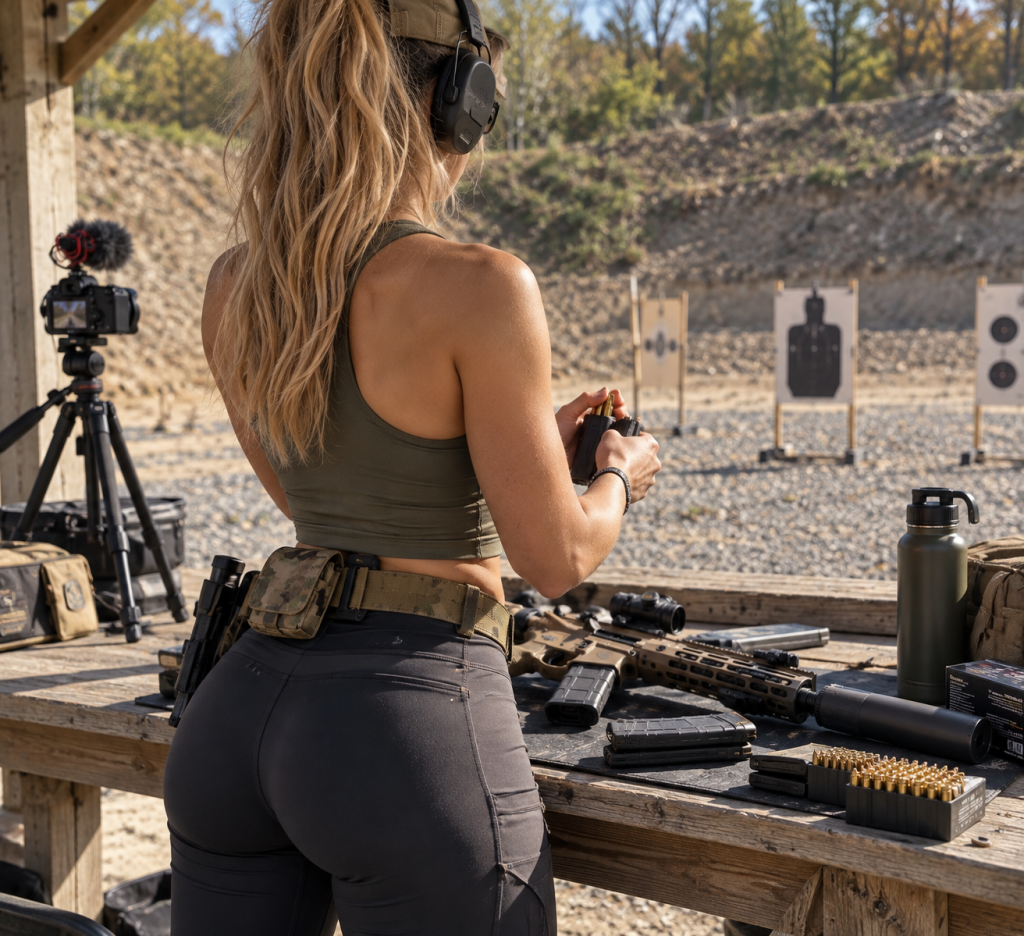
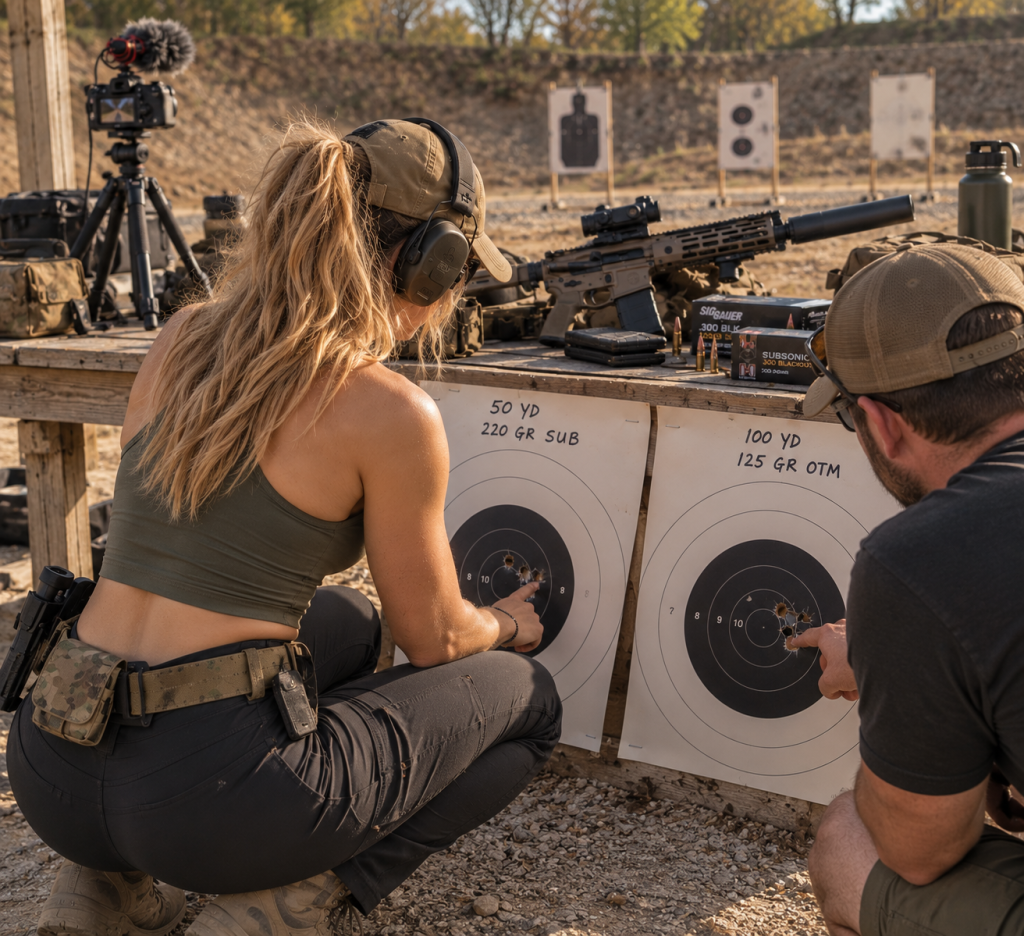
Glock Gen 6 Reliability: The Internet Panic Was Mostly Nonsense

Glock officially launched the Glock 17 Gen6, Glock 19 Gen6 and Glock 45 Gen6 in January 2026. Seven months later, the answer to the question everyone keeps asking is becoming painfully boring:

The Glock Gen 6 appears to work like a Glock.

It is not perfect. No YouTube torture test can prove every production pistol is reliable, and a few owners have reported legitimate problems. But the predicted Gen 6 disaster has not materialized. Most of the panic was people racing to produce content before shooters had enough rounds through the guns to know anything.

If you landed here after searching for a Garand Thumb Glock 17, Garand Thumb Glock 19 or Glock Gen 6 YouTube review, here is the independent answer without a thumbnail face: the Gen 6 looks good, but your older Glock did not suddenly become obsolete.

GarandThumb.com is the independent Garand Thumb Blog and is not affiliated with the unrelated Garand Thumb YouTube channel or its host.

What Glock Actually Changed With Gen 6

The Glock Gen 6 is not merely a Gen 5 with new slide serrations.

Glock redesigned the frame around an enlarged beavertail, palm swell, undercut trigger guard and extended textured thumb rest. It added the new RTF6 grip texture, deeper angled slide serrations, a flat-faced trigger and an updated optic-ready mounting system.

Standard-frame Gen 6 pistols include three optic plates, allowing several popular pistol optics to mount through Glock’s revised system. (us.glock.com, gen6.glock.us)

These are real improvements, particularly for shooters who previously paid someone to undercut, stipple or reshape a Glock frame. The higher grip and better texture may matter more in actual shooting than another round of internet arguments about trigger feel.

However, this is still an evolutionary Glock. It has not transformed into a tuned 2011 because Glock changed the trigger shoe and discovered the human hand has curves.

What the Garand Thumb Glock Gen 6 YouTube Test Proved

A widely watched Garand Thumb YouTube video placed the Glock 19 Gen6 against a Glock 19 Gen3 and Smith & Wesson M&P 2.0 Compact. The pistols were subjected to drops, freezing, dirt, mud and other deliberately abusive conditions. (youtube.com)

That kind of Glock Gen 6 reliability test is entertaining and useful as a demonstration. It is not a statistical study, a replacement for long-term ownership or permission to trust a brand-new pistol without testing it yourself.

A torture test answers one question: what happened to those particular pistols under those particular conditions?

It does not tell you whether your Glock 17 Gen6 will function with your magazines, your ammunition and your grip. It certainly does not mean every gun that survives a YouTube mud bath is automatically ready for concealed carry or home defense.

What Glock 17 Gen 6 and Glock 19 Gen 6 Owners Are Reporting

The useful information is finally coming from people accumulating meaningful round counts.

One experienced competition shooter reported firing 760 rounds of mixed 115- and 124-grain ammunition through a Glock 17 Gen6 across six shooters and several magazine types without a malfunction. The same shooter later updated the report at 2,000 rounds and said the pistol still performed like previous Glock generations.

More recent Glock 19 Gen6 owners have reported totals ranging from approximately 1,000 to 5,000 rounds. One of the higher-round-count reports mentioned a single malfunction associated with a non-OEM magazine. These are self-reported numbers rather than controlled testing, but they are more useful than another 50-round “first look” review filmed beside a suspiciously clean shooting bench. (reddit.com, reddit.com)

The developing pattern is encouraging: the Gen 6 is behaving like a modestly improved Glock, not an experimental pistol assembled by marketing interns during lunch.

The Glock Gen 6 Problems Should Not Be Ignored

There have been contrary reports.

One owner of two Glock 17 Gen6 pistols reported repeated failures to feed while shooting one-handed with certain 115-grain Blazer and PMC ammunition. The same pistols reportedly worked with other ammunition and during normal two-handed shooting. (reddit.com)

That report does not condemn every Glock 17 Gen6. It does mean we should stop using “flawless” as though it were a factory-applied finish.

A single failure report is not proof of a defective generation. A pile of enthusiastic owner comments is not proof of perfection either. The honest conclusion sits between those two internet religions: Gen 6 reliability looks broadly solid, but every individual pistol still needs to earn trust.

Glock Gen 6 vs. Gen 5: Should You Upgrade?

If you are buying your first Glock and the prices are reasonably close, the Gen 6 makes sense. You receive the improved frame, better texture, flat-faced trigger and updated optic system without paying someone to modify a brand-new pistol immediately.

If you already own a reliable Gen 5, the argument becomes much weaker.

Your Gen 5 did not lose accuracy, reliability or parts support on the day Glock released another generation. Unless the Gen 6 grip fits your hand substantially better or you specifically want its optic system, replacing a proven pistol is mostly consumerism wearing tactical pants.

I still carry a Gen 2 Glock 19. As I wrote in my earlier post about Glock abandoning the simplicity that built its reputation, the original appeal was never novelty. It was a brutally simple pistol that worked.

The Gen 6 does not change that argument. It simply packages several sensible ergonomic improvements around the same basic idea.

If you are deciding between pistol sizes rather than generations, my old Glock 19 or Glock 26 comparison still covers the practical difference: the Glock 19 is easier to shoot comfortably, while the Glock 26 is easier to conceal.

The New Optic System May Be the Best Gen 6 Upgrade

Glock’s revised optic system deserves more attention than the cosmetic changes.

The included plates officially support optics including the Trijicon RMR, RCR and SRO; Holosun 407C, 507C and 508T; Vortex Defender ST and XL; EOTech EFLX; Leupold DeltaPoint Pro and several others. Owners should still verify the correct plate and screws for the exact optic being installed. (us.glock.com)

Do not assume every Gen 5 accessory automatically fits the Gen 6. Owner reports indicate that some trigger components interchange while complete aftermarket trigger systems, grip plugs and magwells may not. The altered frame and rear trigger-housing geometry give accessory companies another excuse to sell everyone the same parts again.

Would I Trust a Glock Gen 6 for Carry or Home Defense?

I would treat it exactly like any other defensive pistol.

Test the actual gun with the magazines and ammunition you intend to use. Shoot it two-handed, one-handed and with the support hand. Confirm the optic plate and screws remain secure. Make sure the controls work with your grip instead of assuming Glock’s redesigned thumb rest was personally measured for you.

Most importantly, do not let a Garand Thumb YouTube video—or any other firearms video—perform that validation in your place. Watching someone else freeze a Glock is not the same as confirming your pistol works.

The Real Glock Gen 6 Verdict

The Glock Gen 6 reliability panic was mostly nonsense.

Available owner reports are broadly positive. The redesigned frame is a legitimate improvement. The optic system is more useful, and the flat trigger will appeal to shooters who immediately replaced the curved factory shoe anyway.

But the Gen 6 is still a Glock. That is both its strongest selling point and the reason existing Glock owners do not urgently need one.

If you are buying new, the Gen 6 is probably the generation to buy. If your Gen 2, Gen 3, Gen 4 or Gen 5 already works, spend the money on ammunition, magazines and practice unless the new ergonomics solve a real problem for you.

Your old Glock did not expire because YouTube uploaded a new thumbnail.

The internet wanted a revolution or a catastrophe. Glock delivered a slightly better Glock.

For a defensive handgun, boring is exactly what we should want.

Posted in XTC

The M1 Carbine Is Better Than the M1 Garand and Everyone Knows It

The M1 Carbine Is Better Than the M1 Garand and Everyone Knows It

There, I said it.

The M1 Garand is the legend. The M1 Carbine is the one you actually want to shoot, carry, hunt with, and keep around as a practical home-defense rifle.

That is the part that gets people mad, because the M1 Garand has the mythology. It has the ping. It has the World War II reputation. It has every YouTube gun video title ever written by someone trying to sound like they just walked off Iwo Jima with a camera crew.

But if we are talking about which one is more useful for normal people, the M1 Carbine wins.

I have already kicked this around before in my old M1 Garand or M1 Carbine⁠ post, and I also spent time trying to squeeze more accuracy out of my own Winchester carbine in Improving The Accuracy of a M1 Carbine⁠. After owning Garands, dragging them to matches, messing with stock fit, crowns, slings, clips, and CMP stuff for years, I am more convinced than ever that the Carbine is the better all-around gun.

People searching YouTube for M1 Garand videos, M1 Carbine videos, CMP rifles, World War II rifles, Malcolm X rifle photos, or “best milsurp rifle” usually get fed the same old Garand worship. That is fine. The Garand earned its place. But the YouTube answer and the real range answer are not always the same thing.

Malcolm X Had the Right Idea

One of the most famous civilian rifle photos in American history is Malcolm X standing at the window with an M1 Carbine.

Not an M1 Garand.

An M1 Carbine.

That image works because the rifle makes sense. It is compact, handy, light, and serious without being ridiculous. It is exactly the kind of rifle a person could keep close, move with, and actually manage inside a house.

That does not mean the M1 Carbine is magic. It does not mean you should build your entire personality around one old photo. But it does show something important: the Carbine has always had a practical appeal beyond the battlefield.

The Garand is the parade rifle.

The Carbine is the one by the door.

The Garand Is Iconic, But Iconic Gets Heavy

The M1 Garand is a serious rifle.

It is heavy. It recoils enough that new shooters notice. It burns .30-06. It has more going on mechanically. It is absolutely satisfying when everything is working right, but it is not exactly casual.

I have spent a lot of time with Garands. I have written about peening barrel splines on an M1 Garand⁠, re-crowning an M1 Garand⁠, fitting a Dupage stock on an M1 Garand⁠, and even using an M1 Garand SLED⁠ for single-loading in matches.

That stuff is fun if you are already sick in the head in the correct way.

But the M1 Carbine does not ask as much from you. It is light. It points naturally. It recoils like a polite suggestion. You can hand it to almost anyone and they immediately understand why people like shooting old guns.

That matters.

The M1 Carbine Is the Better New-Shooter Rifle

If someone has never shot a classic U.S. military rifle before, the internet wants you to hand them an M1 Garand because YouTube has trained everyone to worship the ping.

Fine. The ping is cool.

But if you actually want that person to keep shooting, the M1 Carbine is the smarter choice.

The Garand gives them noise, weight, recoil, and a clip system that can be a little intimidating until they understand it. The Carbine gives them a small, handy, semi-auto rifle that feels friendly immediately.

That does not make the Carbine childish. It makes it useful.

People confuse power with quality because gun culture is full of guys who judge rifles like they are ordering steak. Bigger cartridge, bigger legend, bigger ego. But the M1 Carbine was never trying to be a Garand. It was a light rifle for people who needed more than a pistol and less than a full-size battle rifle.

That is still a brilliant niche.

The M1 Carbine Is a Great Little Hunting Rifle

The M1 Carbine also makes more sense as a handy little hunting rifle than people want to admit.

No, it is not a .30-06. No, it is not a long-range deer hammer. Nobody with a functioning brain is pretending .30 Carbine is the same thing as a full-power rifle cartridge.

But inside its limits, and where legal, the M1 Carbine is a great woods rifle. It is light, fast, easy to carry, and easy to shoot well. For close-range hunting, pest control, walking around the property, or any situation where a big heavy rifle is more burden than benefit, the Carbine makes a ton of sense.

That is the thing YouTube arguments usually miss. A rifle does not need to win a ballistic spreadsheet fight to be useful. It needs to be something you can actually carry, shoulder quickly, shoot accurately, and not hate by the end of the day.

The M1 Carbine does that.

The M1 Carbine Also Makes Sense for Home Defense

The M1 Carbine is also a strong home-defense choice, especially compared with a full-size M1 Garand.

It is short, light, low recoil, simple to point, and easier for smaller or newer shooters to manage. It gives you rifle stability without the blast, weight, and length of a .30-06 Garand. With good magazines and reliable ammunition, it is a very practical defensive carbine.

Again, this makes people mad because they want every home-defense conversation to turn into a modern tactical gear catalog. But the old Carbine still does a lot right.

A home-defense gun should be controllable, reliable, and something the owner can actually use confidently. The M1 Carbine checks those boxes better than a lot of people want to admit.

The Garand is historic.

The Carbine is handy.

Handy wins in the house.

The Carbine Is Just More Fun

This is where the argument really ends.

The M1 Garand is more powerful.

The M1 Garand is more historically famous.

The M1 Garand is probably the one that looks better in a dramatic YouTube thumbnail with smoke and a slow-motion clip ejection.

But the M1 Carbine is more fun.

It is fast. It is light. It is handy. It feels like it wants to be shot. It does not beat you up. It does not turn a casual range trip into a shoulder workout. It is the kind of rifle that makes people say, “Let me shoot that again.”

That reaction matters more than another tired “greatest battle implement ever devised” quote getting recycled for the millionth time.

My Carbine Was Not Even Fancy

The funny part is that my own M1 Carbine was not some museum-grade masterpiece.

I picked up a Winchester M1 Carbine from a little shop in northern Pennsylvania. It had some Winchester parts, mostly Inland parts, and an M2 potbelly stock. Nothing too precious. Nothing that needed to live in a velvet-lined emotional support case.

It needed work, too. The barrel band fit was not right. The crown had seen better days. I ended up cleaning up the crown with my M1 Garand crowning tool because the other option was replacing the barrel. Was that the perfect tool for the job? No. Did it make sense at the time? Also yes.

That is the charm of these guns. They are old military rifles. They have lives. They have weird parts histories. They have problems you can actually work through.

The Garand world can get a little too sacred sometimes. Correct parts. Correct drawing numbers. Correct finish. Correct emotional tone while discussing op rods.

The Carbine world feels more practical. Does it run? Does it shoot? Is it fun? Good. Go shoot it.

The Garand Is Better for Matches

I am not pretending the Carbine beats the Garand at everything.

If we are talking CMP matches, full-power rifle shooting, 200 yards and beyond, or the whole Camp Perry experience, the Garand makes more sense. I have dragged Garands through enough match use to respect what they do well.

If you are heading to the Camp Perry CMP Games and National Matches⁠, the Garand has the deeper tradition. It belongs there. It has the weight, sight radius, cartridge, and match history.

The Carbine is not really trying to be that.

But most people are not shooting Camp Perry. Most people are not chasing points. Most people are going to the range, shooting steel, hunting inside normal woods distances, keeping something handy at home, letting a buddy try something old, and arguing about guns afterward like civilized idiots.

For that, the Carbine wins.

M1 Carbine vs M1 Garand: The Search Answer

If you found this after searching “M1 Carbine vs M1 Garand,” “M1 Garand vs M1 Carbine,” “best World War II rifle,” “CMP M1 Garand,” “M1 Carbine hunting,” “M1 Carbine home defense,” “Malcolm X M1 Carbine,” “Malcolm X rifle,” or “YouTube M1 Garand,” here is the short version.

The M1 Garand is the better battle rifle.

The M1 Carbine is the better rifle for most normal range days.

The Garand wins on power, long-range use, match tradition, and historical weight.

The Carbine wins on weight, recoil, handling, new-shooter friendliness, home-defense practicality, hunting usefulness, and plain fun.

That is why the YouTube comments will argue forever, and why the guy actually handing rifles to new shooters usually reaches for the Carbine.

Which One Should You Buy?

If you want the legend, buy the M1 Garand.

If you want the ping, buy the M1 Garand.

If you want to shoot Garand matches, collect CMP rifles, obsess over gas cylinders, and read about things like setting the elevation knob on an M1 Garand⁠, buy the M1 Garand.

But if you want the old U.S. military rifle that is probably more useful for most people, buy the M1 Carbine.

If you want something smaller, lighter, softer shooting, better for new shooters, handy for home defense, and great as a light hunting rifle where legal, buy the M1 Carbine.

Ideally, buy both. That is usually the correct answer when the question is “which old gun should I buy?”

But if I am being honest, the Carbine is the one people underestimate.

Final Thought

The M1 Garand is the rifle people think they are supposed to love.

The M1 Carbine is the rifle they actually enjoy shooting.

That does not take anything away from the Garand. I still love them. I have written way too much about them to pretend otherwise. The Garand is important, historic, mechanically interesting, and deeply satisfying when everything comes together.

But the M1 Carbine is lighter, friendlier, faster, easier to carry, better for new shooters, useful for hunting, and genuinely sensible for home defense.

There is a reason Malcolm X looked right holding one.

The YouTube answer is M1 Garand.

The honest answer is M1 Carbine.

Posted in XTC

CMP Trench Guns: The Winchester 1897 Shotgun Story Hiding Behind the M14 Circus

Everyone is screaming about the CMP M14 rifles, but the better collector story may be the CMP trench guns.

Yes, the M14 announcement is big. Military Times reported⁠ that CMP received special authorization to sell more than 100,000 surplus M14 rifles, which is exactly the kind of headline that fills gun YouTube feeds for a week. But tucked behind that larger story is something much scarcer: surplus pump-action military shotguns, possibly including Winchester Model 1897 trench guns.

And the timing could get even more interesting. Upcoming changes to the National Firearms Act may remove or reduce some of the federal friction around short-barreled shotguns. If those changes take effect as expected, the next wave of trench-gun interest may not be limited to original military guns. People may soon be able to build their own short-barreled battle shotguns without the same tax and registration burden that has historically made the project such a bureaucratic hostage situation.

If you got here after seeing a CMP trench gun YouTube video, a YouTube short about surplus shotguns, or some half-baked YouTube comment section argument about “cheap trench guns,” slow down. The interesting part is not just “CMP might sell shotguns.” The interesting part is what kind of shotguns, how many, what condition, and whether the collector market is about to get a small batch of documented U.S. martial shotguns with real provenance.

Before we get into it, if you like weird shotguns, go read my old post on the Remington Model 11 Whippet: Bonnie and Clyde’s Shotgun⁠. The CMP 1897 trench gun is probably more collectible. The Whippet is still cooler. Sorry, history has spoken.

What CMP Actually Said About Shotguns

This is not a live CMP order page yet. Nobody should be licking stamps or harassing Anniston over it.

The legal door opened through the FY2026 NDAA. Section 1062⁠ modified CMP transfer and sale authority to include surplus pump-action shotguns, with limits. The law allows one-time transfers from the Army, Navy, and Air Force, but excludes short-barreled shotguns and modular under-rifle shotgun attachments. It also requires a report to Congress listing the make, model, and number of surplus shotguns before transfer can happen.

CMP later stated that the military departments were still assessing what shotguns were excess to their needs. CMP’s May 2026 update⁠ said expected transfer and sales would likely be in late 2026 or early 2027, and warned that there would not be huge numbers, though CMP had “good intel” that interesting and historic shotguns were on the list.

Then CMP CEO Gerald O’Keefe replied to a comment asking about trench guns and said, “I do think there will be some trench shotguns in the mix.”

That is the honest status. Not a catalog. Not a price list. Not a guarantee that your cousin’s barber is getting a crate of trench guns at the North Store next Tuesday. The YouTube version of this story will probably skip all of that and jump straight to “CMP TRENCH GUNS CONFIRMED.” That is how the internet gets stupid.

Why The Winchester 1897 Trench Gun Matters

The Winchester Model 1897 is the obvious headline gun because it is the trench gun most people picture first. John Browning design. Exposed hammer. 12 gauge. Heat shield. Bayonet adapter. World War I trench warfare. Later service into World War II and beyond.

Firearms News reported⁠ that CMP is expected to receive an unknown quantity of Winchester Model 1897 trench guns, but also noted that CMP had not announced quantity, condition, grading, pricing, purchase limits, or the actual sales timeline.

That uncertainty matters because 1897 trench guns are a fake-heavy collector market. Riot guns get dressed up. Reproduction heat shields show up. Bayonet adapters get added. Markings get debated until everyone involved needs a nap. A real CMP paper trail would be the whole point. The shotgun itself is cool, but the government inventory provenance is what would separate a CMP trench gun from a table-show fairy tale.

This is also why the YouTube hype is only partly useful. A YouTube video can show you what an 1897 trench gun looks like. It can show the heat shield, the bayonet lug, and the slam-fire lore. What it cannot do is magically turn a questionable gun into a documented U.S. military shotgun. Provenance is the game here.

The NFA Changes Could Make New Trench Guns More Interesting

The original military trench guns are the historical prize, but upcoming NFA changes could make the broader category much more accessible.

For decades, cutting a shotgun barrel below the federal minimum has generally meant dealing with the short-barreled shotgun rules under the National Firearms Act. That has meant paperwork, registration, a $200 tax, and waiting for approval before the gun could legally be made or transferred. It is the kind of process that turns a simple gunsmithing idea into a small administrative religion.

If the coming NFA changes eliminate the federal tax or otherwise reduce the registration burden for covered short-barreled firearms, people may soon have a much easier path to making modern short-barreled battle shotguns. That could mean 1897-style builds, short Remington 870s, old Stevens pumps, or other practical and historically inspired configurations.

But “easier” does not mean “anything goes.” State law may still prohibit short-barreled shotguns. Barrel length and overall length still matter under federal definitions unless the law actually changes those definitions. A shotgun that is manufactured or configured as an “any other weapon” may raise different questions than a conventional shotgun. And the exact effective date, scope, and implementation of any NFA change will matter more than internet summaries written by a guy holding a tape measure next to a parts kit.

So check the current federal law, state law, and official ATF guidance before making anything. Do not rely on a meme, a forum post, or a YouTube comment from someone named TacticalDad420.

The larger point is that the market may soon split into two related categories:

  • Original military trench guns with historical provenance.
  • Modern short-barreled battle-shotgun builds inspired by those originals.

The first category should remain scarce and expensive. The second could become much more common if the legal environment changes. That may make original Winchester 1897 trench guns even more desirable because a reproduction can copy the silhouette, but it cannot copy the service history.

These Should Not Be Cheap

This is where people start whining, so let us get ahead of it.

CMP is not supposed to be a discount rifle and shotgun Santa for collectors. CMP’s own mission⁠ is to promote marksmanship, firearms safety, and youth programs through the secure restoration and sale of historic American firearms. The law behind CMP also tells the organization to prioritize firearms safety, training, competition, and youth participation.

So if the CMP really gets documented Winchester 1897 trench guns, they should sell them at market value. Maybe that means lottery for some. Maybe it means auction for the best examples. But pricing them like random beat-up surplus pumps would just hand free money to flippers, which helps exactly no shooter, no junior program, no match, and no range.

Market context is not subtle. A Kramer Auction WWI Winchester 1897 trench gun⁠ closed at $6,500 in June 2026. Rock Island Auction estimated⁠ an exceptional WWI Winchester 1897 trench shotgun at $7,500 to $11,000 in 2025. Even an unusual civilian 1897 trench configuration⁠ was estimated at $4,500 to $7,000 by Rock Island.

Not every CMP shotgun will be that nice. Some may be tired. Some may be later riot guns. Some may be guard armory survivors with more honest wear than collector shine. But if real 1897 trench guns are in the pile, pretending they are $900 rack-grade toys is unserious.

YouTube will probably turn this into a fight between “CMP should sell them cheap” and “CMP should auction everything.” The smarter answer is boring: price them according to what they are. Real documented trench guns should bring real money. Random surplus pumps can be priced like random surplus pumps.

The Whippet Is Still Cooler

Here is the part where I get myself yelled at by trench gun collectors.

The Winchester 1897 trench gun is historically important. It is valuable. It has the heat shield, the bayonet lug, and the World War I aura. It is the gun that looks like it should be leaning in the corner of a muddy dugout while someone yells about going over the top.

But the Remington Model 11 Whippet⁠ is still cooler in the way that matters to me. It is weirder. It is more outlaw. It is tied to Bonnie and Clyde lore. It takes a long-recoil Remington Model 11 and turns it into something that looks like a terrible idea that somehow became iconic.

A CMP Winchester 1897 trench gun is the collector flex.

A Whippet shotgun is the one people actually stop and ask about.

A modern short-barreled battle shotgun build may soon be the one people actually shoot.

That is not financial advice. It is just taste.

Common Search Questions Answered

Is CMP selling trench guns?

Probably, but not yet in a normal order-page sense. The law now allows surplus pump-action shotguns to transfer to CMP, and CMP has said shotgun sales are expected in late 2026 or early 2027.

Are they Winchester 1897 trench guns?

That is the big rumor and the big hope. CMP’s CEO said he thinks trench shotguns will be in the mix, and Firearms News reported that Winchester Model 1897 trench guns are expected. The final make/model list still depends on the required inventory and report process.

Why is YouTube suddenly talking about CMP trench guns?

Because the M14 announcement pulled attention back to CMP surplus firearms, and the trench gun angle is more interesting to collectors. A CMP M14 is a big program. A CMP Winchester 1897 trench gun, if the numbers are small, is the kind of thing that makes YouTube channels, forums, and auction-watchers lose their minds.

Should I trust a CMP trench gun YouTube video?

Use YouTube for pictures, background, and entertainment. Do not use YouTube as the final word on pricing, legality, CMP sales procedure, or whether a specific gun is original. Wait for CMP’s official sales instructions and the actual make/model list.

Will upcoming NFA changes make short-barreled shotguns legal without the old tax?

They may remove or reduce some federal NFA burdens, depending on the final law and implementation. That does not automatically override state restrictions, eliminate every federal firearms rule, or make every short shotgun configuration lawful. Verify the current rules before making or transferring one.

Can people make their own short battle shotguns soon?

Possibly, and that is one of the more interesting consequences. If the NFA changes take effect as expected, a person may have a simpler federal path to making a short-barreled shotgun inspired by a trench gun. The exact barrel-length rules, registration requirements, tax treatment, and state-law restrictions still need to be checked at the time of manufacture.

Will CMP shotguns be cheap?

They should not be, at least not the historically significant ones. CMP should price or auction scarce documented examples in a way that supports matches, safety programs, youth marksmanship, and the actual CMP mission.

Will this hurt private collector values?

Maybe at the margins, but probably not much unless the quantity is larger than expected. A small number of documented CMP trench guns may actually reinforce how desirable real examples are. Easier access to modern short-barreled builds could also make original military examples more valuable by highlighting the difference between a reproduction and a genuine service gun.

Final Thought

The CMP M14 story will get the clicks because M14 people are constitutionally incapable of being normal about M14s. But the CMP trench gun story is more interesting.

The M14 program is about quantity, politics, and whether the government can finally stop tripping over its own definitions.

The shotgun program is about scarcity, provenance, and whether some real American martial shotguns are finally going to come out of government storage and into collector hands.

The NFA changes add another layer. If short-barreled shotguns become easier to make federally, the trench gun may stop being only a collector object and become a practical build category again. People may be able to make modern short battle shotguns that borrow the old military formula without paying the same bureaucratic toll. That will not make a new build a Winchester 1897, but it may make the old guns more interesting, not less.

YouTube will flatten this into two lazy arguments: “CMP shotguns will be cheap” and “NFA changes mean anything goes.” Both are probably wrong. The real story is better. CMP may get a small number of historically interesting surplus shotguns, original examples should stay collectible, and modern short shotgun builds may become a bigger category if the law changes the way people expect.

If CMP gets actual Winchester 1897 trench guns, they should treat them like the historic guns they are. Price them accordingly. Auction the best ones. Use the money for matches, marksmanship, and the shooters who actually keep the sport alive.

And then, after all that, go read about the Remington Model 11 Whippet⁠, because it is still cooler.

Posted in XTC

CMP M14 Rifles Under $2,000? The CMP Should Charge What They’re Worth

The Civilian Marksmanship Program may soon sell genuine surplus M14 rifles for under $2,000, and judging by the reaction online, a lot of people think this is fantastic news.

I think the rifles are fantastic news.

I think deliberately selling them cheap is a terrible idea.

According to Firearms News, CMP CEO Gerald O’Keefe says the CMP could eventually receive approximately 100,000 surplus M14 rifles, permanently convert them to semiautomatic configuration and potentially begin selling them in late 2026 or early 2027.

The reported goal is to keep the CMP M14 price under $2,000.

For collectors of the M14, M1A, M1 Garand and other U.S. military rifles, this could be one of the biggest surplus rifle releases in decades.

But everybody seems to be asking the wrong question.

Instead of asking how cheaply the CMP can sell an M14, we should be asking:

What are these rifles actually worth, and why shouldn’t the CMP get that money?

The CMP Is Not a Discount Military Rifle Store

The Civilian Marksmanship Program exists to promote marksmanship, firearms safety, training and competition.

Selling surplus military rifles is one of the ways CMP finances that mission.

CMP says firearm sales revenue supports its safety and marksmanship programs. Money not required for current operations can also support CMP programs into the future, when the seemingly endless supply of government surplus rifles finally isn’t so endless.

That’s important.

The CMP M1 Garand program wasn’t created simply because the federal government thought collectors needed cheap Garands.

These firearms are valuable assets that help finance American marksmanship.

The same logic should apply to the M14.

If the government transfers 100,000 valuable rifles to CMP, the organization should obtain a reasonable market return from them and use that money to fulfill its mission.

Selling a $3,000 Rifle for $2,000 Doesn’t Make It a $2,000 Rifle

Nobody actually knows what a genuine CMP M14 will be worth.

That’s because this isn’t an ordinary Springfield Armory M1A or another newly manufactured M14-style rifle.

If the proposed program works, buyers will be getting rifles originating as genuine U.S. military M14s, permanently converted to semiautomatic configuration and sold with CMP provenance.

Collectors are going to care about that.

People who collect M1 Garands, M1903 Springfields, M1 Carbines and other U.S. martial arms already understand how provenance, manufacturer and condition affect value.

An M14 collector certainly will.

Whether you’re reading military rifle sites like Garand Thumb Blog, watching Garand Thumb or other firearms channels on YouTube, or standing around at Camp Perry talking about rifles, nobody is going to confuse an actual CMP-surplus M14 with an ordinary commercial M1A.

So what are they worth?

Maybe $2,000.

Maybe $2,500.

Maybe $3,000.

Some manufacturers, grades and configurations could be worth considerably more.

We don’t know yet.

That’s exactly why CMP shouldn’t arbitrarily decide that under $2,000 is the magic number.

A $1,000 Discount Could Leave $100 Million on the Table

Let’s assume the reported figure of approximately 100,000 M14 rifles is eventually accurate.

Now suppose the market decides an average CMP M14 is worth just $1,000 more than CMP charges.

The math is painfully simple:

100,000 rifles × $1,000 = $100,000,000.

That’s one hundred million dollars.

Money that could support the National Matches.

Money for junior shooting programs.

Money for scholarships.

Money for ranges and electronic targets.

Money for affiliated clubs.

Money for training.

Money that could reduce the cost of actually participating in competitive marksmanship.

Instead, we’re supposed to celebrate transferring that value to whoever gets through the CMP ordering process first?

No thanks.

We Already Know What Happens to Underpriced CMP Rifles

Somebody buys the rifle.

Somebody discovers it’s worth considerably more than CMP charged.

Somebody puts it on the secondary market.

And suddenly that cheap CMP rifle isn’t cheap anymore.

The market price eventually wins.

The only real question is who gets the difference.

If CMP sells a rifle for $2,000 that collectors immediately demonstrate is worth $3,000, CMP didn’t magically make a $3,000 collectible affordable.

It handed the original buyer $1,000 in equity.

If that buyer keeps the rifle forever, good for him.

If he flips it, the next collector pays $3,000 anyway.

I’d rather see that extra $1,000 go to CMP and ultimately support marksmanship than become somebody’s GunBroker profit.

CMP Already Has a Way to Figure Out What M14s Are Worth

CMP doesn’t have to guess.

It already auctions collectible and unusual firearms, and CMP has specifically identified determining market value as one reason for using its auction system.

So do that.

Before establishing mass-sale prices, auction representative Springfield Armory, Winchester, Harrington & Richardson and TRW M14 rifles from the grades CMP expects to offer.

Let actual buyers establish prices.

Then use that information to price the regular inventory.

If the market says a common CMP M14 is worth $2,100, charge accordingly.

If it’s $2,800, charge accordingly.

If a particularly desirable TRW or Winchester is worth considerably more, charge accordingly.

This isn’t complicated.

There Is Another Problem Everyone Is Ignoring

Before we get too excited arguing about the price of our future CMP M14s, there’s a considerably more fundamental question.

Can CMP actually get these rifles into civilian hands?

Because these aren’t ordinary semiautomatic rifles.

They started life as machine guns.

And anyone who has spent enough time around military firearms has probably heard the ATF shorthand:

“Once a machine gun, always a machine gun.”

That isn’t just something your uncle posted on Facebook.

Federal law defines a machine gun broadly and includes weapons designed to fire automatically, weapons that can be readily restored to automatic operation and machine-gun receivers.

More importantly, actual M14s have already gone through federal court over this exact problem.

United States v. One TRW, Model M14

You couldn’t invent a more relevant case name:

United States v. One TRW, Model M14, 7.62 Caliber Rifle.

The case involved an actual TRW M14 that had been modified to prevent automatic operation.

Among the modifications, the selector lug had been welded.

The argument was essentially that the modifications meant the rifle should no longer qualify as a machine gun.

The federal government disagreed.

The Sixth Circuit ultimately upheld the government’s position that the rifle remained a machine gun under federal law because it could be readily restored to automatic operation.

That’s a fairly significant piece of history when the current plan involves taking actual government M14s and modifying them for civilian sale.

“But ATF Approved the CMP M14 Conversion”

And that’s the big difference this time.

The current proposal reportedly involves a conversion designed to make the M14 permanently and irreversibly semiautomatic, with ATF involved in approving the process.

That matters.

CMP isn’t some guy with a welder trying to convince ATF afterward that his M14 isn’t a machine gun.

Presumably CMP, ATF and everyone else involved has spent a substantial amount of time determining exactly what needs to happen to these receivers.

Maybe they’ve solved it.

I hope they have.

But previous M14 litigation is exactly why I’m not treating the arrival of 100,000 civilian CMP M14 rifles as a done deal until CMP starts transferring them.

ATF approval doesn’t erase the federal statute or previous court decisions.

It also doesn’t guarantee that nobody challenges this new process.

We’ve seen government surplus firearm releases encounter unexpected legal and political problems before.

So I’m keeping the champagne cork in the bottle.

I’ll believe 100,000 genuine GI M14s are entering civilian hands when CMP starts shipping them.

If CMP Actually Pulls This Off, Why Would the Rifles Be Cheap?

This is where the two parts of this story collide.

Suppose CMP succeeds.

It gets the M14s.

The rifles undergo an ATF-approved permanent conversion.

The legal questions are resolved.

CMP starts transferring documented rifles originating as genuine U.S. military M14s to ordinary qualified civilian buyers.

That’s remarkable.

And somehow the conclusion is that these rifles should cost less than $2,000?

Why?

If anything, overcoming those hurdles makes these rifles more interesting.

A documented CMP M14 with genuine U.S. military history is exactly the kind of firearm military rifle collectors are going to want.

The same audience searching Google and YouTube for M14 rifles, M1A rifles, M1 Garands, CMP rifles, military surplus guns, Garand Thumb M14 videos and historic U.S. military firearms is going to discover these rifles.

Demand isn’t exactly difficult to predict.

Want to Subsidize Something? Subsidize Marksmanship

Here’s my biggest problem with the entire cheap-M14 argument.

If CMP wants to give away millions of dollars in value, give it to shooters.

Lower National Match entry fees.

Support junior shooters.

Subsidize ammunition.

Help affiliated clubs.

Improve ranges.

Install more electronic targets.

Expand training programs.

Fund scholarships.

Make it cheaper for somebody to actually get on a firing line.

Those things directly support the Civilian Marksmanship Program’s mission.

Giving somebody a huge discount on a collectible M14 does not.

There’s a difference between making marksmanship affordable and making collecting affordable.

CMP should concentrate its subsidies on the former.

Yes, I Want a Cheap CMP M14 Too

Of course I do.

If CMP offers me a genuine M14 for $1,900, I’m not going to demand they add another thousand dollars to my invoice.

I’d love a cheap CMP M14.

I’d also love CMP to sell me a correct Winchester M1 Garand for $500.

What I personally want to pay doesn’t determine responsible CMP policy.

These rifles represent a finite asset.

Once the final M14 leaves CMP inventory, it’s gone.

But the money generated by selling those rifles can support Camp Perry, the National Matches, junior programs, ranges, clubs and American competitive marksmanship for decades.

So I hope the reports are correct.

I hope CMP receives 100,000 M14 rifles.

I hope the ATF-approved conversion survives legal scrutiny.

I hope qualified Americans can finally purchase genuine CMP M14 rifles.

And I hope CMP sells every one it legally can.

But if they’re worth more than $2,000, charge more than $2,000.

The Civilian Marksmanship Program exists to support marksmanship, not to make sure military rifle collectors get screaming deals.

Find out what the CMP M14 is actually worth, sell it for market value and put the money back on the firing line.

Sources

Firearms News: “CMP M14 Rifles Priced Under $2,000?”

Civilian Marksmanship Program: CMP Mission and About information

Civilian Marksmanship Program: Explanation of how firearm sales revenue supports CMP programs

36 U.S.C. § 40722: Functions of the Corporation for the Promotion of Rifle Practice and Firearms Safety

United States v. One TRW, Model M14, 7.62 Caliber Rifle, 441 F.3d 416 (6th Cir. 2006)

United States v. Dodson, Sixth Circuit discussion of the federal “readily restored” machine-gun standard

SEO Title: CMP M14 Rifles Under $2,000? Why CMP Should Charge More

Meta Description: CMP M14 rifles could sell for under $2,000. Why CMP should charge market value, support marksmanship and why the M14 machine-gun issue still matters.

URL Slug: cmp-m14-rifles-under-2000-market-value

Posted in XTC

CMP M14 Rifles Are Finally Coming. Here’s Why This Could Be the Biggest CMP Release in Years.

If your social media feed has been full of CMP M14 posts today, you’re not imagining it.

After years of rumors, the Civilian Marksmanship Program has confirmed that authentic U.S. military M14 rifles are headed to the CMP. Before they’re sold, they’ll be permanently converted to semi-automatic configuration in accordance with federal law. While the CMP hasn’t released pricing or ordering details yet, the announcement has already set the firearms community on fire.

For many shooters, this is the announcement they’ve been waiting decades to hear.

The M14 Is Different

The M14 has always occupied a special place in American firearms history.

It was America’s last standard-issue battle rifle chambered in 7.62 NATO before the military transitioned to the M16. It served with distinction, remained in military service long after its official replacement, and continues to be recognized at matches like the CMP’s M14 Heritage Match.

Unlike commercial M1A rifles, these are expected to begin life as genuine U.S. military M14s before conversion.

That’s a big deal.

Everyone Wants to Know One Thing

How much will they cost?

It’s probably the biggest debate online right now.

Some shooters hope the CMP prices these rifles far below market value so more people can own one.

Personally, I hope they don’t.

Why I Hope the CMP Charges Market Value

That might sound strange coming from someone who’d love to own one.

But here’s the thing.

The CMP isn’t supposed to be the cheapest place to buy military rifles.

The Civilian Marksmanship Program exists to promote marksmanship, firearm safety, and competition. Rifle sales are simply how that mission is funded.

Every dollar the CMP earns goes back into things that actually grow the shooting sports, junior marksmanship, Camp Perry, the National Matches, affiliated clubs, coaching, range improvements, and safety education.

If these rifles are worth market value, then the CMP should receive market value.

Otherwise someone else will.

Don’t Fund Flippers

We’ve seen this movie before.

A collectible rifle gets priced well below what it’s could sell for.

Within days, they’re listed online for thousands more.

The buyer profits.

The reseller profits.

The CMP, the organization that actually supports competitive shooting and preserves America’s marksmanship tradition, loses out.

I’d rather see every extra dollar go toward junior shooters than toward someone’s GunBroker listing.

If anyone should benefit from the value of these rifles, it should be the organization that will use those funds to keep American marksmanship alive.

What Happens Next?

Right now we still don’t know:

  • Official pricing
  • Purchase limits
  • Rifle grades
  • Ordering procedures
  • How many rifles will ultimately be available

Those answers will come directly from the CMP over the coming months.

Until then, expect plenty of speculation.

Final Thoughts

The CMP M14 announcement isn’t just another surplus rifle release.

It’s an opportunity.

An opportunity to preserve history.

An opportunity to strengthen the Civilian Marksmanship Program.

And an opportunity to invest in the next generation of American shooters.

If the CMP prices these rifles at their true market value, I’ll be perfectly happy knowing those dollars are helping fund Camp Perry, junior programs, the National Matches, and the future of competitive marksmanship.

That’s exactly what the Civilian Marksmanship Program was created to do.

We’ll continue following the CMP M14 release here on GarandThumb.com as more information becomes available.

Keywords: CMP M14, CMP M14 rifles, Civilian Marksmanship Program, M14 for sale, Camp Perry, National Matches, M14 Heritage Match, U.S. military M14, military surplus rifles, Service Rifle, marksmanship, CMP news