Michigan Finally Lets Hunters Use Rifles Statewide

Michigan deer hunters can use all legal firearms throughout the Lower Peninsula beginning September 12, 2026. The state has eliminated its Limited Firearms Deer Zone, ending the old patchwork of shotgun, muzzleloader and straight-wall cartridge restrictions that governed much of southern Michigan.

That means hunters in the Lower Peninsula can finally use ordinary bottleneck rifle cartridges such as .243 Winchester, .270 Winchester, .308 Winchester, .30-06 Springfield and 6.5 Creedmoor during seasons when firearms are otherwise legal.

The government took long enough to figure out that a rifle is still a rifle whether it is fired north or south of an imaginary line.

What Changed in Michigan’s 2026 Deer Regulations?
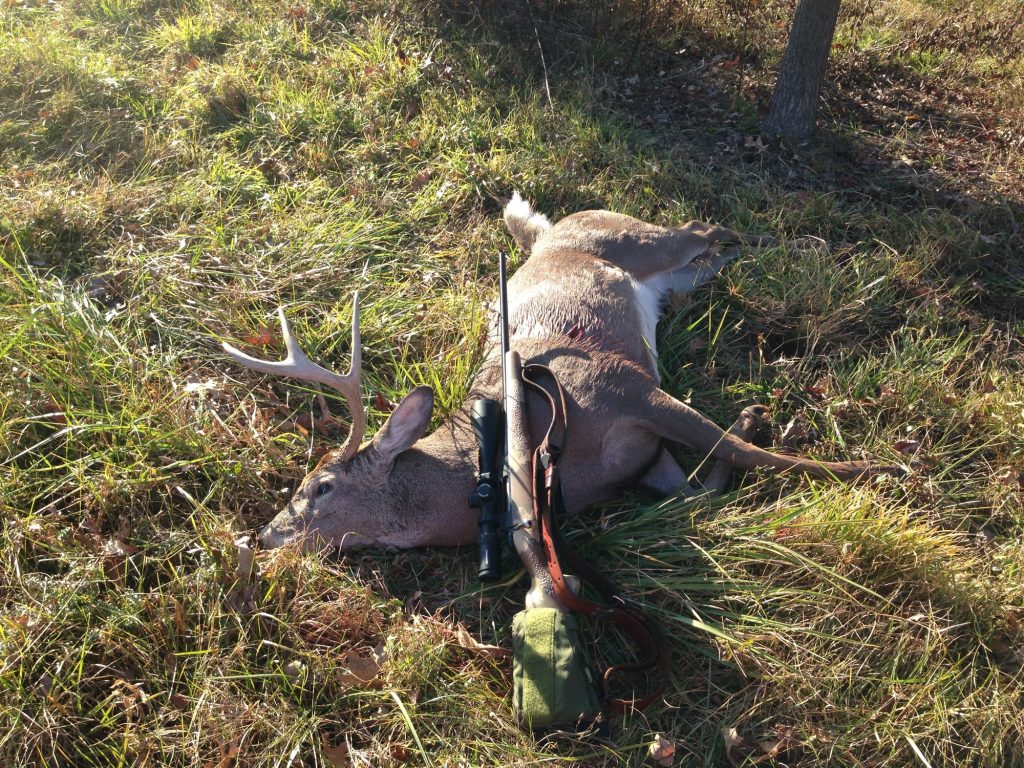
The Michigan Natural Resources Commission approved the change in May 2026, and the Michigan Department of Natural Resources’ 2026 deer regulations⁠ now confirm that the Limited Firearms Deer Zone has been eliminated.

Beginning September 12, hunters can use all legal firearms across the Lower Peninsula.

Previously, southern Michigan hunters faced restrictions that generally limited deer hunting to shotguns, muzzleloaders and certain straight-wall or limited-firearm cartridges. Northern Michigan hunters could use more traditional centerfire rifles, while southern hunters had to select from a narrower group of cartridges.

The old system created a bizarre situation where a .350 Legend or .450 Bushmaster could be legal, but a .308 Winchester or .30-06 Springfield could be prohibited for the same deer, on the same property, depending only on the location.

The deer did not care.

Can You Use a .308 Rifle for Deer Hunting in Southern Michigan?

Yes, beginning with the 2026 season, a .308 Winchester rifle can be used for deer hunting in the Lower Peninsula when the applicable firearm season is open and all other regulations are followed.

The same basic answer applies to many traditional hunting cartridges, including:

  • .243 Winchester
  • 6.5 Creedmoor
  • 6.5×55 Swedish
  • .270 Winchester
  • 7mm-08 Remington
  • .308 Winchester
  • .30-06 Springfield
  • .35 Remington
  • .30-30 Winchester
  • .300 Winchester Magnum

Hunters still need to read the current Michigan Deer Digest and confirm the rules for the specific season, deer management unit, license and ammunition being used. Eliminating the zone does not eliminate every hunting regulation.

It simply removes one especially questionable geographic restriction.

Why Did Michigan Have a Limited Firearms Zone?

The original restrictions were connected to concerns about rifle bullets traveling long distances in more heavily populated areas of southern Michigan.

That concern is not entirely imaginary. A centerfire rifle can send a projectile a considerable distance, and hunters are responsible for knowing what lies beyond their target.

But restricting responsible hunters to particular firearm types does not magically make unsafe behavior safe. A shotgun slug can travel a long way. A muzzleloader projectile can travel a long way. A straight-wall rifle cartridge can travel a long way.

The most important safety equipment is still the hunter’s brain.

A hunter who fires at an uncertain target, ignores the background or shoots toward a road is dangerous regardless of whether the firearm is a shotgun, muzzleloader or bolt-action rifle.

The Michigan DNR’s decision recognizes something that should have been obvious years ago: firearm safety comes from hunter education, identification of the target, a safe backstop and responsible judgment—not from pretending that a county line changes external ballistics.

Is a .30-06 Too Much Rifle for Michigan Deer?

For most Michigan deer hunting, a .30-06 Springfield is more cartridge than necessary.

That does not make it a bad choice.

A .30-06 with an appropriate hunting bullet is fully capable of taking whitetail deer, and many hunters already own one. Requiring those hunters to buy a separate rifle simply because they live in southern Michigan was never a particularly sensible policy.

The same applies to the .308 Winchester. It is not a dangerous new invention. It is one of the most common centerfire rifle cartridges in the country, with widely available ammunition, manageable recoil and an enormous selection of hunting bullets.

A .243 Winchester may be a better choice for a smaller-framed hunter or somebody who wants reduced recoil. A .30-30 lever-action rifle may make more sense in thick cover. A .270 Winchester or 7mm-08 may be a practical compromise for hunters who want a flat-shooting cartridge without the recoil of a magnum.

The best hunting rifle is usually the one the hunter can shoot accurately, carry comfortably and operate safely.

That is a better standard than forcing everyone to use whatever cartridge bureaucrats decided was sufficiently harmless.

What About the .350 Legend and .450 Bushmaster?

The 2026 rule change does not make the popular straight-wall cartridges obsolete.

The .350 Legend, .400 Legend and .450 Bushmaster remain useful deer cartridges, particularly for hunters who prefer AR-pattern rifles, compact hunting rifles or moderate-range setups.

The .450 Bushmaster has become especially popular in states that historically restricted bottleneck cartridges. It offers substantial bullet weight and energy at practical deer-hunting distances, although its recoil and ammunition cost are higher than many smaller cartridges.

The .350 Legend produces less recoil and works well in lightweight rifles. It is a sensible option for hunters who mostly take shots at ordinary woods distances.

But the fact that those cartridges work does not prove that .308 Winchester or .30-06 Springfield should have been prohibited. It proves that several different rifles can work when used by somebody who knows what he is doing.

My earlier article on the M1 Carbine as a hunting rifle⁠ discusses the same broader question: the usefulness of a hunting rifle depends on the animal, range, bullet, shooter and circumstances—not on whether the rifle looks sufficiently traditional to satisfy a regulation committee.

Will More Rifles Make Michigan Deer Hunting Less Safe?

That is the argument some people are making, but the available evidence does not justify treating lawful rifle ownership as the problem.

Michigan’s official announcement describes the change as an elimination of the Limited Firearms Deer Zone and a move toward statewide consistency. The Natural Resources Commission announcement⁠ explains the regulation changes and the reasoning behind the new statewide rules.

The responsible approach is not to panic about the existence of rifles. It is to insist that hunters:

  • Identify the target beyond doubt
  • Know what is behind the target
  • Use a safe backstop
  • Follow property and firearm-discharge laws
  • Wear required hunter orange
  • Handle the rifle safely
  • Use ammunition appropriate for the game
  • Report harvested deer as required

Those rules matter more than whether a hunter is carrying a shotgun or a .308 bolt-action rifle.

The “good guy with a gun” principle applies in the woods, too: responsible armed citizens are capable of making sound decisions when they are given proper training and clear rules. Treating every hunter as an incompetent hazard is lazy policy.

What Rifle Should a Michigan Deer Hunter Choose?

The new rule gives Michigan hunters more freedom, but it does not require anybody to abandon the rifle that already works.

If you own a .450 Bushmaster and like it, keep using it.

If you have a .30-30 lever gun that fits your hunting style, there is no reason to replace it.

If you already own a .308, .30-06 or 6.5 Creedmoor, you can now use the rifle you probably wanted to use in the first place.

A practical Michigan deer rifle should be reliable, accurate enough for the expected distance, chambered in ammunition that is readily available and configured so the hunter can carry and operate it safely.

That might be a modern bolt action with a variable-power optic. It might be an AR-pattern rifle. It might be an old Remington pump or a military surplus rifle with iron sights.

My article on surplus rifles and the Civilian Marksmanship Program⁠ covers why older military rifles remain useful beyond the collector’s cabinet. Michigan’s new rules make more of those rifles practical hunting options, provided the cartridge and rifle comply with the current regulations.

Michigan’s Rifle Rule Change Is Long Overdue

Michigan’s 2026 deer regulations are a meaningful improvement for hunters.

The state has not eliminated safety requirements. It has eliminated an outdated firearms boundary that treated ordinary hunters as though they became more responsible when they crossed into another county.

That is the right direction.

Hunters should be trusted to select a suitable rifle, learn its trajectory, use appropriate ammunition and make safe decisions. The state should enforce reckless behavior, trespassing, poaching and unsafe firearm use—not micromanage every lawful hunter’s choice of cartridge.

For the first time, southern Michigan deer hunters can take the field with the same broad rifle choices available elsewhere in the Lower Peninsula.

A .308 is legal.

A .30-06 is legal.

A 6.5 Creedmoor is legal.

And no deer has ever been impressed by the state’s old imaginary rifle line.

Posted in XTC

Garand Thumb, Grand Thumb, Garant Thumb, or Grande Thumb?

Google has apparently decided that “Garand Thumb” is close enough to several other phrases that they all deserve to be grouped together.

According to Search Console, people searching for Garand Thumb are also typing:

  • Garandthumb
  • Grand Thumb
  • Garant Thumb
  • Grande Thumb
  • M1 Grand Thumb
  • M1 Thumb
  • Garand Thumb injury
  • Garand Thumb meaning

This raises an important question:

What exactly is a “Grand Thumb”?

What Is Garand Thumb?

Actual Garand thumb⁠ is what happens when the operating rod of an M1 Garand slams forward on your thumb.

It is not a prestigious military qualification.

It is not a YouTube challenge.

It is not proof that you are descended from John Garand.

It is a painful lesson in keeping your thumb out of the action while loading or closing the bolt on an M1 Garand.

The M1 Garand is an outstanding rifle, but it was designed during an era when the United States was apparently comfortable allowing mechanical objects to teach safety lessons through blunt force.

Grand Thumb

A Grand Thumb is the largest thumb in the family.

It is usually found on somebody who claims he can operate an M1 Garand safely because he watched three videos about it and owns a leather sling.

The Grand Thumb is also useful for reaching the safety on an M1 Garand without changing your grip.

Unfortunately, it is equally easy to catch under the operating rod.

For a proper introduction to the rifle, start with my guide on buying an M1 Garand from the CMP⁠.

Garant Thumb

A Garant Thumb is the French version.

It is pronounced incorrectly but with confidence.

The Garant Thumb is commonly associated with a rifle that has been imported, refurbished, rebarreled or described by a gun-store employee who has never actually handled an M1 Garand.

It may also refer to an M1 Garand purchased from a classified listing containing the words “rare,” “WWII,” “bring cash” and “I know what I have.”

Grande Thumb

The Grande Thumb is the Spanish-sized version.

It is larger than the regular thumb and comes with extra recoil resistance.

A Grande Thumb may be useful when shooting an M1 Garand from the standing position, but it will not help if your M1 Garand elevation knob⁠ is not properly adjusted.

No amount of thumb size can compensate for confusing sight adjustments with random knob spinning.

M1 Grand Thumb

The M1 Grand Thumb is what happens when somebody searches for information about the M1 Garand but types “M1 Grand” because autocorrect has decided history is optional.

The phrase sounds like a rifle that won a beauty contest.

The actual M1 Garand is named after John C. Garand, not because it is the “grand” version of another rifle.

It is a gas-operated, .30-06 service rifle that uses an en-bloc clip and became one of the most important American military rifles of the twentieth century.

If you are trying to understand how the rifle works, my article on the M1 Garand sled⁠ explains one of the most useful tools for safely loading and unloading the rifle during practice.

M1 Thumb

M1 thumb is the short version.

It is also the version most likely to be typed immediately after somebody discovers that the rifle can injure him while he is trying to load it.

The cure is simple:

Keep your thumb clear of the operating rod.

Do not fight the rifle.

Do not place your thumb inside the receiver and then allow the bolt to close on it.

Do not assume that because the rifle is unloaded, the operating rod cannot still move with enough force to make you regret your decisions.

Garand Thumb Injury

A Garand thumb injury is usually preventable, but that does not make it imaginary.

The rifle’s bolt and operating rod contain enough stored energy to pinch or crush a thumb when handled carelessly. The injury can range from a painful bruise to a cut or damaged nail.

The correct response is to learn the loading procedure and keep your hand out of the action.

The incorrect response is to upload a dramatic picture, call the rifle defective and then continue handling it the same way.

Why Does Google Group These Searches Together?

Because Google understands that people are often terrible at spelling.

“Garand,” “grand,” “garant” and “grande” may look different to a human being, but they are close enough that the search engine assumes the user probably wants information about the same rifle, the same injury or the same Garand Thumb topic.

That is probably correct.

At least Google knows what a Garand is.

The searcher who types “M1 Grand Thumb” may still find the right information, assuming he does not accidentally order a decorative thumb sculpture from Etsy.

The Important Thing

Whether you searched for Garand Thumb, Grand Thumb, Garant Thumb, Grande Thumb, M1 Grand Thumb, M1 Thumb or Garand Thumb injury, the answer is the same:

Learn how the M1 Garand works before putting your thumb where the operating rod can find it.

The rifle is not trying to hurt you.

It is simply giving you immediate feedback.

And unlike a YouTube comment, the feedback is physically convincing.

Posted in XTC

FN 309 MRD Review: Is This the Best New Glock 19 Alternative?

The FN 309 MRD is a compact 9mm pistol with a 16+1 capacity, optics-ready slide, internal hammer, approximately five-pound trigger and $549 MSRP.

FN also claims the pistol requires 25 percent less force to rack than the FN 509 Tactical and that its magazines require 40 percent less loading force than comparable pistols.

Those are useful features—not marketing fluff about a new slide texture or another shade of flat dark earth.

The FN 309 MRD appears designed for concealed carry, home defense and new shooters who want a practical compact pistol without the stiff slide, tiny grip or unpleasant recoil commonly associated with “easy-to-use” handguns.

I have not fired the FN 309 MRD, so this is not a hands-on review. It is an examination of the FN 309 specifications, its position against the Glock 19 and what the pistol still needs to prove before it becomes a dependable long-term defensive firearm.

FN 309 MRD Specifications

According to FN’s official FN 309 MRD specifications⁠, the pistol includes:

  • 9mm chambering
  • 3.8-inch barrel
  • 7.4-inch overall length
  • 5.4-inch height
  • 1.26-inch width
  • 22.5-ounce unloaded weight
  • 16-round flush-fit magazine
  • 20-round extended magazine
  • Approximately five-pound trigger
  • Internal hammer
  • Single-action operation
  • Optics-ready slide
  • Accessory rail
  • Reversible magazine release
  • No-trigger-pull disassembly
  • $549 suggested retail price

Those specifications put the FN 309 MRD directly into the compact 9mm category.

That means it will be compared with the Glock 19, SIG Sauer P320 Compact, SIG P365 XMacro, Smith & Wesson M&P Compact, Springfield Hellcat Pro and every other manufacturer trying to sell Americans another black 9mm pistol.

The FN 309 therefore needs to offer more than a familiar shape and a new product number.

What Is the FN 309 MRD?

The FN 309 MRD is a compact polymer-frame 9mm pistol intended for concealed carry and personal defense.

Its dimensions are close enough to the Glock 19 that most buyers will naturally compare the two. The FN is slightly lighter, has a shorter barrel and offers a 16-round flush magazine plus a 20-round extended magazine.

The most unusual part of the design is the operating system.

The FN 309 is not striker-fired. It uses an internal hammer and operates as a single-action-only pistol. The hammer is hidden inside the slide, so the gun retains the clean exterior and snag-free profile most concealed carriers expect from a modern polymer handgun.

That gives FN a way to offer a relatively light trigger without simply building another striker-fired pistol.

The internal hammer is not automatically better than a striker. It is simply different. The real questions are whether the trigger is consistent, whether the pistol ignites ammunition reliably and whether the design remains durable after years of use.

A product page cannot answer those questions.

My older Colt Combat Elite review⁠ dealt with a more traditional hammer-fired pistol and made the same larger point: features are interesting, but the actual trigger, safety system and reliability determine whether a pistol deserves trust.

FN 309 MRD Trigger and Internal Hammer

FN lists the 309 MRD trigger pull at approximately five pounds.

That sounds promising, but trigger-pull weight is only one part of trigger quality. A clean five-pound trigger can be excellent. A gritty five-pound trigger with excessive movement and a poor reset can feel like operating a rusty staple gun.

The FN 309 MRD’s internal hammer may provide a crisp single-action trigger while keeping the pistol externally similar to a striker-fired handgun.

That could be attractive to shooters who want:

  • A lighter, cleaner trigger
  • A consistent single-action trigger press
  • No exposed hammer
  • A compact defensive pistol
  • Familiar modern controls

The tradeoff is that the owner still needs to understand the pistol’s specific operating system. A single-action-only handgun is not the same as a double-action/single-action pistol such as the classic Colt or a CZ 75 variant.

The FN 309 should be treated as its own design rather than assumed to operate exactly like a Glock because it has a polymer frame and no visible hammer.

The FN 309 MRD Has an Easy-to-Rack Slide

FN claims the FN 309 MRD requires 25 percent less slide-racking force than the FN 509 Tactical.

That is one of the most useful features on the entire pistol.

Some gun owners will mock the idea because every gun discussion attracts a man eager to announce that his grandmother could rack an artillery piece during World War I.

Hand strength is not a moral virtue.

Older shooters, people with arthritis, injured shooters and new gun owners may struggle to operate a stiff pistol slide. A firearm that is technically powerful but physically difficult to load, unload or clear is not a practical defensive tool for that person.

The traditional answer was often a tiny blowback pistol with a miserable trigger, sharp recoil, poor sights and limited capacity.

The FN 309 takes a more sensible approach. It keeps a useful grip, compact dimensions and modern capacity while reducing the force needed to operate the slide.

That does not make it a “weak person’s gun.”

It makes it a gun designed around actual human beings instead of gun-counter mythology.

FN 309 MRD Magazine Capacity

The FN 309 MRD uses a 16-round flush-fit magazine and includes a 20-round extended magazine.

That gives the owner a reasonable concealed-carry setup and a higher-capacity option for home defense or use as a spare magazine.

FN also claims that the magazine spring requires 40 percent less force to load than comparable magazines.

This matters because a magazine is not truly a 16-round magazine if the owner cannot reliably load the final cartridges. New shooters frequently struggle with the last few rounds in high-capacity magazines, especially before the springs have worn in.

More capacity does not replace marksmanship or judgment.

It does, however, provide more ammunition in a situation where the owner will not receive advance notice of how many attackers may be present.

FN 309 MRD Optics-Ready Slide

The FN 309 MRD has a direct-mount optics cut compatible with red dots using the Shield RMS and Leupold DeltaPoint Pro footprints.

A direct-mount system can reduce the number of parts between the optic and the slide. It may also allow the optic to sit lower than one mounted through a thick adapter plate.

The disadvantage is that the buyer must confirm compatibility before purchasing an optic.

“RMS footprint” and “DeltaPoint Pro footprint” do not guarantee that every optic will use the same screws, recoil lugs or dimensions. The exact optic model matters.

FN lists a green fiber-optic front sight and white-accented U-notch rear sight. The company also says the rear dovetail is shared with the FN 509, which should provide access to replacement sight options.

An optic may improve aiming, but it does not replace practice. My older service-rifle optics article⁠ made the same point in a different shooting discipline: an optic can help a shooter see the target, but it cannot fix poor fundamentals.

For pistol owners interested in co-witnessing, my article on choosing a co-witness height⁠ explains why sight height and optic placement matter.

FN 309 MRD Disassembly Does Not Require a Trigger Pull

The FN 309 MRD can be disassembled without pulling the trigger.

Many striker-fired pistols require a trigger pull during the takedown process. That can be done safely, but only after removing all ammunition and physically and visually confirming that the firearm is unloaded.

The trigger pull itself does not cause negligent discharges.

Negligent gun handling causes negligent discharges.

Still, eliminating an unnecessary trigger press is a worthwhile design choice. It gives careless owners one fewer opportunity to make a catastrophic mistake and makes the pistol somewhat more approachable for newer shooters.

The FN 309 MRD also uses internal safeties and does not currently appear to include a manual safety. FN has indicated that a manual-safety version is planned.

There is no universally correct answer for every shooter. The correct choice is the configuration the owner understands and will actually practice with.

FN 309 MRD vs. Glock 19

The obvious question is whether the FN 309 MRD is better than the Glock 19.

Not yet.

The Glock 19 has decades of field experience, widespread parts availability, inexpensive magazines, enormous holster support and a reliability reputation built across millions of pistols.

My Glock 19 versus Glock 26 comparison⁠ covers the factors that matter when choosing a carry handgun: size, concealability, grip length, capacity and shootability.

The FN 309 has a promising specification sheet.

The Glock 19 has a track record.

That distinction matters. A new handgun does not become proven because a manufacturer sends it to gun YouTube channels, films a promotional torture test and adds dramatic music.

The FN 309 needs to prove:

  • Reliability with common practice ammunition
  • Reliability with defensive ammunition
  • Magazine durability
  • Magazine availability
  • Extractor and firing-component longevity
  • Optic-mounting durability
  • Holster availability
  • Replacement-parts support
  • Consistency across production guns

If the FN 309 performs well in those areas, it could become a legitimate Glock 19 alternative.

If FN abandons the model after two catalog cycles, owners may eventually be searching auction sites for magazines and replacement parts.

Is the FN 309 MRD Good for New Shooters?

The FN 309 MRD may be especially appealing to new shooters.

The lighter slide, easier-loading magazines, no-trigger-pull disassembly and relatively light trigger address real problems that many new handgun owners encounter.

That makes the FN 309 interesting for concealed carry and home defense, particularly for somebody who wants a useful compact pistol but struggles with heavier slides or stiff magazine springs.

The accessory rail allows the use of a compact weapon light. The optics-ready slide allows the addition of a red dot. The 20-round magazine provides additional capacity when concealment is not the priority.

But equipment does not install competence.

My article What Gear Do I Need to Be a Competitive Shooter? Nothing⁠ explains the same principle from the competition side: buying equipment is not the same as developing skill.

Watching a Garand Thumb YouTube video is not training.

Mounting an optic is not training.

Buying the newest FN pistol is not training.

The owner still needs to learn safe handling, loading, unloading, malfunction clearance, sight use and trigger control.

FN 309 MRD Concealed Carry Considerations

At 22.5 ounces unloaded, the FN 309 MRD appears light enough for daily concealed carry without becoming an unpleasantly small pistol.

The 5.4-inch height and 1.26-inch width are within the range many concealed carriers already accept from compact 9mm handguns.

The real-world carry experience will depend on the holster, belt, clothing, body shape and grip configuration. The extended 20-round magazine may provide useful capacity, but the longer grip will generally be harder to conceal than the flush 16-round magazine.

The owner also needs to test the actual pistol, holster, magazine, ammunition, optic and weapon light as one complete system.

Travel creates another set of responsibilities. My article on flying with a handgun⁠ covers the practical process for transporting a firearm by air. I also wrote about concealed carry at Camp Perry and traveling to Ohio⁠, which illustrates why gun owners need to check the law where they are going instead of relying on assumptions.

Is the FN 309 MRD Worth Buying?

At a $549 MSRP, the FN 309 MRD deserves attention.

It offers useful capacity, compact dimensions, an optics-ready slide, an internal hammer, an easy-to-rack slide and a disassembly system that does not require a trigger pull.

Those are practical features.

The biggest weakness is that the FN 309 MRD is new.

The market does not yet know whether FN will support the pistol for the long term, produce enough magazines, maintain parts availability or provide adequate holster support.

That is the difference between a promising handgun and a proven handgun.

The FN 309 MRD could become one of the better values in the compact 9mm market if it proves reliable and FN supports it properly.

It could also become another decent firearm whose owners spend years searching for magazines if the company loses interest.

The design looks intelligent.

The price is competitive.

The feature list is genuinely useful.

Now FN has to do the difficult part: build enough of them, support them properly and keep them alive long enough for gun owners to trust them.

Posted in XTC

Pennsylvania Sunday Hunting Is Finally Here—Government Only Took 153 Years

Pennsylvania’s 2026–27 hunting seasons begin today, September 1, and this season finally brings something hunters should have had generations ago: Sunday hunting throughout nearly every regular season.

Not three carefully rationed Sundays.

Not a handful of dates selected as though Harrisburg were distributing emergency food.

If a Pennsylvania hunting season includes a Sunday, hunters generally may hunt that Sunday. The major exception for 2026–27 is migratory game birds, including mourning doves, waterfowl and woodcock.

It took Pennsylvania 153 years to mostly eliminate a pointless restriction that treated hunters like irresponsible children six days after allowing them to enter the same woods with the same firearms.

That is government progress measured with a sundial, but it is still progress.

Is Sunday Hunting Legal in Pennsylvania in 2026?

Yes.

The Pennsylvania General Assembly enacted Act 36 of 2025⁠, repealing the state’s general prohibition on Sunday hunting.

The relevant section of the current Game and Wildlife Code now says exactly what it should: “Hunting on Sunday prohibited⁠”—repealed.

For the 2025–26 season, the Pennsylvania Game Commission initially approved 13 Sunday hunting dates while implementing the new law. Beginning with the 2026–27 seasons, the Commission has included Sundays falling within almost every listed season.

That means Sunday is no longer a special exception for deer, bear, turkey, squirrel, rabbit, pheasant and most other Pennsylvania game.

The important rule is simple: the species must actually be in season on that date, and every other licensing, location, firearm, tagging and hunting regulation still applies.

Sunday is now a hunting day, not a suspension of the entire Game Code.

The Migratory Bird Exception Remains

Pennsylvania has not opened Sunday hunting for migratory game birds during the 2026–27 license year.

That includes:

  • Mourning doves
  • Ducks
  • Geese
  • Woodcock
  • Brant
  • Coots
  • Rails
  • Snipe
  • Gallinules

The Pennsylvania Game Commission’s 2026–27 season announcement⁠ says commissioners excluded Sundays after surveying migratory-bird hunters and finding a slight preference for retaining the current structure so seasons could extend farther across the calendar.

The agency also cited federal frameworks under which Pennsylvania could not casually add and remove Sundays from migratory seasons each year.

That distinction matters because some headlines will inevitably reduce the change to “Pennsylvania legalizes Sunday hunting.” That is broadly true, but it does not mean a dove hunter can walk into a managed field this Sunday simply because the dove season opened today.

The current mourning dove season runs from September 1 through November 27, with another segment from December 18 through January 2. The daily limit is 15 and the possession limit is 45, but Sundays remain closed.

The early Canada goose season also opens September 1. Its dates and limits depend upon the applicable goose zone, and Sundays are again excluded.

Check the official Pennsylvania seasons and bag limits⁠ before heading out. A vague memory of somebody’s Facebook post is not a hunting regulation.

Pennsylvania’s Sunday Hunting Ban Was an Outdated Blue Law

Pennsylvania generally prohibited Sunday hunting beginning in 1873.

The old rule did not survive because wildlife becomes especially vulnerable after Saturday night. It survived because government is remarkably good at maintaining restrictions long after their original social justification has collapsed.

Pennsylvania hunters could drive, shop, attend professional sporting events, consume alcohol, fire guns at many ranges and perform countless other lawful activities on Sunday.

They simply could not hunt on most Sundays.

That made no conservation sense. Wildlife populations are managed through season lengths, bag limits, license allocations and restrictions on methods of take. If additional hunting days create an excessive harvest, the Game Commission can adjust those tools.

A blanket Sunday prohibition was not careful wildlife management. It was a leftover government rule supported by institutional inertia and the usual collection of people who believe their preferred use of the outdoors should control everybody else’s.

Sunday Hunting Matters to Working Families

The strongest argument for Sunday hunting was never complicated.

Most adults work during the week.

Most children attend school during the week.

Saturday may be consumed by youth sports, home repairs, family obligations or any of the other things that happen when people have lives outside the woods.

Under the old system, a person working Monday through Friday effectively received one practical hunting day each week. Someone required to work Saturday might receive none.

Sunday hunting does not force anyone to hunt. It gives working hunters another opportunity to use the licenses they purchased, access public land their taxes support and pass hunting traditions to their children.

That last part matters.

Politicians and state agencies regularly complain about declining hunter participation. Then government preserves arbitrary restrictions making hunting more difficult for ordinary working families.

You cannot maintain a hunting culture by making participation unnecessarily inconvenient and hoping another government-sponsored YouTube video will solve it.

People become hunters by going hunting.

More Hunting Days Do Not Mean Private Land Becomes Public

Repealing the Sunday prohibition does not create a right to enter somebody else’s land.

Private property remains private property every day of the week.

Act 36 also changed provisions concerning trespass while hunting. Whatever anyone thinks about Sunday hunting, there is no legitimate pro-gun or pro-hunting argument for ignoring a landowner’s boundaries.

Get permission before entering private land. Know where the property lines are. Respect posted signs and purple paint. Do not assume the permission you received ten years ago applies forever, and do not turn somebody else’s farm into your personal public range.

Hunters who trespass give every anti-hunting busybody exactly the story he wants.

Private gun ownership and private property rights belong on the same side.

The 2026 Pennsylvania Deer Seasons Include Sundays

The expanded Sunday structure will be especially important during Pennsylvania deer season.

For 2026–27, statewide archery deer season runs October 3 through November 20, then returns December 26 through January 24, 2027. WMUs 2B, 5C and 5D receive different archery dates beginning September 19.

The statewide regular firearms deer season runs November 28 through December 12.

Because Sundays falling inside those date ranges are now included, firearms deer hunters gain November 29 and December 6 as legal hunting days.

That is a substantial improvement over forcing hunters to sit home during the middle of a short firearms season because the calendar displayed the governmentally disfavored day of the week.

Pennsylvania also increased its statewide antlerless allocation to 1,469,000 licenses for 2026–27. Hunters still need the appropriate antlerless license or permit for each antlerless deer.

Sunday hunting did not abolish tagging requirements, antler restrictions or wildlife-management units. It only removed one stupid obstacle.

Use a Hunting Rifle You Can Actually Shoot

The additional day is valuable only if hunters arrive prepared.

Confirm the rifle’s zero before the season. Inspect the sling, optic mounts and ammunition. Practice from field positions instead of firing three rounds from a concrete bench and declaring yourself ready for the mountains.

A rifle does not become unsuitable for hunting merely because it began life as a military design or appeared in a Garand Thumb video. Plenty of practical hunting rifles have military ancestry.

I recently explained why the M1 Carbine can make a handy little hunting rifle⁠ where the cartridge is lawful and appropriate for the intended game. Firearm selection should be based on reliability, legal requirements, cartridge performance and the shooter’s ability—not somebody else’s aesthetic rules.

The same principle applies to handguns. My older Glock 40 10mm review⁠ discussed a long-slide pistol designed partly for hunting and woods use.

Use enough gun. Use lawful ammunition. Know the distance at which you can reliably place the shot.

More opportunity should produce more competent hunters, not more excuses.

Hunting Is Not a Privilege Government Invented

The Second Amendment protects the individual right to keep and bear arms. That right does not depend upon hunting, and gun owners should reject every dishonest attempt to reduce firearm ownership to a government-approved sporting activity.

Americans do not need to demonstrate a hunting purpose before owning an AR-15, carrying a handgun or keeping a firearm for home defense.

At the same time, hunting remains one of the oldest and most legitimate uses of privately owned firearms. It provides food, supports wildlife management, maintains practical marksmanship and connects another generation to firearms outside sterile political arguments.

Government does not deserve praise for finally returning an activity it had unnecessarily restricted since the nineteenth century.

Pennsylvania hunters and organizations spent years pushing this repeal through a political system that treats eliminating one outdated rule as though it were splitting the atom.

The credit belongs to them.

Pennsylvania Should Finish the Job

The 2026–27 expansion is a major victory.

Most Pennsylvania hunters will finally be able to hunt Sundays whenever their chosen game is in season. Working families gain more opportunities. Young hunters gain more chances to accompany parents and mentors. License buyers receive greater access to the seasons they help fund.

The migratory-bird exception should be reviewed honestly after the season, using harvest data and input from the hunters who actually participate.

If excluding Sundays genuinely provides better season timing preferred by waterfowl and dove hunters, the Commission should explain that tradeoff clearly. If it is merely another restriction being preserved because changing it requires effort, it should go.

For now, Pennsylvania hunters should take the win and use it.

Buy the license. Confirm the regulations. Ask permission. Check the zero. Take somebody new.

Then hunt Sunday without apologizing to anyone.

It was never the government’s day to withhold.

Posted in XTC

No, CZ Is Not Discontinuing the CZ 75: Here’s What Is Actually Ending

The CZ 75 is not being discontinued.

Three specific CZ 75 models are ending production during 2026:

  • CZ 75 B
  • CZ 75 BD
  • CZ 75 Compact

That is significant news. These are classic metal-framed, hammer-fired pistols that helped build CZ’s reputation in the United States.

It is not the death of the entire CZ 75 family.

The CZ 75 SP-01, CZ 75 SP-01 Tactical, CZ 75 P-01 and CZ 75 D PCR are continuing. CZ has explicitly described this as a transition within the CZ 75 line, not the end of the platform. (americanrifleman.org, thetacticalwire.com)

Unfortunately, “CZ discontinues three models” does not generate as much panic as “CZ 75 DISCONTINUED FOREVER,” so gun YouTube thumbnails and social-media posts are already making the announcement sound much larger than it is.

Before paying a ridiculous panic-buying premium, understand what CZ actually announced.

Which CZ 75 Pistols Are Being Discontinued?

CZ is concluding production of the traditional CZ 75 B, CZ 75 BD and steel-framed CZ 75 Compact.

These are not obscure catalog fillers. They represent the relatively plain, traditional side of the CZ 75 family.

CZ 75 B

The CZ 75 B is the classic full-size, all-steel, double-action/single-action pistol with a manual safety.

Its basic configuration is old-fashioned in the best possible way. It does not have an accessory rail hanging from the dust cover. It does not arrive covered in interchangeable plastic panels. It does not need an optics plate, battery or software update.

It is a metal service pistol with excellent ergonomics, useful capacity and a design that has been proving itself for decades.

CZ’s 2025 catalog listed the CZ 75 B with a 4.6-inch barrel, 16-round standard magazine, steel frame and unloaded weight of approximately 35.2 ounces. (cz-usa.com)

CZ 75 BD

The CZ 75 BD is mechanically similar to the 75 B but replaces the manual safety with a decocking lever.

That distinction matters.

The traditional CZ 75 B can be carried with the hammer cocked and the safety engaged. The BD allows the shooter to safely lower the hammer using the decocker and fire the first shot double-action.

Neither system is universally better. They accommodate different preferences.

Some shooters prefer the positive manual safety and cocked-and-locked option. Others want a decocker and a longer double-action first trigger pull without needing to manually lower the hammer.

CZ is ending both traditional full-size versions.

CZ 75 Compact

The CZ 75 Compact is essentially the classic steel-frame concept reduced to a more concealable package.

It should not be confused with every other compact pistol bearing a CZ 75-related name. The P-01 and PCR are separate variants with different frames and features.

That confusion is already contributing to the false claim that CZ is abandoning compact CZ 75 pistols altogether.

It is not.

The steel-framed CZ 75 Compact is ending. The alloy-framed P-01 and PCR remain in the family.

Which CZ 75 Models Are Staying in Production?

According to CZ’s announcement, the continuing CZ 75 models include:

  • CZ 75 SP-01
  • CZ 75 SP-01 Tactical
  • CZ 75 P-01
  • CZ 75 D PCR

That leaves buyers with full-size and compact options, manual-safety and decocker options, railed and non-railed configurations, and pistols suited to competition, home defense and concealed carry.

The SP-01 is a full-size steel-framed pistol with a longer dust cover and accessory rail. The SP-01 Tactical replaces its manual safety with a decocker.

The P-01 provides a compact alloy frame and accessory rail. The PCR is also a compact alloy-frame pistol but maintains the cleaner, non-railed profile many traditional CZ shooters prefer.

In other words, the CZ 75 family is changing.

It is not disappearing.

Why Are People Panicking?

Because the CZ 75 B is the version many shooters picture when someone says “CZ 75.”

The original CZ 75 appeared during the 1970s. Its combination of a double-stack magazine, double-action/single-action trigger, comfortable grip and slide riding inside the frame established a design that would be copied and adapted across the firearm industry.

The B model became the familiar modern-production version.

Removing the 75 B from regular production therefore feels different from discontinuing some recently introduced variation that nobody bought.

It is like Ford announcing the end of a traditional Mustang configuration while assuring everyone the Mustang name will continue. Technically, the product family survives. Emotionally, buyers still recognize that something important is being lost.

That reaction is reasonable.

Claiming all CZ 75 production is ending is not.

Is the CZ 75 Obsolete?

No.

It is less aligned with current handgun fashion, but fashion and usefulness are not the same thing.

The modern pistol market heavily favors polymer frames, striker-fired actions, accessory rails and optics-ready slides. Those features reduce manufacturing expense, simplify training for large organizations and give manufacturers endless opportunities to release another nearly identical black rectangle.

The traditional CZ 75 B comes from a different philosophy.

Its steel frame provides weight that helps absorb recoil. Its grip shape fits many hands extremely well. Its low slide profile and internal slide rails contribute to the pistol’s distinctive handling. Its double-action/single-action system gives the shooter two trigger modes and the option of a manual safety or decocker, depending on the model.

None of those qualities stopped working because red-dot optics became popular.

The classic CZ does require more familiarity than the average striker-fired pistol. A shooter should understand the transition between the first double-action shot and subsequent single-action shots. Safety and decocker models should not be treated as interchangeable.

That is called learning to operate your firearm. It is not an unreasonable burden.

Should You Buy a CZ 75 B Before Production Ends?

If you already wanted one, this is probably the correct time to start looking.

If you did not want one until somebody posted “RIP CZ 75” over a black-and-white photograph, calm down.

CZ announced that production is concluding, but that does not mean every remaining pistol vanished from distributors overnight. It also does not establish that ordinary production guns will immediately become priceless collectibles.

There may be increased demand as buyers realize a familiar model is leaving the catalog. Dealers may sell existing inventory more quickly. Used prices may eventually reflect reduced supply.

None of that justifies handing a gun-store counter goblin an absurd premium because he printed the word “RARE” on a price tag.

Buy the gun because you want a traditional CZ 75.

Do not buy it because somebody with a shocked face in a YouTube thumbnail told you civilization has six hours remaining.

Which Discontinued CZ 75 Should You Choose?

The CZ 75 B is the obvious choice for someone who wants the most recognizable traditional configuration.

Choose the CZ 75 BD if you prefer a decocker and expect to keep the pistol hammer-down for a double-action first shot.

Choose the CZ 75 Compact if you specifically want the smaller steel-frame version and accept the additional weight compared with alloy-framed compact pistols.

For actual concealed carry, the continuing P-01 and PCR may make more practical sense because their alloy frames reduce weight. The P-01 also provides a rail for a weapon light.

That is similar to the choice discussed in my older Glock 19 or Glock 26 comparison. A smaller handgun is not automatically the better carry gun. Grip length, weight, capacity, shootability, holster selection and the owner’s willingness to practice all matter.

For home defense, the SP-01 and SP-01 Tactical remain strong full-size choices. Their accessory rails also make mounting a proper light easier than on the traditional 75 B or BD.

Buy the configuration that fits the intended job.

The Traditional CZ 75 Deserved Better Than a Quiet Exit

The CZ 75 B, BD and Compact deserved more than becoming victims of the industry’s endless march toward polymer frames, optic cuts and minor feature changes marketed as revolutions.

These pistols represent a period when a service handgun was expected to be substantial, durable and shaped around the human hand instead of a manufacturing spreadsheet.

CZ is entitled to streamline production and concentrate on models customers are currently buying. The continuing SP-01, P-01 and PCR models prove the company has not abandoned the CZ 75 system.

Still, ending regular production of the 75 B closes an important chapter.

It is fair to dislike that decision. It is fair to buy one while they remain available. It is even fair to use the announcement as an excuse to acquire another gun, although your spouse may reject the historical-preservation argument.

Just get the facts right.

The CZ 75 B, CZ 75 BD and CZ 75 Compact are ending production.

The CZ 75 is not dead.

A pistol design that influential does not disappear because three catalog numbers were retired. It continues in the models still being manufactured, the millions of pistols already owned, and the countless designs that borrowed its best ideas.

The classic CZ 75 is leaving regular production.

Its legacy is not going anywhere.

Posted in XTC