YouTube Gun Rules 2026 | Ideological Discrimination Against Gun Channels Is the Policy

The YouTube gun rules for 2026 are ideological discrimination against lawful gun owners, firearms manufacturers and the creators who publish gun reviews.

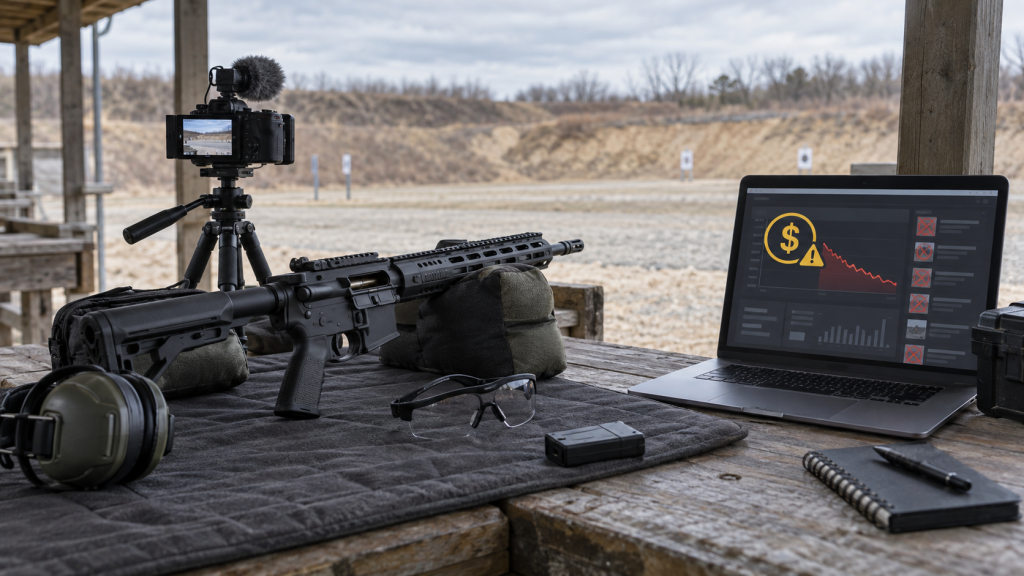
YouTube has not formally banned every gun channel. Instead, it built something more dishonest: a maze of firearms policies that allows gun videos to remain online while demonetizing them, restricting their audience, prohibiting useful links and threatening entire channels with strikes.

A lawful gun review filmed at a legitimate shooting range may technically remain eligible for advertising. The same video can lose its advertising revenue because it mentions the manufacturer, identifies a retailer, includes a discount code, shows a thermal sight or features a magazine holding more than thirty rounds.

YouTube permits enough firearms content to deny that it has banned gun channels. It then makes that content harder to fund, harder to discover and more dangerous to publish.

That is not neutrality. It is anti-gun bigotry enforced by an algorithm.

What Are the YouTube Gun Rules in 2026?

As of September 21, 2026, YouTube applies several overlapping policies to gun videos:

  • Community Guidelines decide whether firearms content may remain online.
  • Advertiser-friendly guidelines determine whether the video can earn advertising revenue.
  • Branded-content rules govern sponsored gun reviews and paid firearm promotions.
  • Age restrictions limit who can watch certain gun videos.
  • Linking rules determine whether creators can direct viewers to firearm retailers or products.
  • Livestream rules prohibit real-time handling and transportation of firearms.

These policies do not produce one simple answer.

A video may remain online while being demonetized. It may receive an age restriction without a strike. It may comply with the YouTube firearms policy but fail the YouTube Partner Program firearms-monetization rules.

That confusion is useful to YouTube. The company can financially punish gun channels while insisting it still “allows” firearms content.

Are Gun Channels Banned on YouTube in 2026?

No official policy says all gun channels are banned from YouTube.

That does not mean gun channels are treated fairly.
YouTube’s current advertiser-friendly firearms guidelines⁠ say the following content can earn advertising revenue:

  • Gun reviews and firearm demonstrations
  • Unmodified semiautomatic firearms used at established shooting ranges
  • Bolt-action, lever-action, pump-action and other manually operated firearms
  • Firearm repair and maintenance
  • Routine firearm disassembly and reassembly
  • Rifle-scope and red-dot-optic content
  • Suppressor and silencer content
  • Gun-law and gun-control discussions
  • Responsible airsoft and BB-gun videos

YouTube therefore admits that responsible gun reviews and shooting videos can be legitimate advertiser-supported content.

Then it buries that admission beneath enough restrictions to make every upload a gamble.

The result is not a straightforward YouTube gun ban. It is a campaign of economic and algorithmic pressure against firearm channels.

YouTube Firearms Monetization Rules Are Deliberately Contradictory

The YouTube Partner Program firearms policy says gun reviews can receive advertising revenue.

It also says a video can receive no advertising revenue when it promotes:

  • Gun manufacturers
  • Firearm retailers
  • Gun-store discount codes
  • Ammunition
  • Suppressors
  • Stocks
  • Grips
  • Sights
  • Scopes
  • Conversion kits
  • Magazines
  • Other components that affect firearm operation

That creates an obvious problem.

A useful Smith & Wesson, Glock, SIG Sauer, Ruger, Colt or Springfield Armory review must identify the manufacturer. A useful rifle-scope review must identify the optic. A suppressor review must identify the suppressor.

A real equipment review should tell the reader what the product costs, what it fits, what ammunition it accepts and where replacement magazines or mounting components can be found.

YouTube says gun reviews are eligible for monetization while threatening to remove monetization when those reviews contain the information that makes them useful.

That is not a carefully written policy. It is corporate gibberish produced by people who are ideologically hostile to the subject.

YouTube Gun-Channel Demonetization Is Ideological Discrimination

YouTube does not apply this suffocating standard equally to every lawful product.

Car channels identify automobile manufacturers, dealerships, replacement parts and performance accessories. Computer channels promote manufacturers, retailers, processors and graphics cards. Sports channels discuss equipment companies and ticket sellers.

Gun channels are expected to discuss products without helping viewers locate those products.

The difference is ideological.

The anti-gun bigot views lawful gun ownership as suspicious by default. He may tolerate a firearm as a historical object, movie prop or police tool, but he becomes uncomfortable when an ordinary citizen treats the same firearm as useful personal property.

That is why the policies focus so heavily on commerce and practical information.

The goal is not merely to prevent criminal instructions. YouTube already has rules against illegal activity. The broader policy isolates lawful gun culture by making it more difficult to finance, advertise and connect buyers with legal products.

A website does not need to announce, “We hate gun owners,” when its policies produce the same practical result.

What Gun Videos Can Earn Advertising Revenue?

According to YouTube, an unmodified firearm may appear in an advertiser-friendly video when used in a controlled environment such as a dedicated shooting range.

Examples of potentially monetized gun content include:

  • Rifle reviews
  • Handgun reviews
  • Shotgun reviews
  • Firearm accuracy tests
  • Shooting-range demonstrations
  • Optics reviews
  • Red-dot-sight reviews
  • Suppressor reviews
  • Firearm cleaning videos
  • Routine maintenance demonstrations
  • Gun-history documentaries
  • Discussions about gun laws
  • Competitive-shooting videos

Even those categories are not guaranteed normal monetization.

YouTube applies its advertising policy to the video, title, description, thumbnail and tags. A firearm review may therefore lose revenue because of a link or phrase placed outside the actual video.

YouTube also admits that its automated systems make mistakes and allows creators to request human review. That is not reassuring. It is an admission that creators may have to appeal decisions produced by a system that cannot reliably interpret the company’s own rules.

Which Gun Videos Receive No Advertising Revenue?

YouTube identifies several categories of firearms content as ineligible for advertising revenue.

These include content showing or promoting:

  • Firearm construction
  • Internal firearm modification
  • Automatic firearms
  • Firearms modified to fire more than once per trigger pull
  • Bump stocks
  • Hair triggers
  • Explosive ammunition
  • Incendiary ammunition
  • Thermal or infrared firearm sights
  • Magazines holding more than thirty rounds
  • Unsupervised minors using firearms
  • Firearm manufacturers or sellers
  • Websites facilitating firearm sales
  • Gun-store discount codes

Some of those subjects involve genuinely different legal or safety considerations.

Others reveal the political prejudices built into the YouTube firearms-monetization policy.

A thermal rifle scope is normal hunting equipment. A thirty-one-round magazine is not morally different from a thirty-round magazine. Mentioning a lawful manufacturer does not make a gun review unsafe.

YouTube lumps ordinary legal equipment together with unlawful modifications because the policy was written to appease people who dislike guns, not to explain firearms accurately.

“High-Capacity Magazine” Is Political Language

YouTube calls magazines holding more than thirty rounds “high capacity.”

That terminology is not a neutral mechanical description. It comes directly from gun-control politics.

Firearms are designed around specific magazine capacities. The standard magazine for a particular firearm may hold ten, fifteen, seventeen, twenty, thirty or more rounds. The proper capacity depends on the firearm and its intended use.

Anti-gun bigots use the phrase “high capacity” to make normal equipment sound abnormal.

YouTube adopted the same loaded language and attached financial punishment to it. A video featuring a magazine holding more than thirty rounds may receive no advertising revenue even when the magazine and firearm are completely lawful.

Nothing becomes less safe when a video includes a thirty-one-round magazine. YouTube merely selected an arbitrary number and converted political prejudice into advertising policy.

Are Sponsored Gun Reviews Allowed on YouTube?

Sponsored gun reviews are not automatically prohibited, but they present a serious monetization risk.

YouTube’s branded-content instructions⁠ require creators to disclose sponsorships, endorsements, free products and other commercial relationships. Selecting the paid-promotion option adds a disclosure label to the video.

Disclosure is reasonable. Viewers should know whether the manufacturer supplied the firearm, ammunition or equipment.

The problem is that disclosed sponsored content must also satisfy YouTube’s other advertising and Community Guidelines.

A creator can properly disclose that a manufacturer supplied a rifle and still lose advertising revenue because YouTube considers manufacturer promotion unsuitable for ads.

In other words:

  1. YouTube requires the creator to disclose the relationship.
  2. The disclosure identifies the video as a promotion.
  3. YouTube’s firearms rules can punish the promotion.
  4. YouTube may still collect traffic, data and subscription revenue from the video.

That is a rigged arrangement.

YouTube receives the content and audience. The gun reviewer absorbs the cost and risk.

Can Gun Channels Link to Firearm Retailers?

YouTube’s official firearms Community Guideline⁠ prohibits direct links to websites, marketplaces or peer-to-peer forums selling:

  • Firearms
  • Automatic-fire conversion devices
  • Accessories that simulate automatic fire
  • Magazines or ammunition belts holding more than thirty rounds

The restriction applies to links in titles, descriptions and other video metadata.

YouTube says creators may link to websites that discuss or review firearms, provided those websites do not directly sell or give away the regulated products.

That distinction makes independent firearms websites more important.

A gun video can demonstrate recoil, sound and operation. A written gun review can preserve specifications, magazine compatibility, ammunition results, accuracy data, photographs, maintenance information and links to related articles.

The Garand Thumb Blog YouTube page⁠ collects the site’s video material, but GarandThumb.com remains the permanent searchable archive.

A Garand Thumb video should support the written article. It should never be the only surviving copy of useful firearms information.

Are Suppressor Videos Allowed on YouTube?

Suppressor videos are not automatically banned.

YouTube’s advertiser-friendly guidelines specifically identify content featuring silencers as potentially eligible for advertising revenue.

However, YouTube prohibits instructions for manufacturing homemade suppressors. It may also prohibit sales links or monetization connected with suppressor promotion.

The policy therefore distinguishes between:

  • Reviewing a commercially manufactured suppressor
  • Demonstrating lawful suppressor use
  • Discussing sound reduction and firearm compatibility
  • Showing suppressor maintenance
  • Providing instructions to manufacture a homemade suppressor
  • Linking viewers directly to regulated-product sales

The first several categories may remain online and qualify for monetization. Homemade suppressor instructions are prohibited.

Whether YouTube enforces those distinctions consistently is another matter.

Are Gun Videos Age-Restricted on YouTube?

YouTube age-restricts real-world footage showing the use of:

  • Homemade firearms
  • 3D-printed firearms
  • Fully automatic firearms
  • Automatic-fire conversion devices
  • Accessories that simulate automatic fire
  • Magazines YouTube classifies as high capacity
  • Homemade suppressors

Age restriction reduces the available audience and can affect recommendations, embedded playback and monetization.

A video does not have to be deleted to disappear from ordinary discovery.

Age restriction gives YouTube another method of suppressing gun content without accepting responsibility for banning it.

The company can claim that the video remains available while making it considerably more difficult to find.

YouTube Prohibits Gun Livestreams

YouTube says livestreams may not show someone holding, handling or transporting a firearm.

The firearm does not have to be fired.

That means a livestream from a gun show, competitive shooting match, hunting camp, gunsmith’s shop or shooting range could violate the YouTube firearms policy simply because someone lawfully handles a gun on camera.

A recorded video of the same activity may be permitted.

The difference is not public safety. The difference is YouTube’s unwillingness to evaluate live context.

Rather than create a sensible standard, it prohibits the entire category.

Gun Reviews Are Treated Worse Than Violent Entertainment

YouTube’s treatment of firearms becomes even more ridiculous when compared with entertainment content.

Movies, music videos and video games regularly feature firearms used to commit robberies, murders and acts of war. YouTube excuses much of that content as artistic, fictional or contextual.

The lawful gun owner firing at a paper target receives greater scrutiny than fictional characters shooting people.

That exposes the ideology underneath the policy.

A firearm in the hands of a government agent, movie actor or video-game character is culturally acceptable. The same firearm in the hands of an ordinary American exercising a constitutional right becomes controversial.

The anti-gun bigot does not merely dislike criminal misuse. He dislikes civilian ownership itself.

YouTube Gun Rules Hurt Small Firearms Channels Most

Large gun channels may survive demonetization through outside sponsorships, subscriptions, merchandise and established audiences.

Small firearms channels depend more heavily on:

  • YouTube advertising revenue
  • Search recommendations
  • Suggested-video traffic
  • Equipment sponsorships
  • Retailer links
  • Discount codes
  • Affiliate revenue

YouTube’s firearms restrictions attack nearly every one of those income sources.

That makes it harder for new firearm reviewers, competitive shooters, gunsmiths, historians and collectors to build an audience.

The result is fewer independent voices and more dependence on a handful of enormous channels.

A policy supposedly intended to improve trust instead makes the firearms-review market less diverse and less independent.

Why Written Gun Reviews Matter More Than YouTube

YouTube is not a dependable home for firearms information.

It owns the platform, recommendation system, advertising system and enforcement process. It can change the rules, reinterpret existing language, restrict old videos or terminate a channel.

The creator owns none of that infrastructure.

A privately controlled firearms website can preserve:

  • Complete gun reviews
  • Round counts
  • Accuracy targets
  • Chronograph results
  • Ammunition comparisons
  • Firearm specifications
  • Optic compatibility
  • Magazine compatibility
  • Maintenance instructions
  • Competition reports
  • Historical research
  • Corrections and long-term updates

A searchable article can remain valuable for years. A YouTube gun video can become financially worthless because an automated system dislikes a link, magazine or manufacturer name.

GarandThumb.com exists because firearms information should not depend on the political tolerance of a giant technology company.

This Is Anti-Gun Bigotry, Not Neutral Moderation

YouTube is a private company, so this is not automatically a First Amendment violation by the government.

It is still ideological discrimination.

The platform treats lawful gun ownership as a disfavored activity. It places special restrictions on firearm manufacturers, retailers, reviewers and owners because corporate leadership considers their culture politically undesirable.

Anti-gun bigotry operates through intolerance.

It assumes lawful gun owners are dangerous, ignorant or morally defective. It treats firearm commerce as inherently suspicious. It describes standard equipment with loaded political terminology. It accepts gun ownership only after surrounding it with restrictions that do not apply to comparable lawful products.

The polite corporate language does not change the substance.

YouTube wants the traffic generated by gun videos without openly accepting gun owners as equal participants on the platform.

It wants firearm creators to supply free content while remaining permanently uncertain about monetization, links and channel survival.

That is exploitation built on ideological hostility.

Final Verdict

The YouTube gun rules for 2026 do not openly ban every firearms channel.

They do something more calculated.

YouTube permits selected gun reviews, shooting demonstrations, maintenance videos, optics reviews and suppressor discussions. It then uses separate advertising, linking, sponsorship, livestream and age-restriction policies to reduce their reach and revenue.

Gun channels can be demonetized for promoting manufacturers, stores, ammunition, scopes, sights, suppressors, magazines and other equipment that naturally appears in a useful firearm review.

The company’s message is obvious: gun owners may provide content, views and advertising inventory, but they should not expect equal treatment.

Firearms creators should not introduce YouTube as a friendly platform, a reliable archive or a dependable business partner. It is none of those things.

It is a hostile landlord that tolerates gun channels only while retaining the power to starve, restrict or remove them.

Anti-gun bigotry does not become respectable because an algorithm enforces it.

GarandThumb.com was established on May 4, 2012, to document my experiences trying to become a better marksman.

Posted in XTC

Smith & Wesson M&P FPC 10mm Review | 620-Round Test, Accuracy and Problems

The Smith & Wesson M&P FPC 10mm combines a folding carbine, fifteen-round M&P magazines and the best millimeter in one surprisingly practical package.

I fired 620 rounds through the FPC 10mm using practice ammunition, defensive hollow points and heavy hard-cast loads. The carbine experienced two ammunition-related feeding problems during the first 100 rounds but otherwise functioned reliably, held its zero after repeated folding and produced its best 25-yard group with 180-grain Hornady XTP ammunition.

It is not a precision rifle, and it does not magically transform 10mm Auto into .308 Winchester. It is a compact, hard-hitting pistol-caliber carbine that offers substantially more control than a 10mm handgun.

Smith & Wesson M&P FPC 10mm Specifications

According to the official Smith & Wesson M&P FPC 10mm product page⁠, model 14167 includes:

  • 10mm Auto chambering
  • 16.25-inch barrel
  • 30.625-inch unfolded length
  • 16.5-inch folded length
  • Approximately 5.7-pound weight
  • Fifteen-round capacity
  • Three included 15-round magazines
  • M&P 10mm double-stack magazine compatibility
  • Two spare-magazine compartments in the stock
  • Side-folding barrel and handguard
  • Picatinny-style upper rail
  • M-LOK accessory slots
  • Flat-face trigger
  • Reversible magazine release
  • Integrated recoil-buffer system
  • 9/16×24 threaded muzzle
  • $719 manufacturer-listed price

Smith & Wesson also sells an OD-green FPC 10mm. State-compliant versions may include reduced-capacity magazines or other changes required by local nonsense.

M&P FPC 10mm Round Count and Ammunition Tested

I fired 620 rounds over three range sessions:

Ammunition

Bullet

Rounds

Magtech full-metal jacket

180 grains

200

Sellier & Bellot full-metal jacket

180 grains

160

Federal American Eagle full-metal jacket

180 grains

100

Hornady XTP jacketed hollow point

180 grains

80

Underwood hard-cast flat nose

200 grains

80

Total

620

I used all three supplied Smith & Wesson 15-round magazines. I loaded each magazine to full capacity and rotated them throughout the test.

The FPC was cleaned and lightly lubricated before the first session. I did not clean it again until the 620-round test was complete, although I added a small amount of lubricant to the bolt rails after approximately 350 rounds.

That is enough ammunition to reveal obvious feeding, magazine and heat-related problems. It is not enough to declare the carbine immortal. Anyone promising a definitive 50,000-round durability verdict after one afternoon and two boxes of ammunition is reviewing his own imagination.

Reliability and M&P FPC 10mm Problems

The FPC 10mm experienced two failures to feed during the first range session.

Both occurred with 200-grain hard-cast flat-nose ammunition loaded in the same magazine. The bullet nose stopped against the feed ramp instead of entering the chamber. Pulling the charging handle cleared both stoppages.

I marked that magazine and continued using it. The problem did not repeat with full-metal-jacket or hollow-point ammunition, and the same hard-cast load functioned normally after the first 100 rounds.

That suggests an interaction between the new magazine, the feed-ramp surface and the long flat-nose bullet rather than a fundamental failure of the carbine. It is still something an owner should test carefully before choosing heavy hard-cast ammunition for woods defense.

There were no failures to fire, extract or eject. The bolt locked open consistently after the last round.

The FPC became dirty quickly when firing full-power ammunition. Carbon accumulated around the bolt face, chamber and inside the receiver. That is normal behavior for a blowback pistol-caliber carbine, but owners expecting an immaculate action after several hundred rounds are going to be disappointed.

The carbine continued functioning when dirty. That matters more than whether the inside remained suitable for serving breakfast.

M&P FPC 10mm Accuracy at 25 Yards

I tested accuracy from a bench at 25 yards using a compact red-dot sight and a supported front handguard. Each recorded group contained ten shots.

The average results were:

  • Magtech 180-grain FMJ: 2.9 inches
  • Sellier & Bellot 180-grain FMJ: 3.1 inches
  • Federal American Eagle 180-grain FMJ: 2.7 inches
  • Hornady 180-grain XTP: 2.2 inches
  • Underwood 200-grain hard cast: 2.8 inches

The pictured target is a representative ten-shot group fired with Federal American Eagle 180-grain ammunition. It measured just under three inches, with most shots concentrated near the center and two rounds opening the group.

The FPC is capable of keeping rounds inside the practical scoring area of a defensive target at ordinary pistol-caliber-carbine distances.

At 50 yards, ammunition differences became more noticeable. The Hornady load remained the most consistent, while inexpensive practice ammunition produced occasional unexplained shots outside the main group.

That accuracy is entirely adequate for home defense, trail use and shooting steel. The FPC is not intended to replace a bolt-action hunting rifle or Service Rifle.

Does the FPC Return to Zero After Folding?

The FPC folds horizontally, allowing the barrel and handguard to pivot beside the receiver. The optic remains attached to the receiver’s top rail.

I checked the zero after repeatedly folding and unfolding the carbine between groups. After 50 folding cycles, the center of the group had shifted less than one inch at 25 yards. That difference was small enough to fall within normal shooter and ammunition variation.

The hinge remained tight, and the locking mechanism engaged positively each time. I found no visible peening or unusual movement around the hinge.

This is the correct way to design a folding carbine with an optic. Mounting the sight on the stationary receiver prevents the folding barrel assembly from dragging the optic around with it.

The charging handle also retains the folded assembly. It is simple, requires no separate strap and keeps the folded carbine from opening inside its case.

Recoil and Shooting Impressions

The M&P FPC 10mm produces more recoil than a typical 9mm carbine. Nobody should find that surprising unless his understanding of ammunition begins and ends with the price sticker.

The recoil is a firm rearward push accompanied by the movement of the blowback bolt. It is not painful, but it is more noticeable than the recoil from a gas-operated 5.56mm AR-15.

Smith & Wesson’s integrated buffer keeps the impulse manageable. The stock remained comfortable during longer strings, and the carbine did not become unpleasant with full-power ammunition.

The heavier 200-grain loads produced the strongest impulse. The difference between ordinary practice ammunition and full-power woods ammunition was immediately obvious.

The flat-face trigger was usable but not remarkable. Mine broke consistently without excessive grit, although it was heavier than a good AR-15 trigger. It is appropriate for a defensive folding carbine, not a benchrest rifle.

M&P FPC 10mm Magazine Compatibility

The FPC accepts Smith & Wesson M&P 10mm double-stack pistol magazines. That is one of the strongest reasons to buy it.

An owner with an M&P 10mm handgun can use the same magazines in both firearms. Smith & Wesson includes three 15-round magazines, and the stock stores two spares using quick-release retention tabs.

With one magazine in the grip and two in the stock, the carbine carries 45 rounds without requiring an external magazine pouch.

The stock compartments held loaded magazines securely throughout the test. Neither magazine moved free during firing, carrying or repeated folding.

The release tabs are positive, although they require deliberate pressure. That is preferable to watching a fully loaded 10mm magazine launch itself into the mud.

Do not assume that FPC 9mm magazines, .40 S&W magazines and M&P 10mm magazines are interchangeable merely because they share similar dimensions.

What Does the 16.25-Inch Barrel Do for 10mm?

A 16-inch barrel can increase velocity with some 10mm loads, but results depend heavily on the powder, bullet weight and original cartridge design.

The additional barrel length does not turn 10mm Auto into a centerfire rifle cartridge. It does provide a stable shoulder-fired platform, a useful sight radius, a stationary optic and easier recoil control.

I previously reviewed the Glock G40 10mm long-slide pistol⁠. The Glock offers superior portability and can be carried in a proper chest or belt holster. The FPC provides better stability and is considerably easier to shoot accurately at distance.

For hunting or outdoor defense, the choice depends on whether the owner prioritizes immediate handgun access or carbine-level control.

Is the M&P FPC 10mm Good for Bear Defense?

The FPC 10mm is useful around a rural property, hunting cabin or campsite, but the caliber name does not create an invisible force field around the shooter.

A bear-defense carbine must function with the chosen ammunition. Heavy hard-cast bullets can have long, blunt profiles that feed differently from conventional full-metal-jacket ammunition. My two early failures with 200-grain hard-cast ammunition demonstrate why every defensive load must be tested.

The FPC provides better control and easier aiming than a 10mm handgun. It also provides less power than a proper centerfire rifle or shotgun.

A folded carbine packed beneath camping equipment is compact but nearly useless during an immediate emergency. Equipment placement matters as much as equipment selection.

M&P FPC 10mm for Home Defense

For home defense, the FPC offers fifteen-round capacity, a shoulder stock, room for a red-dot sight and M-LOK slots for a weapon-mounted light.

A weapon light helps the homeowner identify what is in front of the muzzle. It does not replace a handheld light, safe gun handling or judgment.

Full-power hunting ammunition may penetrate more deeply than desired inside a house. Select home-defense ammunition with the building, family members and neighboring homes in mind.

Police are not stored in your hallway waiting for glass to break downstairs. Armed citizens must be capable of defending themselves during the time between recognizing a threat and receiving outside help. That is why private gun ownership matters and why politicians who restrict defensive firearms place innocent people in greater danger.

M&P FPC 10mm Muzzle Threads and Suppressor Compatibility

The FPC 10mm uses 9/16×24 muzzle threads.

That is not the 1/2×28 thread commonly found on 9mm carbines, nor is it the 5/8×24 thread common on many centerfire rifles.

Any suppressor mount, compensator or muzzle brake must match the 9/16×24 thread and safely accommodate a .40-caliber projectile. A device designed only for 9mm can create a very expensive demonstration of why bore diameter matters.

A suppressed blowback 10mm carbine may also send additional gas and fouling into the receiver. Function should be verified with the specific suppressor, mount and ammunition.

M&P FPC 10mm vs. CMMG Banshee 10mm

The CMMG Banshee 10mm uses AR-style controls and CMMG’s radial-delayed operating system. It is available in configurations that are shorter than the Smith & Wesson when ready to fire.

The FPC instead provides a conventional 16.25-inch rifle barrel and shoulder stock. It folds for transportation without depending on a pistol brace and shares magazines with the M&P 10mm pistol.

The Banshee offers familiar AR ergonomics and a more sophisticated operating system. The FPC is lighter, less expensive and easier to store.

Is the M&P FPC 10mm Worth $719?

At its $719 manufacturer-listed price, the FPC 10mm provides a strong collection of features:

  • Three magazines
  • Folding construction
  • M&P pistol-magazine compatibility
  • Onboard spare-magazine storage
  • Optics-ready receiver
  • M-LOK accessory slots
  • Threaded barrel
  • Manageable weight
  • Full shoulder stock

The primary disadvantages are more expensive ammunition, heavier recoil than a 9mm PCC, increased blowback fouling and an uncommon muzzle-thread specification.

After 620 rounds, I would trust the FPC with the full-metal-jacket and hollow-point ammunition tested. I would conduct additional testing before relying on the particular hard-cast load that produced the two early feeding problems.

Final Verdict

The Smith & Wesson M&P FPC 10mm is not merely a larger-caliber version of the original 9mm folding carbine.

The additional power changes the character of the firearm. It becomes a legitimate woods, hunting-camp and rural-defense carbine while retaining the FPC’s compact storage, magazine compatibility and sensible optic arrangement.

Mine remained accurate, held its zero and completed 620 rounds with only two early stoppages involving the same flat-nose ammunition and magazine.

The folding system is useful rather than gimmicky. The stock magazine storage works. Recoil is substantial but manageable. The accuracy is more than sufficient for the carbine’s intended purpose.

For an M&P 10mm pistol owner, the FPC is an easy recommendation. For somebody seeking a compact 10mm carbine without spending well over $1,000, it deserves serious consideration.

It is compact without being legally complicated, powerful without pretending to be a rifle cartridge and unusual without being stupid.

That is about as good as firearm design gets.

GarandThumb.com was established on May 4, 2012, to document my experiences trying to become a better marksman.

Posted in XTC

Greenland Is American Now | The Arctic Deal That Changes U.S. Defense

Greenland is American now.

Greenland is now firmly inside the American security perimeter.

The United States has permanent security access, basing rights and overflight rights. The new agreement blocks hostile nations from establishing military bases or making sensitive investments on the island without American approval. President Trump has also said the United States will begin developing a much larger military presence there.

That is not a tourist partnership.

That is American strategic control over the Arctic.

The Reuters report on the Greenland agreement⁠ says the deal gives the United States permanent access, basing and overflight rights while preventing American adversaries from establishing their own military presence. ABC News reported⁠ that the agreement is expected to strengthen security in the Arctic and North Atlantic while preserving the formal sovereignty of Denmark and Greenland.

That distinction matters to lawyers.

It matters much less to anyone planning the defense of North America.

What the Greenland Deal Actually Does

The Greenland security agreement does not appear to transfer the island’s legal title to the United States. Greenland remains an autonomous territory within the Kingdom of Denmark.

But the United States now has the ability to determine who can build military infrastructure there, who can make sensitive investments and what American forces can do to defend the island and the surrounding Arctic region.

That is control in every practical military sense.

The United States already had broad rights under the 1951 Greenland Defense Agreement. American forces could construct and operate facilities, station personnel and move through designated defense areas.

Government spent months arguing about whether America needed to buy Greenland, threaten Denmark or invent some new bureaucratic arrangement. Then it reached a deal that largely formalizes what serious military planners already understood: Greenland is too important to leave vulnerable to Russia, China or whatever other hostile power decides the Arctic is an empty parking lot.

This is what government does when it is not being actively stupid. It takes an obvious strategic reality and eventually puts it on official stationery.

Why Greenland Matters to American Defense

Greenland sits between North America, Europe and the Arctic approaches to Russia. Its location makes it valuable for:

  • Missile warning
  • Space surveillance
  • Submarine and aircraft detection
  • Arctic air defense
  • North Atlantic naval operations
  • Long-range radar and communications
  • Monitoring new shipping routes
  • Protecting the approaches to Canada and the United States

The American military already operates Pituffik Space Base⁠, formerly known as Thule Air Base, in northwest Greenland.

Pituffik is not just an airfield sitting on a map for decoration. It supports missile-warning and space-surveillance missions in one of the most remote environments on earth. Its radar coverage and location provide early warning of threats approaching North America over the Arctic.

A larger American presence means more than additional soldiers standing around in parkas. It means airfields, fuel storage, radar, communications, engineering units, transportation, maintenance and the ability to keep those systems functioning when the temperature is trying to kill every mechanical device in sight.

Arctic Warfare Is a Hardware Problem

The people who talk about Greenland as if it is merely a geopolitical chess piece usually have never tried to operate equipment in serious cold.

Arctic defense is a hardware problem before it becomes a political talking point.

Batteries lose capacity. Lubricants thicken. Optics fog. Metal becomes painful to touch. Gloves interfere with controls. Ice enters places that were perfectly sealed in a laboratory. Plastic becomes brittle. Condensation creates corrosion after equipment moves between heated buildings and freezing air.

A rifle that works beautifully at a warm training range may become a miserable liability in Greenland if the ammunition, optic, sling, magazines and lubrication were chosen by somebody who only read the brochure.

That is why the American military presence in Greenland will require boring equipment that works:

  • Cold-rated lubricants
  • Batteries stored inside clothing until needed
  • Optics with reliable illumination controls
  • Gloves that allow a proper trigger-finger position
  • Slings that can be adjusted over heavy layers
  • Magazines protected from ice and snow
  • Corrosion-resistant finishes
  • Backup iron sights
  • Ammunition that remains reliable after temperature changes
  • Simple maintenance procedures that can be performed in the field

The rifle does not care how impressive the press conference was.

What Rifles Make Sense in Greenland?

No public announcement has identified a specific new Greenland small-arms package, and anybody claiming to know the exact rifle that will be issued there is probably selling something.

The sensible answer is not exotic.

A military rifle for Greenland should be reliable, repairable, compatible with night vision and thermal optics, and simple enough to maintain when the nearest replacement part is separated from the user by hundreds of miles of ocean, ice and government paperwork.

That points toward proven service rifles rather than fragile boutique equipment.

The same principle applies to civilians. If you are choosing a rifle for an Arctic hunt, remote cabin or severe winter environment, the priorities are nearly identical:

  1. Reliable operation in cold temperatures
  2. Ammunition that remains available
  3. Optics with dependable batteries
  4. Controls that can be used with gloves
  5. A sling that works with winter clothing
  6. Corrosion protection
  7. The ability to repair the rifle without a factory representative standing beside you

A rifle does not become more reliable because it has a futuristic stock or a dozen accessory slots. Sometimes the correct answer is an ordinary bolt-action rifle with a practical optic, a good sling and ammunition that has already proven itself.

My earlier M1 Carbine article⁠ discusses the broader question of what makes a military or hunting rifle useful. Appearance is not reliability. A rifle that balances well, operates simply and can be maintained by its owner is worth more than an expensive object designed mainly for photographs.

Why Private Gun Ownership Matters in the Arctic

The Greenland discussion also exposes the weakness of government-only defense.

The United States can build bases, install radar and station troops, but it cannot put a uniformed soldier beside every road, settlement, airstrip or fishing camp. Greenland is enormous, remote and difficult to move through.

Local people who know the terrain are not helpless civilians waiting for a government office to save them. They are the people who understand the weather, the terrain, the sea ice and the distances involved.

Armed citizens are not a substitute for a modern military. They are part of a resilient society.

That is true in Pennsylvania, Alaska, Greenland and every other place where help may be far away. A government that insists only official personnel should possess the tools of defense is not making people safer. It is making them dependent.

The good guy with a gun is not a childish fantasy. In a remote environment, an armed, competent citizen may be the only person capable of responding before a military aircraft, police unit or rescue team can arrive.

The Government Will Try to Ruin the Simple Part

The military logic of Greenland is straightforward.

Secure the island. Deny hostile powers access. Build the infrastructure needed to monitor the Arctic. Keep the equipment functioning. Let the people who live there retain the ability to protect themselves.

Then government gets involved.

Expect new layers of rules about firearms, ammunition, hunting, transportation, land use and local permissions. Expect officials to create paperwork for problems that could have been solved by common sense. Expect politicians to claim that ordinary armed citizens are somehow the danger while foreign powers are the reason the military is expanding.

That is the standard government pattern: ignore a strategic problem until it becomes urgent, then regulate the peaceful people who were already prepared to deal with it.

Final Verdict

Greenland is American now in the sense that matters most to defense.

The United States controls the island’s strategic security, has permanent access and basing rights, can block hostile military activity and is preparing to expand its presence there.

The legal paperwork may continue to use Danish and Greenlandic sovereignty language. Fine. Let the diplomats argue over the nouns.

The radar, runways, fuel, rifles, communications systems and American personnel will tell the real story.

Greenland is the front door to the Arctic approaches of North America. The United States finally appears willing to treat it that way.

The lesson for gun owners is simple: serious defense depends on people who can shoot, equipment that works in terrible conditions and a population that is not disarmed by politicians who have never had to survive outside a heated office.

GarandThumb.com was established on May 4, 2012, to document my experiences trying to become a better marksman.

Posted in XTC

350 Legend vs 400 Legend vs 450 Bushmaster | Best Straight-Wall Deer Cartridge for 2026?

The winner of the 350 Legend vs 400 Legend vs 450 Bushmaster comparison depends on what you actually need.

For most deer hunters, the 350 Legend is the best straight-wall deer cartridge because it combines mild recoil, adequate power and widely available rifles and ammunition.

The 400 Legend is the best middle ground. It launches a heavier bullet with more energy than the 350 Legend while producing less recoil than the 450 Bushmaster.

The 450 Bushmaster remains the heavy hitter. It delivers the most authority at ordinary deer-hunting distances, accompanied by heavier recoil, more muzzle blast and generally more expensive ammunition.

All three can cleanly take whitetail deer. The deer will not inspect the headstamp before falling over. Bullet construction, shot placement and the shooter’s ability matter more than winning an argument at the gun counter.

This comparison uses published factory information, current rifle availability and practical field considerations. I am not going to manufacture three imaginary hunts and call that testing. The firearms internet already has enough campfire stories wearing lab coats.

350 Legend vs 400 Legend vs 450 Bushmaster Comparison

Cartridge

Representative factory load

Recoil

Practical deer range

Best use

350 Legend

Winchester 180-grain Power-Point

Mildest

About 200 yards

New hunters, lighter rifles and general whitetail hunting

400 Legend

Winchester 215-grain Power-Point

Moderate

About 200 to 250 yards

Hunters wanting more power without 450 Bushmaster recoil

450 Bushmaster

Hornady 250-grain FTX

Heaviest

About 200 yards

Maximum short-range power in thick cover

These distances are practical guidelines, not mechanical limits. Rifle accuracy, ammunition, zero, wind, target angle and the shooter’s ability determine whether a shot is responsible.

A ballistic table does not know that your rifle has not been fired since last November.

Why Do Straight-Wall Deer Cartridges Exist?

Straight-wall cartridges became popular because several states or hunting zones restricted traditional bottleneck rifle cartridges.

Lawmakers decided that cartridge-case geometry could substitute for judgment. It cannot.

A careless hunter remains dangerous with a shotgun slug, muzzleloader or straight-wall rifle. A responsible hunter with a safe backstop does not suddenly become reckless because his rifle is chambered in .308 Winchester.

Michigan finally acknowledged part of that reality when it eliminated its Limited Firearms Deer Zone in 2026. I covered that overdue change in Michigan Finally Lets Hunters Use Rifles Statewide⁠.

That does not make straight-wall rifles useless. The 350 Legend, 400 Legend and 450 Bushmaster remain effective compact-rifle cartridges even where traditional rifle cartridges are legal.

It simply means hunters should be free to choose the firearm they can use safely and accurately.

350 Legend | Best Straight-Wall Cartridge for Most Hunters

The Winchester 350 Legend 180-grain Power-Point⁠ represents the traditional heavy hunting load for the cartridge. Lighter hunting bullets are also available for shooters who want greater velocity and a somewhat flatter trajectory.

The largest advantage is manageable 350 Legend recoil.

A cartridge that produces less recoil is easier to practice with, especially in a lightweight bolt-action rifle. That makes the 350 Legend an excellent choice for younger hunters, smaller-framed shooters and anybody who simply does not enjoy being punched every time he presses the trigger.

Less recoil also makes it easier to maintain position, observe the shot and deliver an accurate follow-up if one is genuinely necessary.

The 350 Legend has another major advantage: market support. Ammunition, magazines, bolt-action rifles and AR-pattern rifles have been available long enough that the cartridge no longer depends upon one manufacturer.

Its weakness is power and trajectory compared with the larger choices. That does not make it inadequate. Inside approximately 200 yards, a suitable expanding bullet placed through the vital area is entirely capable of taking whitetail deer.

The Garand Thumb Blog answer is simple: the rifle you can shoot accurately is more useful than the harder-kicking rifle you avoid practicing with.

400 Legend | Best Balance of Power and Recoil

The 400 Legend fills the gap between the easy-shooting 350 Legend and the considerably more forceful 450 Bushmaster.

Winchester’s current 400 Legend 215-grain Power-Point⁠ uses a .4005-inch bullet and a 1.650-inch case. Winchester claims the cartridge produces 25 percent more energy than the 350 Legend and energy comparable to the 450 Bushmaster with 20 percent less recoil.

Those are manufacturer comparisons, not my independent chronograph or recoil testing. They nevertheless describe exactly what the cartridge is intended to accomplish.

For hunters researching 400 Legend ballistics, the important point is not merely its muzzle-energy number. The heavier 215-grain bullet gives the 400 Legend more striking energy than typical 350 Legend hunting loads without demanding the recoil tolerance normally associated with the 450 Bushmaster.

Current rifle support is also becoming substantial. Savage now lists 11 rifles chambered in 400 Legend⁠, including Axis and Model 110 variants. That is a meaningful selection, not a single promotional rifle quietly waiting to be discontinued.

The disadvantage is ammunition variety.

The 400 Legend is newer than its competitors, so fewer loads are available and fewer stores keep it on the shelf. A hunter choosing one should buy enough of the exact ammunition his rifle prefers for zeroing, field practice and hunting season.

Between the 400 Legend and 450 Bushmaster, I would choose the 400 Legend for most whitetail hunting. It offers plenty of power without making every sight-in session a negotiation with your shoulder.

450 Bushmaster | Maximum Power and Maximum Recoil

The 450 Bushmaster is the established heavyweight of this group.

Hornady’s 250-grain FTX 450 Bushmaster load⁠ is published at 2,200 feet per second from a 20-inch test barrel, producing 2,687 foot-pounds of muzzle energy.

That is serious performance from an AR-compatible straight-wall cartridge.

The cost is recoil. A lightweight 450 Bushmaster bolt-action rifle can be unpleasant from the bench, particularly when the shooter is wearing a thin shirt and firing repeated groups. A muzzle brake can reduce recoil, but it also makes an already loud cartridge significantly more obnoxious to everyone nearby.

That may not matter much for one carefully aimed hunting shot. It matters considerably during the practice required to make that shot carefully.

What Is the 450 Bushmaster Effective Range?

The realistic 450 Bushmaster effective range for deer is approximately 200 yards for most hunters.

Hornady’s published figures for its 250-grain FTX show a substantial velocity and trajectory change as distance increases. The cartridge still carries energy beyond 200 yards, but energy alone does not eliminate bullet drop, wind, imperfect range estimation or shooter error.

The 450 Bushmaster is at its best in woods, brushy edges and agricultural country where shots are relatively close. It offers a large bullet, strong terminal performance and compatibility with both AR-pattern and bolt-action rifles.

If most of your opportunities occur inside 150 yards and recoil does not bother you, the 450 Bushmaster remains an excellent deer cartridge.

Which Cartridge Has the Best Effective Range?

The 400 Legend probably offers the best combination of energy, recoil and useful reach, but none of these cartridges should be treated like a flat-shooting western hunting round.

The 350 Legend is comfortable inside about 200 yards.

The 400 Legend can reasonably extend toward 250 yards when the shooter has verified the actual trajectory of his rifle and load.

The 450 Bushmaster has ample power but a relatively arcing trajectory. Its recoil can also make precise field shooting more difficult for somebody who has not practiced enough.

Do not rely on the trajectory printed on the ammunition box. Confirm velocity and point of impact with the actual rifle whenever possible. Fire from sitting, kneeling and supported field positions instead of zeroing from a concrete bench and assuming the deer will provide sandbags.

Bolt-Action or AR Straight-Wall Deer Rifle?

A bolt-action straight-wall rifle is usually lighter, simpler and less expensive. It is an excellent choice for a hunter who wants a dedicated deer rifle.

An AR-pattern rifle offers adjustable ergonomics, quick follow-up shots and familiar controls. It can also allow an existing lower receiver to support a different hunting upper, although the shooter must use the correct barrel, bolt and magazines for the chosen cartridge.

Do not assume that every standard 5.56 magazine will feed every straight-wall cartridge reliably. The 350 Legend, 400 Legend and 450 Bushmaster have different case dimensions and feeding requirements.

Reliability should be confirmed before hunting season, not while a buck is walking away.

My discussion of the M1 Carbine as a hunting rifle⁠ reaches the same basic conclusion: cartridge labels do not replace realistic judgment about the game, distance, bullet and shooter.

Are Straight-Wall Cartridges Legal in Every Deer Season?

No.

Straight-wall cartridge laws vary by state, county, hunting zone and season. Some regulations specify minimum bullet diameter, maximum case length, approved firearm types or particular geographic boundaries.

Those rules also change.

Never assume a rifle is legal merely because a sporting-goods employee, social-media comment or Garand Thumb video said it was legal somewhere else. Read the current regulations published by the wildlife agency responsible for the exact place and season you intend to hunt.

I think many of these cartridge restrictions are bureaucratic nonsense. Ignoring an existing regulation is still a fine way to lose hunting privileges while giving an anti-gun official an excuse to confiscate a rifle.

Fight bad rules through legislation and the courts. Do not volunteer to become the test case because somebody posted an outdated screenshot.

Which Straight-Wall Deer Cartridge Should You Buy?

Choose the 350 Legend if you want:

  • The mildest recoil
  • Broad rifle and ammunition availability
  • An affordable straight-wall rifle for deer hunting
  • A sensible cartridge for new or recoil-sensitive hunters
  • Reliable performance at ordinary woods distances

Choose the 400 Legend if you want:

  • More bullet weight and energy than the 350 Legend
  • Less recoil than the 450 Bushmaster
  • The best overall balance among these three cartridges
  • A newer cartridge with rapidly expanding rifle support
  • A practical 200-to-250-yard whitetail rifle

Choose the 450 Bushmaster if you want:

  • The most muzzle energy of the group
  • A heavy bullet for close- and moderate-range hunting
  • An established cartridge with proven rifle and ammunition support
  • An AR or bolt-action heavy hitter
  • Maximum power without concern about heavier recoil

Final Verdict

The 350 Legend wins for most hunters. It is easy to shoot, widely supported and fully capable of taking deer at sensible distances.

The 400 Legend wins the technical comparison. It occupies the useful middle ground between 350 Legend recoil and 450 Bushmaster power. Its greatest remaining question is whether ammunition selection and long-term market support will catch up with its excellent specifications.

The 450 Bushmaster wins when power matters more than recoil, ammunition price or trajectory. It is not subtle, but subtlety is not always the assignment.

If I were recommending one straight-wall deer cartridge to a new hunter, I would choose the 350 Legend.

If I were buying one for myself and could confirm local ammunition availability, I would take a serious look at the 400 Legend.

If I expected close shots in heavy cover and wanted the largest hammer of the three, I would choose the 450 Bushmaster.

All three work. The best one is the cartridge that is legal where you hunt, feeds reliably in your rifle and allows you to place an appropriate bullet exactly where it needs to go.

GarandThumb.com was established on May 4, 2012, to document my experiences trying to become a better marksman.

Posted in XTC

M1 Garand SLED Guide | How to Single-Load a Garand for CMP Slow Fire

An M1 Garand SLED is a simple modified en-bloc clip that makes single-loading an M1 Garand easier, safer and more consistent during CMP slow-fire stages.

SLED stands for Single Loading Enhancement Device, although shooters also search for it as a Single Load Enhancement Device, M1 Garand single-shot clip or M1 Garand single-loading clip.

Whatever name ends up in the search box, it is a useful little piece of equipment.

I have used an M1 Garand SLED in competition for years. Its greatest advantage is not that it transforms the rifle or produces miraculous scores. It simply allows me to place one cartridge into the Garand’s internal magazine and let the rifle feed that cartridge normally.

That is much easier than placing a loose cartridge directly into the chamber—especially while prone, wearing a shooting coat and trying to preserve a good position before the clock starts eating points.<figure class="wp-block-image"> <a href="https://garandthumb.com/wp-content/uploads/2013/06/20130606-195136.jpg"> <img src="https://garandthumb.com/wp-content/uploads/2013/06/20130606-195136.jpg" alt="M1 Garand SLED Single Loading Enhancement Device clip"> </a> <figcaption>An M1 Garand SLED is a modified en-bloc clip designed for loading one cartridge at a time.</figcaption> </figure>

What Is an M1 Garand SLED?

The M1 Garand normally uses an eight-round en-bloc clip. The loaded clip is pressed into the rifle’s fixed internal magazine, where it remains until the last round is chambered. The empty clip is then ejected with the famous M1 Garand “ping.”

A SLED uses the basic shape of an en-bloc clip but is modified to remain inside the rifle while individual cartridges are loaded.

Unlike a normal eight-round Garand clip, the SLED does not eject after each shot. It creates a loading platform that holds a single cartridge in the correct position so the bolt can strip it from the magazine and feed it into the chamber.

The SLED remains locked in the receiver until the shooter manually removes it.

It is not a detachable magazine, an ammunition conversion or a permanent modification to the rifle. It is a small competition accessory that can be installed or removed without altering the Garand.

Why Single-Load an M1 Garand?

CMP and other traditional rifle matches include slow-fire stages during which cartridges are loaded and fired individually.

A standard eight-round clip is designed for semiautomatic fire, not deliberate single loading. Shooters can place a cartridge directly into the chamber, but doing so is awkward from position and allows the bolt to close on a cartridge that is already seated in the chamber.

The M1 Garand SLED provides a better procedure.

With the device installed, the shooter places a round into the internal magazine, presses it into position and slightly retracts the operating-rod handle. Releasing the handle allows the bolt to strip the cartridge from the SLED and chamber it in the normal direction.

The primary advantages are:

  • Easier single loading during CMP slow fire
  • More consistent cartridge alignment
  • Less movement while shooting prone
  • No need to place a cartridge directly into the chamber
  • Normal controlled feeding from the internal magazine
  • The ability to maintain a more consistent shoulder position
  • A visible reminder that the rifle is configured for single loading

The SLED does not make the shooter hold harder, call shots correctly or read the wind. Unfortunately, those parts still require work.

How to Install an M1 Garand SLED

Before installing a SLED, keep the muzzle pointed in a safe direction, engage the safety when appropriate and confirm that the chamber and magazine are empty.

Lock the bolt fully to the rear.

Insert the SLED into the receiver in the same general location occupied by a normal M1 Garand en-bloc clip. Press it completely into position until its retaining tab engages the receiver.

Do not depress the follower unnecessarily while installing it. A properly fitted SLED should lock into place and remain in the rifle until deliberately removed.

Different manufacturers may bend or shape their SLED clips slightly differently. Follow the maker’s instructions and test the device with an unloaded rifle before taking it to a match.

Do not wait until the preparation period to discover that a new SLED requires fitting. Match day already provides enough opportunities to learn expensive lessons.<figure class="wp-block-image"> <a href="https://garandthumb.com/wp-content/uploads/2013/06/20130606-200536.jpg"> <img src="https://garandthumb.com/wp-content/uploads/2013/06/20130606-200536.jpg" alt="Orange M1 Garand SLED installed for CMP slow-fire competition"> </a> <figcaption>I painted my M1 Garand SLED orange so it would be difficult to overlook before a rapid-fire stage.</figcaption> </figure>

How to Load a Garand With a SLED

Once the M1 Garand single-loading device is installed:

  1. Keep the rifle pointed safely downrange with the bolt locked open.
  2. Place one cartridge on the right side of the follower and SLED.
  3. Press the cartridge down until it settles into the loading position.
  4. Keep your hand clear of the bolt’s path.
  5. Pull the operating-rod handle slightly rearward to release the bolt.
  6. Let the operating spring drive the bolt forward and feed the cartridge.

Do not ride the operating-rod handle slowly forward. The M1 Garand was designed to chamber ammunition under spring pressure.

At the same time, do not press backward on the operating-rod handle while your thumb is still inside the receiver. That is an excellent way to discover the literal meaning behind the Garand Thumb name⁠.

The bolt does not care whether you are a new shooter, an NRA High Master or somebody recording a Garand Thumb video. If your thumb remains in the wrong place when the bolt is released, the rifle will provide immediate instruction.

Does a SLED Prevent an M1 Garand Slam-Fire?

A SLED should not be advertised as magical protection against every possible slam-fire.

What it does is avoid the practice of placing a loose cartridge directly into the chamber and releasing the bolt from its fully retracted position. Instead, the cartridge is stripped from the internal magazine and fed under the extractor as the rifle was designed to operate.

That is a more controlled single-loading method.

The M1 Garand uses a free-floating firing pin. Its receiver bridge and bolt geometry are intended to prevent full firing-pin movement until the bolt is rotating into its locked position. However, no piece of bent sheet metal can make defective ammunition safe.

High primers, improperly seated primers, unusually sensitive primers, dirty components and out-of-spec ammunition can create dangerous conditions in any self-loading rifle.

A SLED does not excuse careless reloading or questionable ammunition.

Use ammunition appropriate for the M1 Garand. Handloaders should inspect primer seating carefully and follow established load data. If the firing pin does not move freely or the bolt is contaminated with hardened grease, brass shavings or debris, correct the mechanical problem before firing the rifle.

The SLED is one part of a sound loading procedure, not a substitute for ammunition inspection and rifle maintenance.

Why I Painted My Garand SLED Orange

My M1 Garand SLED is painted orange.

That has nothing to do with ballistics. It makes the device obvious when I look into the open receiver.

A dark parkerized SLED can disappear visually inside a dark parkerized rifle. That becomes important when the next stage requires a normal two-round or eight-round clip.

The SLED must be removed before a rapid-fire stage. If it remains locked inside the rifle, the normal rapid-fire clip cannot be inserted.

Bright orange paint gives me a visual reminder before I settle into position and hear a command that makes the forgotten SLED everybody’s problem.

Fluorescent orange, yellow or another conspicuous color works. Keep paint away from bearing surfaces and any area where excess thickness could interfere with installation, feeding or removal.

How to Remove an M1 Garand SLED

Unload the rifle, lock the bolt open and verify that the chamber is empty.

Press the clip latch on the left side of the receiver. A properly fitted SLED may lift far enough to be grasped and removed. Some devices fit tightly and need gentle assistance from a flat-blade screwdriver or similar tool.

Do not pry recklessly against the receiver or gouge the stock. The objective is to remove a ten-dollar piece of metal, not add character to a collectible Garand.

I keep a small flat-head screwdriver in the front pocket of my shooting stool. That is partly preparation and partly an admission that I have forgotten to remove the SLED before rapid prone more than once.<figure class="wp-block-image"> <a href="https://garandthumb.com/wp-content/uploads/2013/06/20130606-201110.jpg"> <img src="https://garandthumb.com/wp-content/uploads/2013/06/20130606-201110.jpg" alt="How to remove an M1 Garand SLED clip before rapid fire"> </a> <figcaption>A small flat-blade screwdriver can help remove a tight SLED, but use it carefully to avoid marking the receiver.</figcaption> </figure>

M1 Garand SLED YouTube Video

The M1 Garand SLED video below demonstrates how the Single Loading Enhancement Device is installed, loaded and removed.

This is useful for a new CMP shooter because the SLED makes considerably more sense after seeing it move inside the rifle than it does after reading another thousand words about a bent clip.<iframe width="560" height="315" src="https://www.youtube.com/embed/mv-hLS5d3Wo" title="M1 Garand SLED Usage YouTube video" frameborder="0" allow="accelerometer; autoplay; clipboard-write; encrypted-media; gyroscope; picture-in-picture; web-share" allowfullscreen></iframe>

Watch the M1 Garand SLED usage video on YouTube⁠

Additional M1 Garand, CMP and competitive-shooting videos are available through the Garand Thumb Blog YouTube page⁠.

M1 Garand SLED vs. Two-Round Clip

An M1 Garand SLED and an M1 Garand two-round clip solve different problems.

The SLED is designed for slow-fire stages where the shooter loads one cartridge at a time. It remains in the rifle between shots and must be removed manually.

A two-round Garand clip holds two cartridges and is normally used as part of a rapid-fire loading sequence. It functions more like a conventional en-bloc clip and is not a replacement for a dedicated single-loading device.

A shooter preparing for CMP Garand competition may therefore keep all three:

  • A SLED for single-loading slow-fire cartridges
  • A two-round clip for the first portion of a rapid-fire string
  • A standard eight-round clip for normal loading

Marking each clip clearly and keeping them in separate pockets eliminates confusion. Discovering that you grabbed the wrong clip after the command to load is a poor time to begin a sorting project.

Can You Make an M1 Garand SLED?

A SLED is fundamentally a modified Garand clip, and mechanically capable shooters have made their own.

The old Ray-Vin M1 SLED instructions⁠ explain one method. Building one requires cutting, reshaping and bending a clip so it locks into the rifle, supports one cartridge and remains installed after firing.

A homemade SLED should be tested carefully with an unloaded rifle before live ammunition is introduced.

The device must:

  • Lock securely into the receiver
  • Hold the cartridge at the correct feeding angle
  • Allow the bolt to strip the round cleanly
  • Remain installed after the shot
  • Release without damaging the rifle
  • Avoid interfering with the bolt or operating rod

Commercial SLED clips are inexpensive. Unless modifying old clips is part of the entertainment, purchasing a correctly manufactured device is usually the easier answer.

Current commercial examples include the Aggressive Engineering M1 Garand SLED⁠, which is made specifically for single loading.

Is an M1 Garand SLED Worth Buying?

For a collector who only fires eight-round clips from a bench, a SLED is optional.

For a shooter entering CMP Games, John C. Garand matches or another course containing slow-fire single loading, it is one of the cheapest genuinely useful accessories available.

It makes loading easier from prone. It allows the rifle to feed a cartridge from the internal magazine. It helps the shooter disturb his position less between shots. Painting it a bright color also provides an obvious reminder to remove it before rapid fire.

New competitors interested in the rifle itself should also read how to buy an M1 Garand from the CMP⁠ and the Garand Thumb Blog list of places to shoot Service Rifle matches⁠.

The M1 Garand SLED will not improve a poor position or rescue a bad wind call.

It will make one repetitive part of firing the Garand considerably easier—and during a match, removing one unnecessary problem is often worth more than buying another impressive-looking piece of equipment.

GarandThumb.com was established on May 4, 2012, to document my experiences trying to become a better marksman.

Posted in XTC