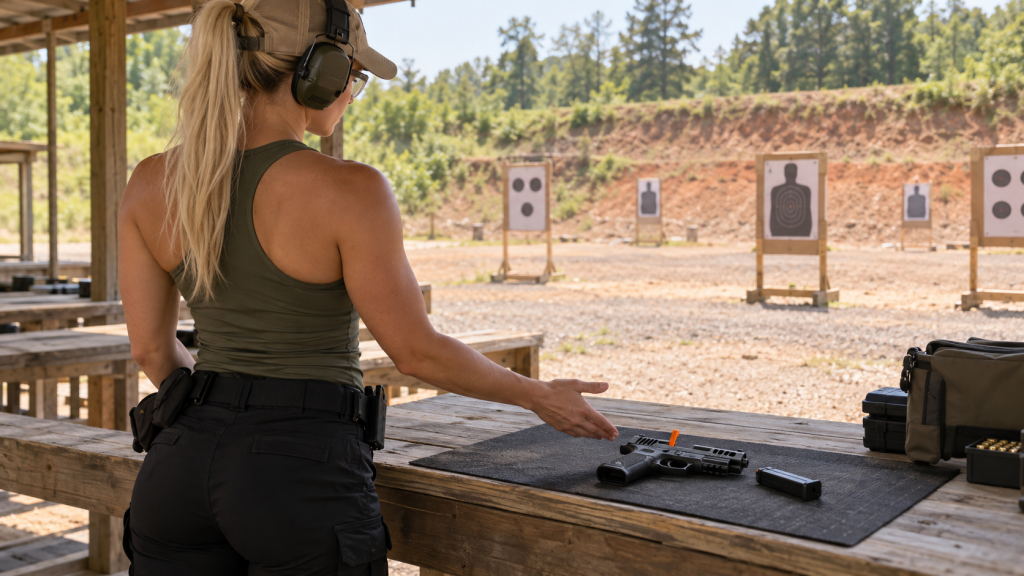
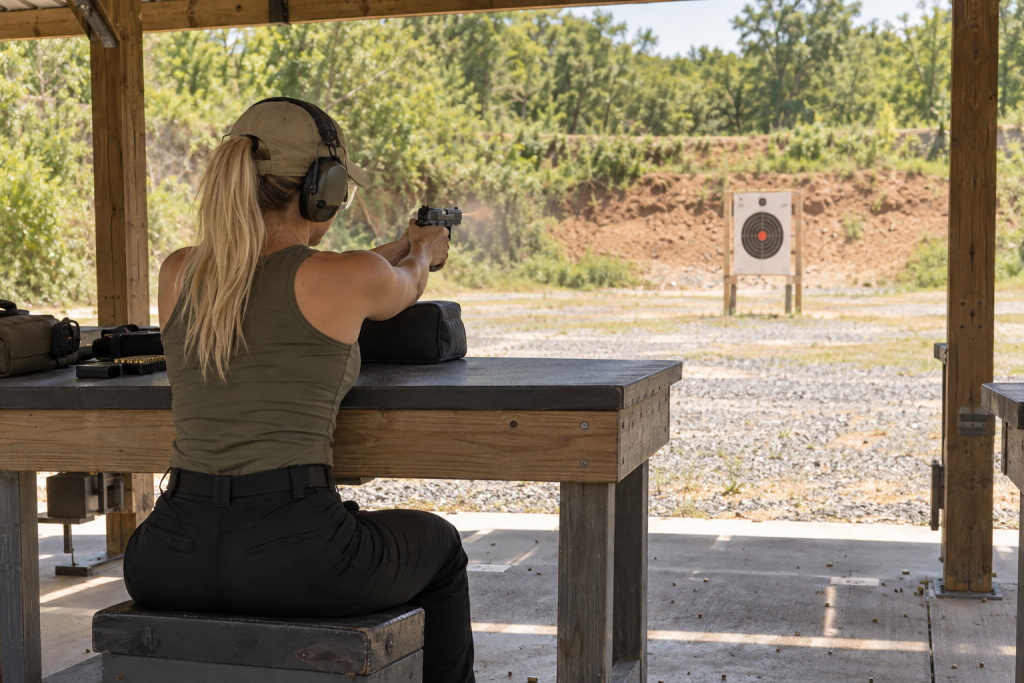
Hornady Frontier 7.62×39 ammunition is coming for 2027 with a 123-grain full-metal-jacket bullet and an unusually useful 50-round box. Naturally, we answered this announcement by hauling an AK, a military-surplus SKS and a Ruger American Ranch to the range to determine which rifle would behave like a precision instrument and which would behave like an agricultural machine that had recently learned to shoot.
The official Hornady 2027 product announcement identifies the new load as Frontier 7.62×39 123-grain FMJ, item FR421, packaged in an oriented 50-round box.
That is not a hunting bullet or a boutique defensive load. It is American-made 7.62×39 range ammunition designed for shooting paper, ringing steel and discovering which of your magazines is merely decorative.
Hornady Frontier 7.62×39 Specifications
Hornady has confirmed the following basic specifications:
- Caliber: 7.62x39mm
- Bullet weight: 123 grains
- Bullet type: Full metal jacket
- Product line: Frontier Cartridge
- Box size: 50 rounds
- Item number: FR421
- Introduction: 2027 product lineup
The 123-grain FMJ configuration is the conventional weight for general-purpose 7.62×39 ammunition. That makes the new Frontier load potentially relevant to AK-pattern rifles, SKS carbines, Ruger American Ranch rifles, CZ bolt actions, Mini Thirty rifles and AR-pattern firearms chambered for the Soviet cartridge.
The Three-Rifle 7.62×39 Range Test
Our test rifles represented three completely different interpretations of the same cartridge:
- A stamped-receiver AK with iron sights
- A military-surplus SKS with its original fixed magazine
- A Ruger American Ranch with a low-power scope
The AK arrived in a canvas case surrounded by magazines of uncertain ancestry.
The Ruger arrived clean, properly supported and looking prepared to discuss group size in decimal points.
The SKS arrived wrapped in an old blanket and smelling faintly of cosmoline, history and a basement that has contained ammunition since the Reagan administration.
On the first box, the blonde range influencer held up one of the new cartridges for the camera. The SKS owner immediately announced that commercial American ammunition was unnecessary because his rifle had successfully digested “everything since Yugoslavia.”
Nobody knew whether he meant ammunition manufactured in Yugoslavia or events occurring since the country existed. He refused to clarify.
Frontier 7.62×39 Reliability
We fired 100 rounds through each rifle for a fictional 300-round test.
The AK completed all 100 rounds without an ammunition-related malfunction. One surplus magazine produced a failure to feed, but the same magazine had previously demonstrated that it could transform any ammunition brand into a malfunction. Replacing it solved the problem.
The SKS also fired all 100 rounds. Its fixed magazine, stripper-clip guide and long operating rod remain evidence that a rifle does not need seventeen modular accessories to function.
Loading individual cartridges from Hornady’s 50-round box was slower than feeding the SKS with loaded stripper clips, but it eliminated the comedy of dropping half a clip into the gravel while pretending nothing happened.
The Ruger American Ranch fed, fired and extracted its 100 rounds without trouble. Its bolt did not feel as smooth as a polished target rifle, but it chambered the cartridges consistently.
The only object that failed completely was a folding range chair, which surrendered beneath the cameraman during the second cease-fire.
Hornady Frontier 7.62×39 Accuracy
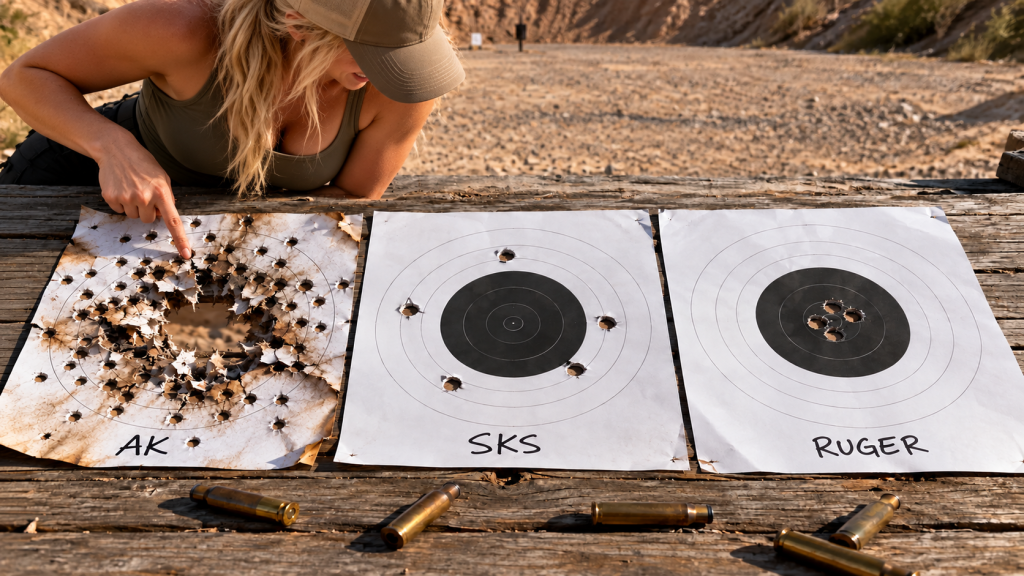
We fired five-shot groups at 100 yards from a supported bench.
AK Accuracy
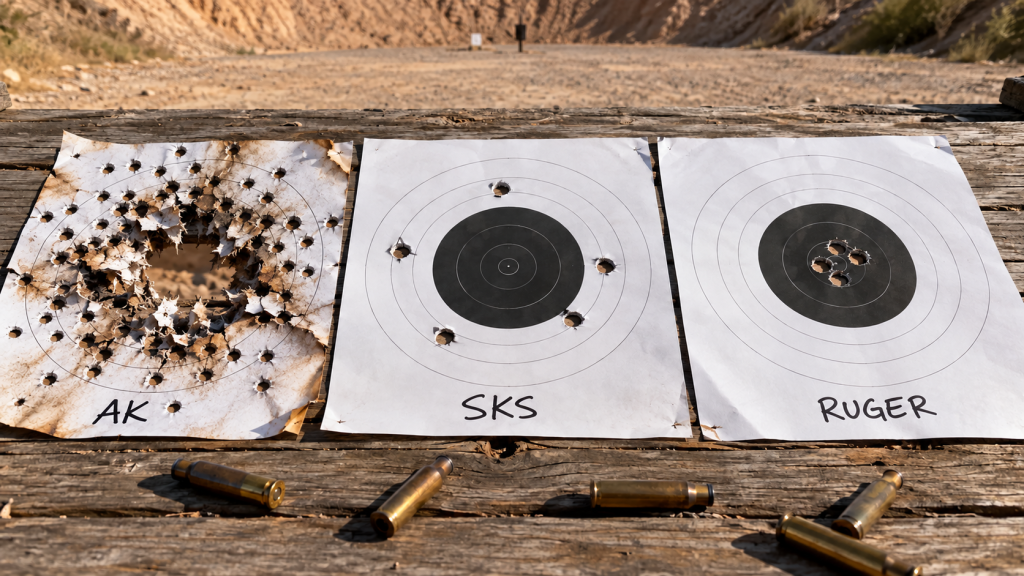
The AK averaged approximately 3.1 inches, with its best group measuring 2.6 inches.
That was respectable performance from an ordinary iron-sighted rifle. The limiting factors were the sight picture, trigger and shooter—not evidence that the cartridge is inherently inaccurate.
The first group opened vertically because I was concentrating on the camera instead of the front sight. The influencer described this as “testing under social pressure,” which is a professional way of saying I threw two shots.
SKS Accuracy
The SKS averaged 3.8 inches and produced one 3.2-inch group.
Its sights were serviceable, its trigger felt like two separate government committees reaching a compromise, and its stock was designed for somebody with shorter arms and greater confidence in communism.
Nevertheless, the rifle kept every shot comfortably on the target.
The SKS remains one of the most enjoyable military-surplus semiautomatic rifles because it is historically interesting, mechanically durable and still practical. It occupies a different world from a CMP M1 Garand, but both remind shooters that old service rifles were intended to be fired rather than converted into permanent closet decorations.
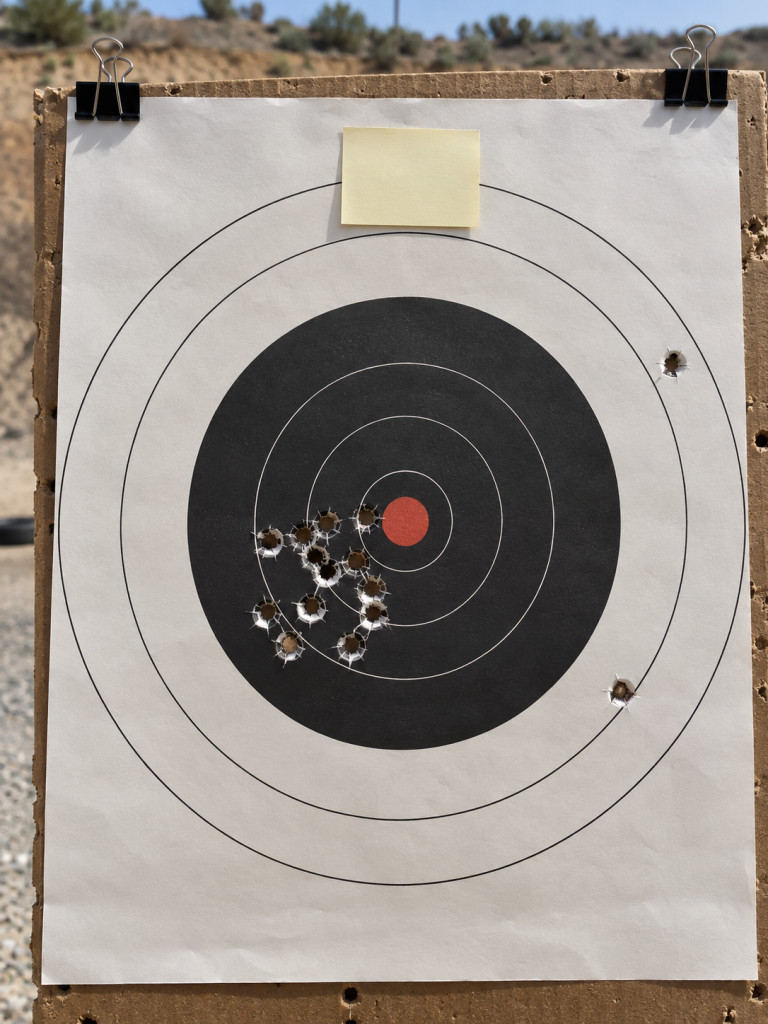
Ruger American Ranch Accuracy
The scoped Ruger averaged 1.7 inches, with a best five-shot group of 1.3 inches.
That result surprised nobody. A rigid bolt-action rifle with an optic should outshoot rack-grade military semiautomatics wearing iron sights.
The useful result was consistency. The Ruger printed round groups without unexplained flyers and made the new Frontier ammunition look considerably more precise than its range-ammunition label suggests.
The cameraman called the 1.3-inch group “basically one hole.” It was not basically one hole. It was five separate holes living in the same general neighborhood.
Recoil and Shooting Characteristics
The new Hornady 123-grain FMJ produced the familiar 7.62×39 recoil impulse: more authoritative than 5.56 NATO but substantially softer than .308 Winchester.
The AK moved more than the other rifles because of its weight distribution, stock geometry and reciprocating action. It remained controllable during rapid strings.
The SKS felt softer. Its additional length and weight turned the cartridge into a pleasant push, although its traditional stock placed the shooter differently behind the rifle.
The Ruger transmitted a sharper impulse because it lacked a semiautomatic action to absorb and redistribute movement. Recoil was still mild enough for extended shooting.
A 7.62×39 rifle is not a shoulder-fired artillery piece. Anyone dramatically staggering backward for a video thumbnail should be required to spend the afternoon shooting a steel-buttplate M1903.
Is Hornady Frontier 7.62×39 Good AK Ammunition?
Based on the day’s results, the Frontier load suited the AK well.
Its strongest potential advantage is not that it turns an AK into a precision rifle. It provides domestically produced, conventional 123-grain FMJ ammunition in a practical 50-round package.
The unresolved issue is price.
Imported steel-cased ammunition built much of the American 7.62×39 market because it was inexpensive enough to purchase by the case. If Frontier 7.62×39 reaches dealers at a substantial premium, many AK owners will reserve it for indoor ranges that prohibit magnetic ammunition or for rifles that prefer conventional commercial cartridges.
If its street price remains competitive, the combination of Hornady production and 50-round packaging could make it a serious general-purpose range option.
Is It Good SKS Ammunition?
The SKS fired it reliably and produced perfectly adequate 100-yard accuracy.
The 50-round box also divides neatly into five ten-round SKS loads, assuming nobody loses ammunition between the bench and firing line.
Owners should still inspect and maintain any military-surplus SKS before firing. Old cosmoline, damaged firing-pin channels, questionable aftermarket magazines and decades of enthusiastic amateur gunsmithing can create problems no ammunition manufacturer can solve.
The cartridge cannot repair your rifle’s previous owner.
What Is Hornady Frontier 7.62×39 For?
This load makes the most sense for:
- Recreational AK and SKS shooting
- Steel-target practice
- Carbine training
- Indoor ranges restricting certain imported ammunition
- Accuracy testing in bolt-action 7.62×39 rifles
- Shooters wanting 50-round commercial packaging
It is not the obvious choice for deer hunting. Full-metal-jacket bullets are designed primarily for target and training use rather than controlled expansion.
Hornady already offers purpose-built expanding 7.62×39 projectiles in other product lines. Use ammunition appropriate to the target and follow applicable hunting regulations.
The Final Verdict
The Hornady Frontier 7.62×39 range report produced the result we hoped for: the ammunition worked in three very different rifles and revealed their personalities without becoming the story itself.
The AK was reliable, practical and sufficiently accurate.
The SKS was slower, softer-shooting and far more charming than a rifle packed with seventy years of cosmoline has any right to be.
The Ruger American Ranch demonstrated that 7.62×39 can produce respectable groups when fired through a scoped bolt action instead of a rifle whose rear sight begins somewhere near the shooter’s mailbox.
Hornady’s new Frontier load will ultimately succeed or fail on availability and street price. AK and SKS owners consume ammunition in quantities normally associated with government contracts and poor financial planning.
If Hornady can place FR421 on shelves at a competitive price, the new 50-round Frontier box could become a useful American-made option for AKs, SKSs and modern bolt-action rifles.
The Ruger won the accuracy test. The AK won the rapid-fire test. The SKS won the rifle-everyone-wanted-to-shoot-again test.
The folding chair was declared a total loss.
GarandThumb.com was established on May 4, 2012, to document my experiences trying to become a better marksman.