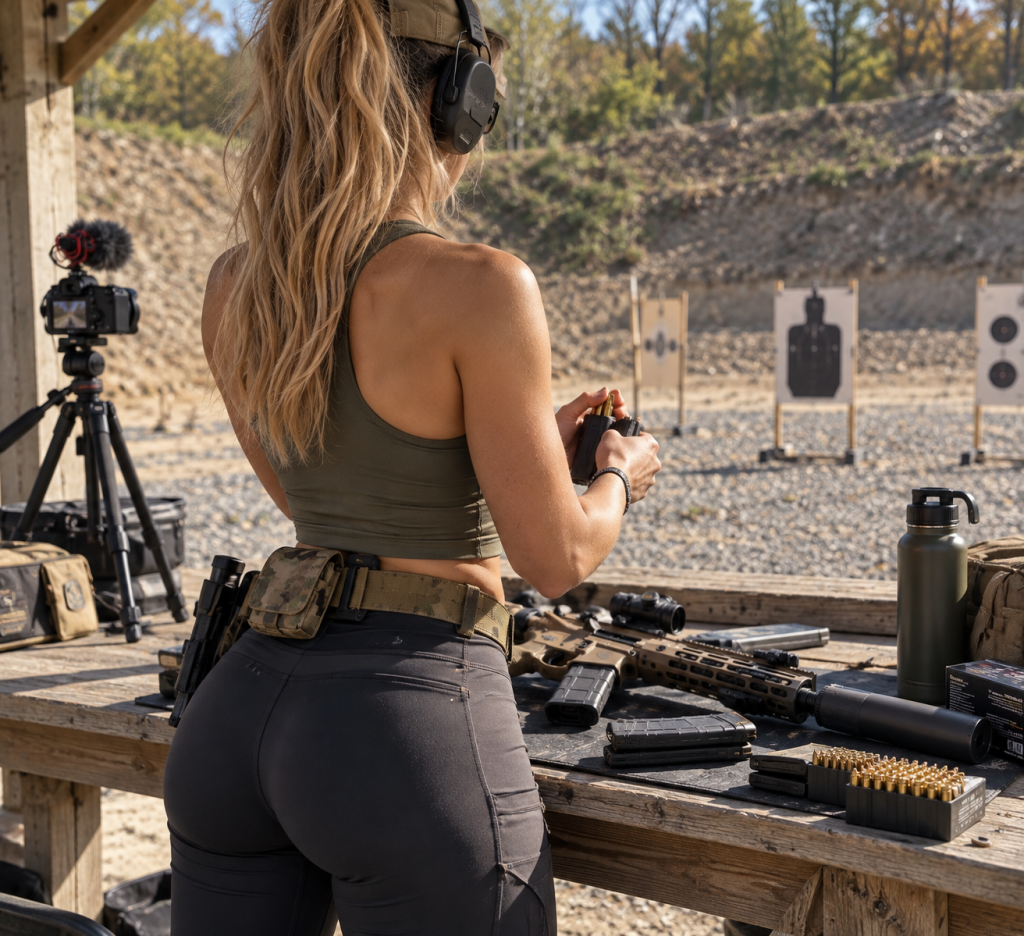
The first thing I noticed about the SIG MCX-LTAW wasn’t the suppressor. It was the woman carrying it.
She had the usual range-influencer arrangement: fitted range clothes, plate carrier, electronic hearing protection, and enough expensive equipment to suggest that somebody was either sponsoring the afternoon or making very poor decisions with a credit card.
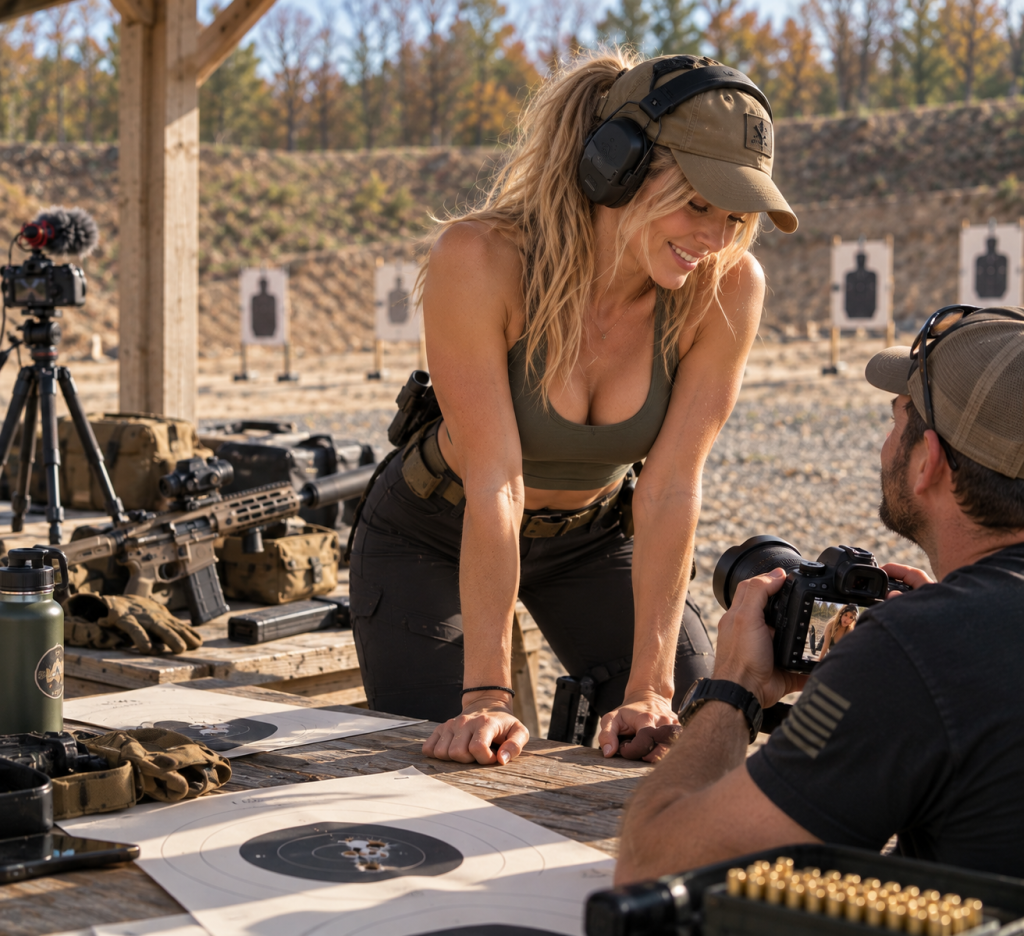
She was setting up a camera behind the firing line when I arrived. On the bench was a compact SIG MCX, several boxes of .300 Blackout, a couple of magazines, and a suppressor that looked nearly as long as the barrel.
I’d come to shoot my regular AR. She’d come to make content. Neither of us had any particular reason to care what the other was doing until I noticed the rifle.
It was an MCX-LTAW.
I’d been curious about one for a while.
The rifle
The MCX-LTAW is SIG’s compact .300 Blackout platform, built around a short-stroke piston system rather than the conventional direct-impingement arrangement found on most AR-15s.
The 6.75-inch barrel is the defining feature. That’s short even by SBR standards, and the folding stock makes the package remarkably compact when stored.
This particular setup had a red-dot optic, a suppressor, and a sling. Nothing especially unusual, although the total price of everything on the bench would have paid for a decent used motorcycle.
I picked it up after asking permission.
It was heavier than expected.
Not excessively heavy, but heavier than its dimensions suggested. The piston assembly, suppressor, and relatively substantial handguard give the rifle a dense feeling. It doesn’t have the hollow, almost insubstantial character of some lightweight AR builds.
The trigger was good. The controls were familiar. The folding stock locked up firmly, and the overall construction felt like what you’d expect from an expensive SIG.
Whether any of that justified the price was another matter.

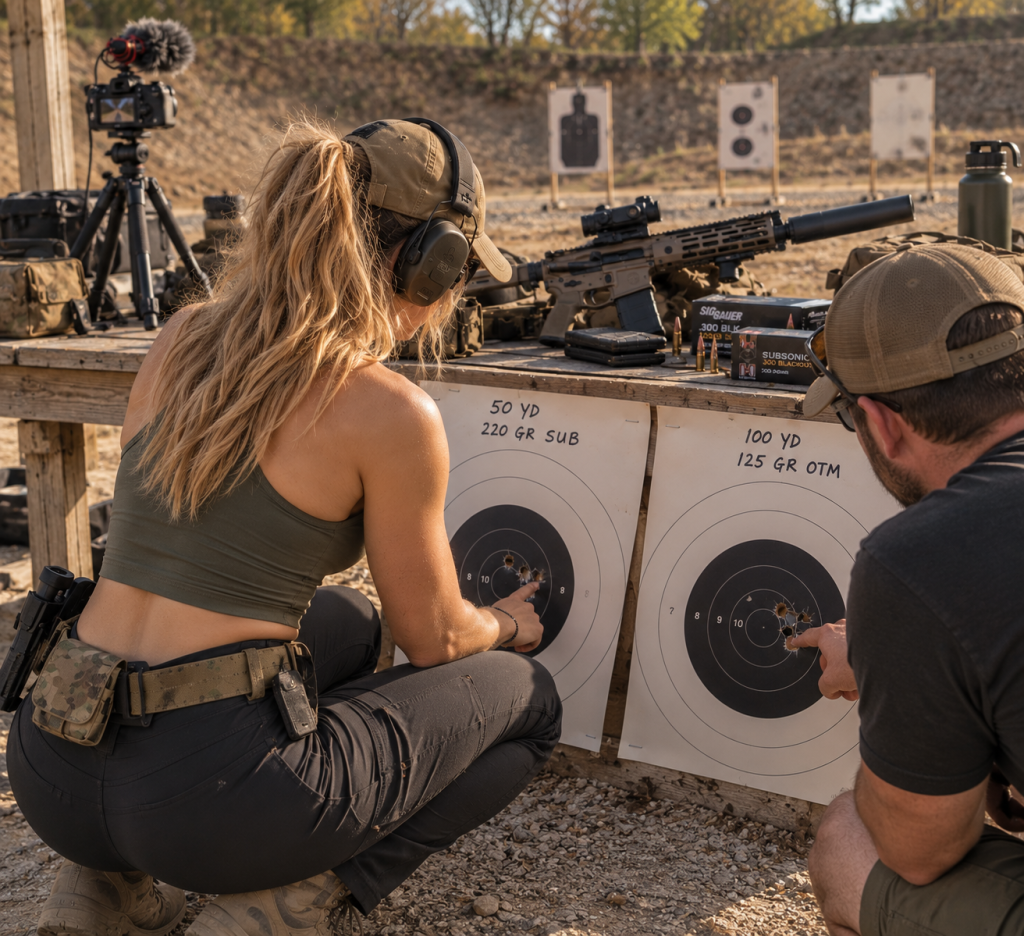
Starting at 50 yards
The first ammunition was 220-grain subsonic .300 Blackout.
The rifle had already been zeroed, so there wasn’t much to do beyond hanging a fresh target and shooting.
She fired the first five-round group from a supported position. I watched through a spotting scope while she checked the camera between strings.
The first group measured about 1.4 inches.
Not bad.
The second opened slightly, with four shots reasonably close and one wandering out toward the edge of the black.
She blamed herself rather than the ammunition, which was refreshing. I’ve watched grown men spend half an hour explaining how a perfectly good rifle was responsible for a bad shot.
I fired a magazine afterward.
The trigger was predictable, the recoil was mild, and the red dot settled back onto the target without much effort.
The suppressor made the biggest difference to the overall experience. There was still plenty of mechanical noise, and hearing protection stayed on, but the usual sharp muzzle report was substantially reduced.
It was pleasant enough that I understood the appeal immediately.
That didn’t mean I was ready to spend the money.
The 100-yard target
We switched to 125-grain supersonic ammunition for the next portion of the session.
The change in sound was obvious. The supersonic crack returned, although the suppressor continued to moderate the muzzle blast.
The first group at 100 yards measured just under three inches. The next was somewhat tighter.
For a compact rifle wearing a red dot, the results were reasonable. Nobody was going to confuse the target with a high-power match rifle’s slow-fire string, but there was nothing particularly embarrassing about it either.
The groups also exposed the difference between a firearm that is mechanically capable of good accuracy and one that’s easy to shoot precisely.
The MCX’s short barrel isn’t automatically inaccurate. But a relatively coarse aiming reference, a compact shooting position, and ordinary factory ammunition aren’t a recipe for tiny groups.
I would have liked to try it with a magnified optic. That would have told us considerably more about the rifle’s actual accuracy potential.
She wasn’t interested in changing the setup.
Fair enough. It was her rifle.
The targets
The 50-yard target was the better of the two. The subsonic ammunition produced a fairly consistent cluster, and the rifle was easy to keep on target during deliberate shooting.
At 100 yards, the groups were larger but still entirely usable for the kind of shooting this configuration was intended to accommodate.
The results weren’t spectacular, and that was probably the most interesting part of the afternoon.
Expensive rifles don’t automatically produce impressive targets.
They may have better triggers, more sophisticated operating systems, or features that make them easier to handle. None of those things eliminates shooter error or turns ordinary ammunition into match ammunition.
Reliability and handling
Between us, the rifle fired 120 rounds.
There was one failure to feed early in the session with subsonic ammunition. After clearing it, the rifle ran without another stoppage.
That isn’t enough ammunition to draw sweeping conclusions about reliability. It is enough to establish that nothing obviously disastrous happened during the afternoon.
The magazines seated positively, the controls worked as expected, and the bolt locked back consistently during the remainder of the session.
The short configuration was particularly comfortable when shooting standing. The rifle was easy to bring onto target, although the suppressor made it slightly more front-heavy than its appearance suggested.
After several strings, the handguard became warm enough to notice. Nothing unusual there.
I was more interested in the way the rifle balanced.
With the stock extended, it felt compact without being cramped. The grip angle was familiar, and the optic was positioned at a comfortable height.
The folding stock was also genuinely useful, although that’s more of a storage and transportation advantage than something that changes how the rifle shoots.
The influencer problem
At some point she started filming a close-up of the rifle on the bench.
I asked whether she was going to include the malfunction.
She looked at me for a moment.
“Probably.”
That was a better answer than I expected.
There’s a peculiar economy surrounding modern firearms content. A rifle can be perfectly ordinary on the range and somehow become revolutionary once the video has enough slow-motion footage, dramatic music, and attractive people wearing tactical equipment.
The MCX doesn’t need that treatment.
It’s an interesting firearm on its own merits.
The engineering is worth discussing. So are the compromises. It would be considerably more useful to hear about the rifle’s weight, ammunition preferences, maintenance requirements, and reliability over several thousand rounds than to watch somebody fire three magazines into a dirt berm while the camera circles them.
To her credit, she actually kept the targets.
I suspect that puts her ahead of a fair percentage of the internet.
Is the MCX-LTAW worth buying?
That depends entirely on what you want from it.
For somebody who specifically wants a compact, suppressed .300 Blackout rifle, the MCX-LTAW makes a compelling case. The short-stroke piston system, folding stock, compact dimensions, and factory suppressor options offer something meaningfully different from a conventional AR.
For somebody who spends most of their time shooting paper at 100 or 200 yards, it’s considerably harder to justify.
A good AR-15 with a decent barrel and trigger can shoot very well for substantially less money.
And if precision is the priority, there are better ways to spend several thousand dollars.
The MCX’s advantages are primarily in its configuration and handling rather than its ability to put five bullets through the same hole.
That’s not criticism. It’s simply understanding what the rifle is.
Final thoughts
I liked the MCX-LTAW more than I expected.
The suppressed shooting experience was enjoyable, the controls were excellent, and the compact package felt well thought out. Accuracy was adequate, and the single malfunction wasn’t enough to substantially change my opinion.
I still wouldn’t sell a good service rifle to buy one.
Then again, I wouldn’t sell a good service rifle to buy much of anything.
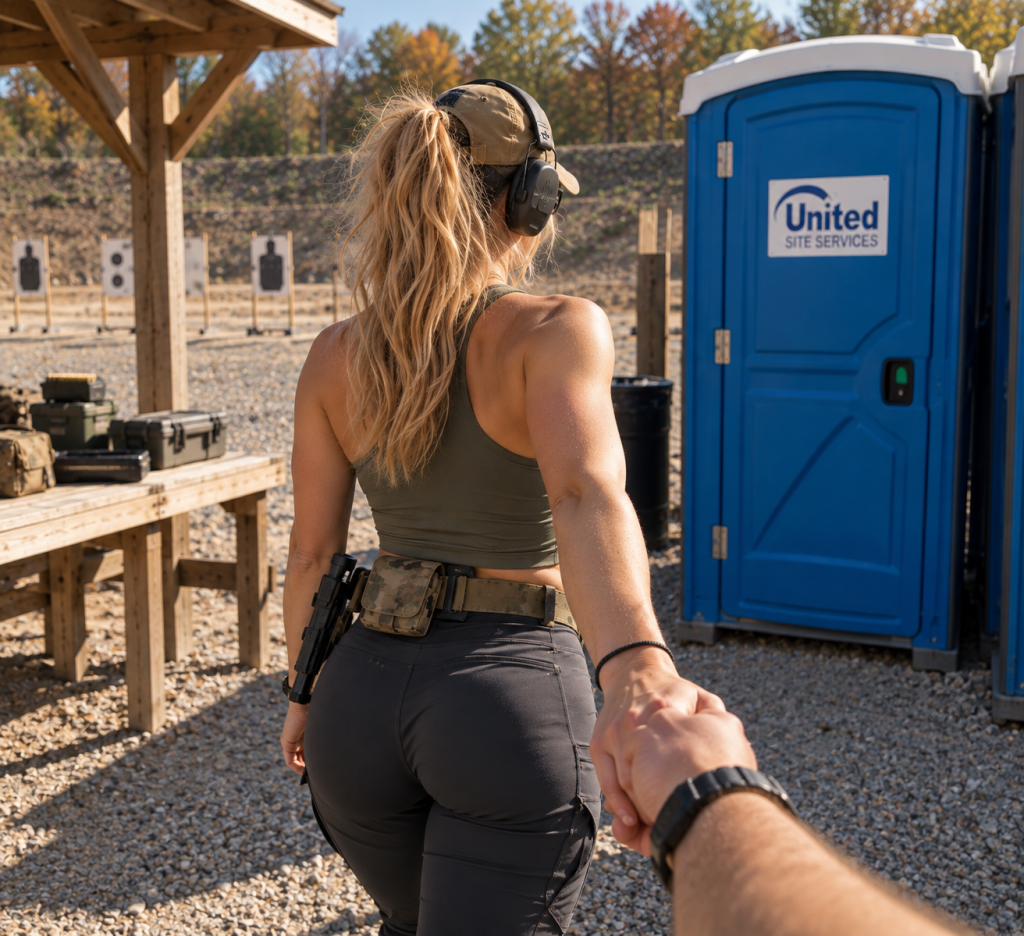
The woman packed up her equipment, checked the footage on her phone, and asked what I thought. Then took me to the porta pot to show me how she can clean a barrel
I told her it was a good rifle, but I wasn’t convinced it was worth what SIG wanted for it.
She shrugged.

“That’s what everybody says until they shoot it.”
I couldn’t entirely disagree.
I went back to my bench and finished shooting the AR I’d brought. Twenty-inch barrel, iron sights, and absolutely nothing new or exciting about it.
The MCX had been more interesting.
My targets were better.
I went home satisfied with that arrangement.
SEO title: SIG MCX-LTAW Suppressor SBR Combo Review | .300 Blackout Range Report
Meta description: SIG MCX-LTAW range review covering the suppressed SBR combo, .300 Blackout accuracy, 220-grain subsonic ammunition, 100-yard groups, handling, and reliability.
Suggested slug: sig-mcx-ltaw-suppressor-sbr-combo-range-review
Tags: SIG MCX-LTAW, MCX-LTAW pistol, MCX suppressor SBR combo, SIG MCX review, 300 Blackout, 300 BLK subsonic, suppressed rifle, SBR, rifle range report, AR-15 comparison.