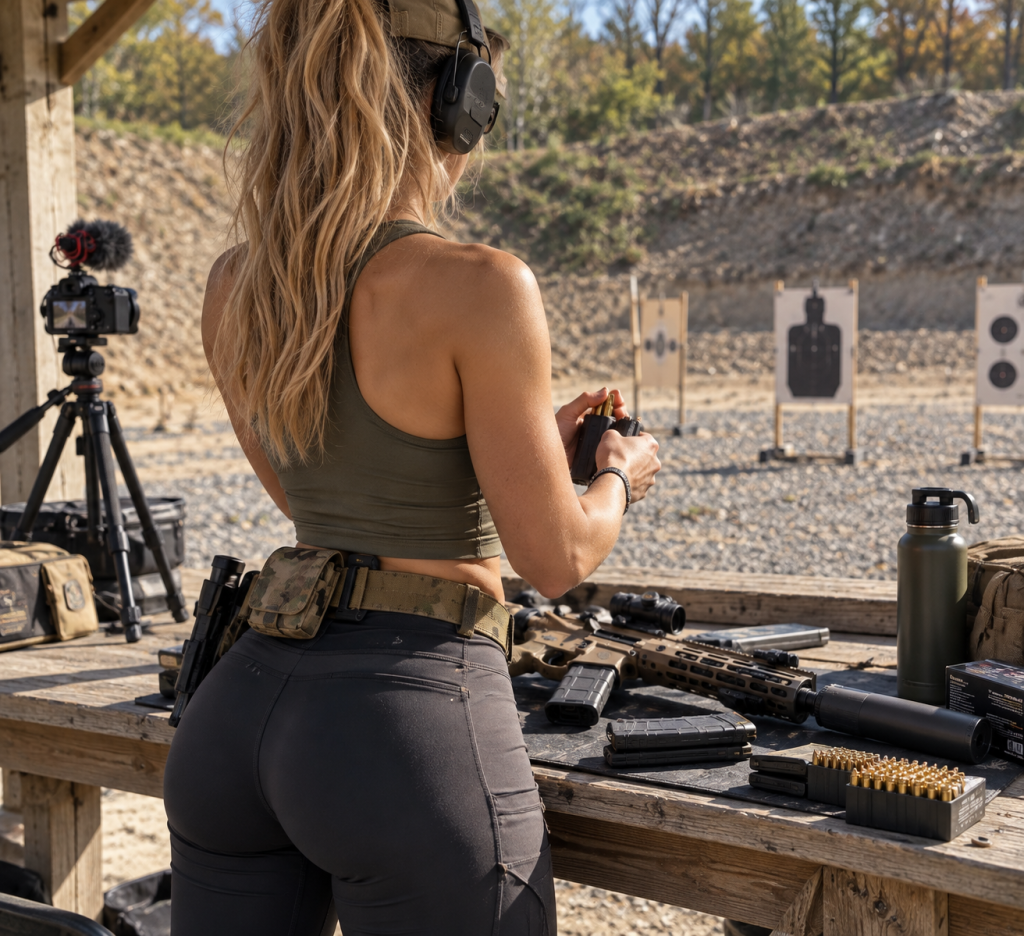
SIG MCX-LTAW Suppressor SBR Combo | Range Report: Short Barrel, Big Expectations

The first thing I noticed about the SIG MCX-LTAW wasn’t the suppressor. It was the woman carrying it.

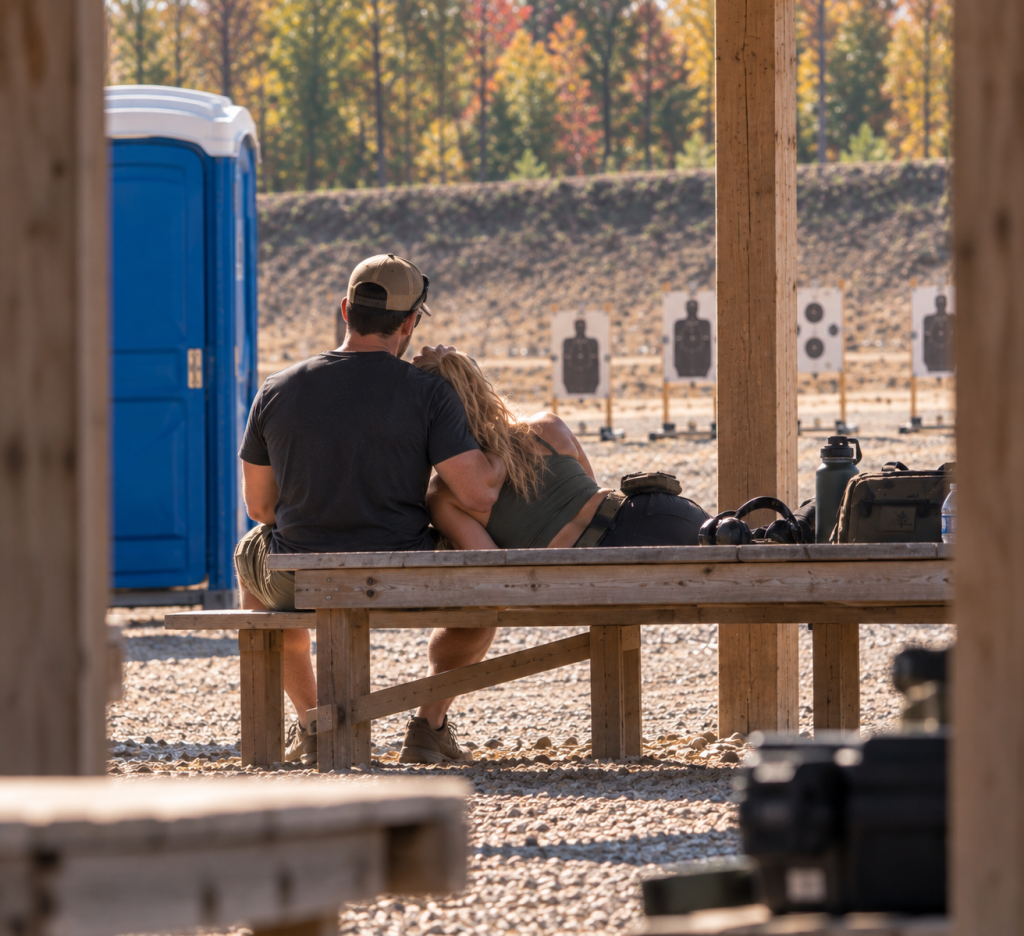
She had the usual range-influencer arrangement: fitted range clothes, plate carrier, electronic hearing protection, and enough expensive equipment to suggest that somebody was either sponsoring the afternoon or making very poor decisions with a credit card.
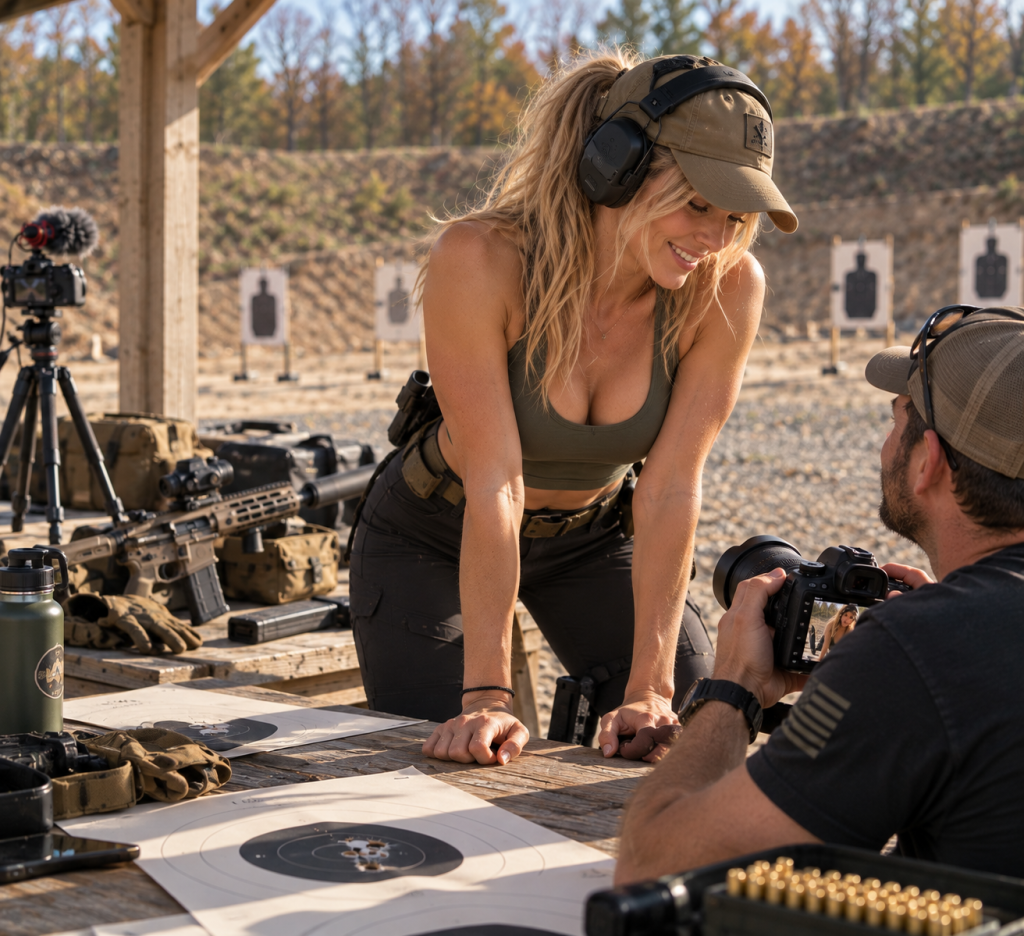
She was setting up a camera behind the firing line when I arrived. On the bench was a compact SIG MCX, several boxes of .300 Blackout, a couple of magazines, and a suppressor that looked nearly as long as the barrel.

I’d come to shoot my regular AR. She’d come to make content. Neither of us had any particular reason to care what the other was doing until I noticed the rifle.

It was an MCX-LTAW.

I’d been curious about one for a while.
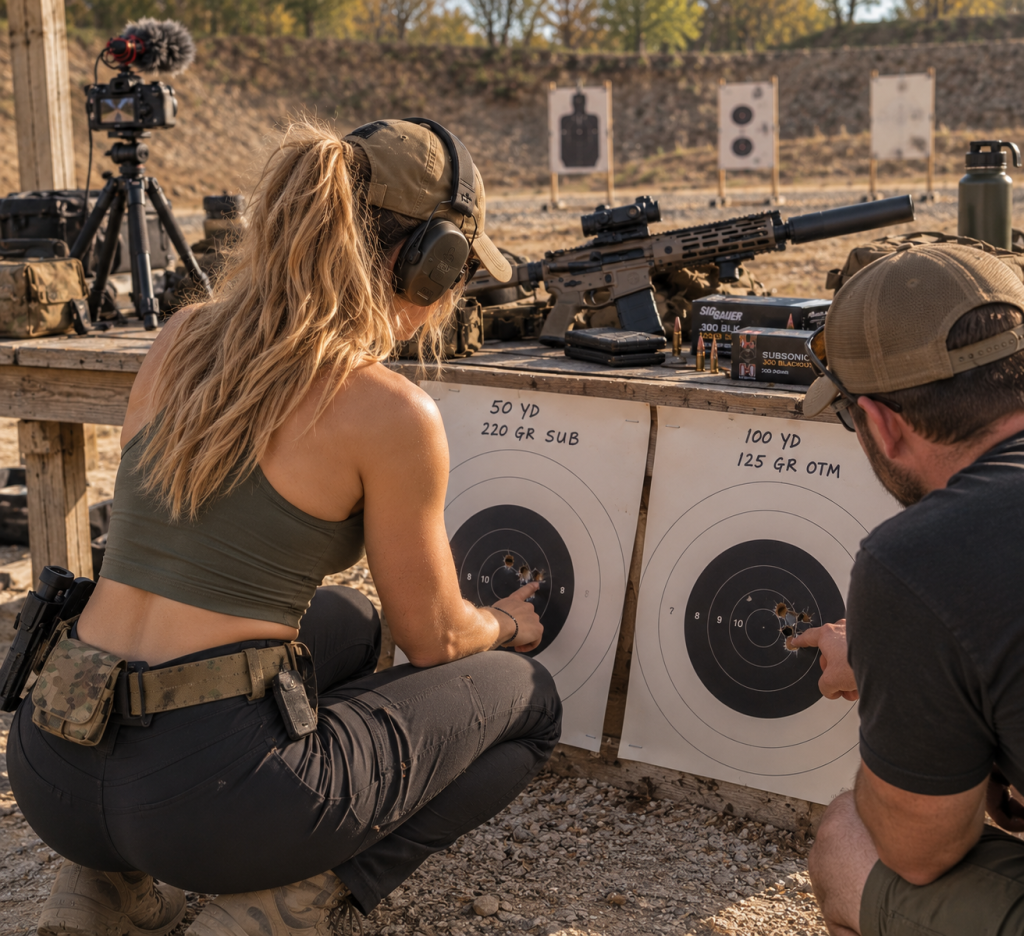
The rifle

The MCX-LTAW is SIG’s compact .300 Blackout platform, built around a short-stroke piston system rather than the conventional direct-impingement arrangement found on most AR-15s.

The 6.75-inch barrel is the defining feature. That’s short even by SBR standards, and the folding stock makes the package remarkably compact when stored.

This particular setup had a red-dot optic, a suppressor, and a sling. Nothing especially unusual, although the total price of everything on the bench would have paid for a decent used motorcycle.

I picked it up after asking permission.

It was heavier than expected.

Not excessively heavy, but heavier than its dimensions suggested. The piston assembly, suppressor, and relatively substantial handguard give the rifle a dense feeling. It doesn’t have the hollow, almost insubstantial character of some lightweight AR builds.

The trigger was good. The controls were familiar. The folding stock locked up firmly, and the overall construction felt like what you’d expect from an expensive SIG.

Whether any of that justified the price was another matter.

Starting at 50 yards

The first ammunition was 220-grain subsonic .300 Blackout.

The rifle had already been zeroed, so there wasn’t much to do beyond hanging a fresh target and shooting.

She fired the first five-round group from a supported position. I watched through a spotting scope while she checked the camera between strings.

The first group measured about 1.4 inches.

Not bad.

The second opened slightly, with four shots reasonably close and one wandering out toward the edge of the black.

She blamed herself rather than the ammunition, which was refreshing. I’ve watched grown men spend half an hour explaining how a perfectly good rifle was responsible for a bad shot.

I fired a magazine afterward.

The trigger was predictable, the recoil was mild, and the red dot settled back onto the target without much effort.

The suppressor made the biggest difference to the overall experience. There was still plenty of mechanical noise, and hearing protection stayed on, but the usual sharp muzzle report was substantially reduced.

It was pleasant enough that I understood the appeal immediately.

That didn’t mean I was ready to spend the money.
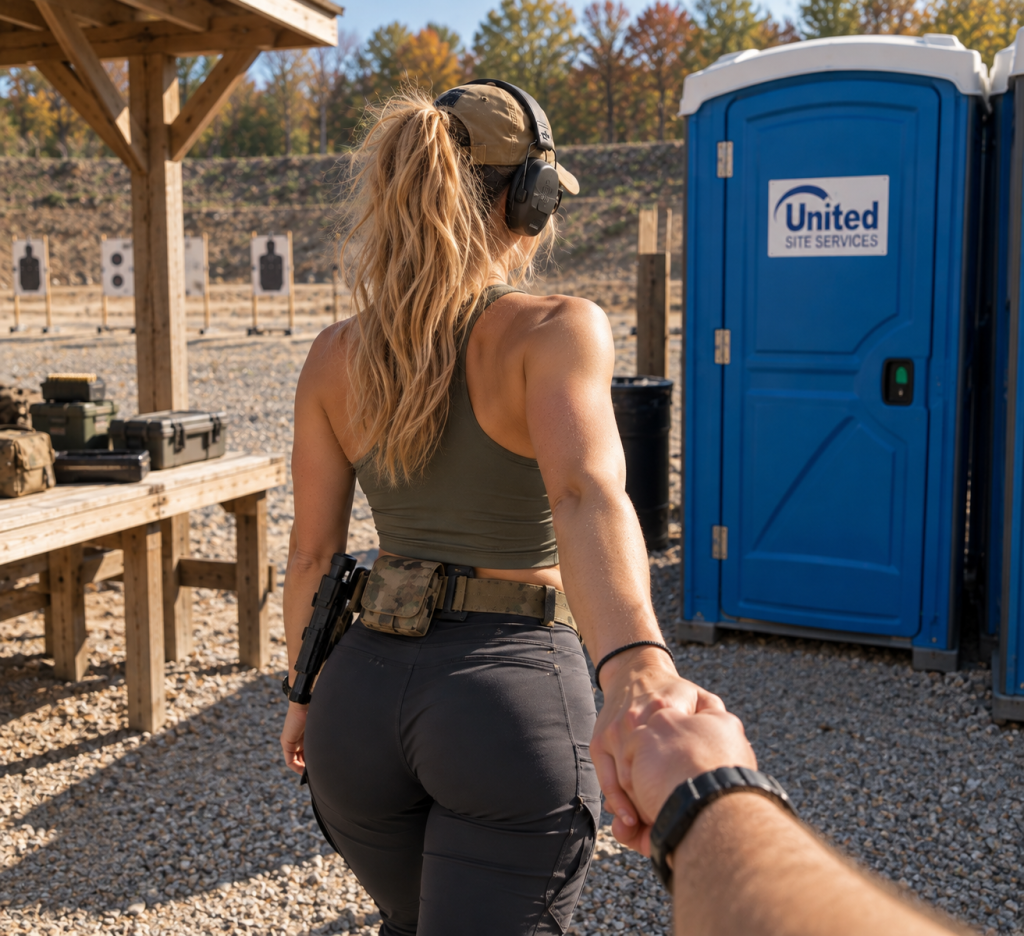
The 100-yard target

We switched to 125-grain supersonic ammunition for the next portion of the session.

The change in sound was obvious. The supersonic crack returned, although the suppressor continued to moderate the muzzle blast.

The first group at 100 yards measured just under three inches. The next was somewhat tighter.

For a compact rifle wearing a red dot, the results were reasonable. Nobody was going to confuse the target with a high-power match rifle’s slow-fire string, but there was nothing particularly embarrassing about it either.

The groups also exposed the difference between a firearm that is mechanically capable of good accuracy and one that’s easy to shoot precisely.

The MCX’s short barrel isn’t automatically inaccurate. But a relatively coarse aiming reference, a compact shooting position, and ordinary factory ammunition aren’t a recipe for tiny groups.

I would have liked to try it with a magnified optic. That would have told us considerably more about the rifle’s actual accuracy potential.

She wasn’t interested in changing the setup.

Fair enough. It was her rifle.

The targets

The 50-yard target was the better of the two. The subsonic ammunition produced a fairly consistent cluster, and the rifle was easy to keep on target during deliberate shooting.

At 100 yards, the groups were larger but still entirely usable for the kind of shooting this configuration was intended to accommodate.

The results weren’t spectacular, and that was probably the most interesting part of the afternoon.

Expensive rifles don’t automatically produce impressive targets.

They may have better triggers, more sophisticated operating systems, or features that make them easier to handle. None of those things eliminates shooter error or turns ordinary ammunition into match ammunition.
Reliability and handling

Between us, the rifle fired 120 rounds.

There was one failure to feed early in the session with subsonic ammunition. After clearing it, the rifle ran without another stoppage.

That isn’t enough ammunition to draw sweeping conclusions about reliability. It is enough to establish that nothing obviously disastrous happened during the afternoon.

The magazines seated positively, the controls worked as expected, and the bolt locked back consistently during the remainder of the session.

The short configuration was particularly comfortable when shooting standing. The rifle was easy to bring onto target, although the suppressor made it slightly more front-heavy than its appearance suggested.

After several strings, the handguard became warm enough to notice. Nothing unusual there.

I was more interested in the way the rifle balanced.

With the stock extended, it felt compact without being cramped. The grip angle was familiar, and the optic was positioned at a comfortable height.

The folding stock was also genuinely useful, although that’s more of a storage and transportation advantage than something that changes how the rifle shoots.

The influencer problem

At some point she started filming a close-up of the rifle on the bench.

I asked whether she was going to include the malfunction.

She looked at me for a moment.

“Probably.”

That was a better answer than I expected.

There’s a peculiar economy surrounding modern firearms content. A rifle can be perfectly ordinary on the range and somehow become revolutionary once the video has enough slow-motion footage, dramatic music, and attractive people wearing tactical equipment.

The MCX doesn’t need that treatment.

It’s an interesting firearm on its own merits.

The engineering is worth discussing. So are the compromises. It would be considerably more useful to hear about the rifle’s weight, ammunition preferences, maintenance requirements, and reliability over several thousand rounds than to watch somebody fire three magazines into a dirt berm while the camera circles them.

To her credit, she actually kept the targets.

I suspect that puts her ahead of a fair percentage of the internet.

Is the MCX-LTAW worth buying?

That depends entirely on what you want from it.

For somebody who specifically wants a compact, suppressed .300 Blackout rifle, the MCX-LTAW makes a compelling case. The short-stroke piston system, folding stock, compact dimensions, and factory suppressor options offer something meaningfully different from a conventional AR.

For somebody who spends most of their time shooting paper at 100 or 200 yards, it’s considerably harder to justify.

A good AR-15 with a decent barrel and trigger can shoot very well for substantially less money.

And if precision is the priority, there are better ways to spend several thousand dollars.

The MCX’s advantages are primarily in its configuration and handling rather than its ability to put five bullets through the same hole.

That’s not criticism. It’s simply understanding what the rifle is.

Final thoughts

I liked the MCX-LTAW more than I expected.

The suppressed shooting experience was enjoyable, the controls were excellent, and the compact package felt well thought out. Accuracy was adequate, and the single malfunction wasn’t enough to substantially change my opinion.

I still wouldn’t sell a good service rifle to buy one.

Then again, I wouldn’t sell a good service rifle to buy much of anything.

The woman packed up her equipment, checked the footage on her phone, and asked what I thought. Then took me to the porta pot to show me how she can clean a barrel

I told her it was a good rifle, but I wasn’t convinced it was worth what SIG wanted for it.

She shrugged.

“That’s what everybody says until they shoot it.”

I couldn’t entirely disagree.

I went back to my bench and finished shooting the AR I’d brought. Twenty-inch barrel, iron sights, and absolutely nothing new or exciting about it.

The MCX had been more interesting.

My targets were better.

I went home satisfied with that arrangement.

SEO title: SIG MCX-LTAW Suppressor SBR Combo Review | .300 Blackout Range Report

Meta description: SIG MCX-LTAW range review covering the suppressed SBR combo, .300 Blackout accuracy, 220-grain subsonic ammunition, 100-yard groups, handling, and reliability.

Suggested slug: sig-mcx-ltaw-suppressor-sbr-combo-range-review

Tags: SIG MCX-LTAW, MCX-LTAW pistol, MCX suppressor SBR combo, SIG MCX review, 300 Blackout, 300 BLK subsonic, suppressed rifle, SBR, rifle range report, AR-15 comparison.

Posted in XTC

US Palm Storm CAT4 Review | New AR-15 and EOS Suppressors Explained

The US Palm Storm CAT4 review question became considerably more relevant on October 8, 2026, when US Palm announced that the complete Storm CAT4 rifle, 11.5-inch CAT4 pistol and four-model EOS suppressor family were commercially available.

US Palm built its reputation around AK magazines, grips and equipment. Entering the crowded AR-15 rifle and suppressor markets is a major expansion—and the company did not choose the bargain-bin end of either category.

The 16-inch Storm CAT4 rifle and 11.5-inch Storm CAT4 pistol each carry a $1,399.99 MSRP. The EOS-556, EOS-30 and EOS-AK suppressors cost $899.99, while the lightweight EOS-30Ti costs $999.99.

This is not a hands-on firing report. I have not personally tested the CAT4’s reliability, accuracy or suppressor performance, so I will not manufacture a round count or imaginary group size. This review examines the verified specifications, design, price, suppressor compatibility, likely advantages and potential US Palm Storm CAT4 problems.

US Palm Storm CAT4 Specifications

According to the official US Palm Storm CAT4 product page⁠, the rifle is a direct-impingement, 5.56 NATO AR-15 with the following specifications:

  • 16-inch cold-hammer-forged 4150 chrome-moly barrel
  • 1:7-inch rifling twist
  • 7075-T6 aluminum upper and lower receivers
  • Type III hardcoat-anodized finish
  • Seven-sided M-LOK Mono-Loc handguard
  • Full-length Picatinny optics rail
  • Fully ambidextrous controls
  • Ambidextrous 45-degree safety
  • Ambidextrous bolt catch and release
  • Ambidextrous magazine release
  • Ambidextrous charging handle
  • Flared magazine well
  • Hiperfire EDT Designated Marksman trigger
  • US Palm reduced-angle pistol grip
  • Magpul DT Carbine stock
  • Hurricane hybrid flash hider and compensator
  • 30-round magazine capacity
  • Seven-pound unloaded weight
  • 7.8-pound published loaded weight
  • 33.5-inch collapsed length
  • 36.8-inch extended length
  • $1,399.99 MSRP

A seven-pound AR-15 is neither exceptionally light nor unnecessarily heavy. It lands in sensible general-purpose carbine territory before adding an optic, sling, weapon light and suppressor.

The 1:7 twist should accommodate the common range of 5.56 NATO ammunition, including heavier 69-, 75- and 77-grain projectiles. Actual accuracy will depend on ammunition, barrel consistency, optic, environmental conditions and the shooter. Cold-hammer forging sounds impressive in an advertisement, but a target ultimately matters more than a manufacturing buzzword.

What Makes the Storm CAT4 Different?

The modern AR-15 market contains rifles at almost every imaginable price. A basic direct-impingement rifle can cost less than $500, while premium duty carbines easily exceed $2,000.

At $1,399.99, the Storm CAT4 must offer more than a logo and aggressive styling.

Its most distinctive feature is the US Palm Mono-Loc handguard system. The handguard uses a rear-locking interface keyed into the upper receiver. US Palm says this construction reduces rail movement and helps retain the alignment of lasers and other aiming equipment.

That claim is mechanically plausible. Rail rigidity matters when an infrared laser, visible laser, front sight or other aiming device is attached to the handguard. It matters considerably less when the rail holds nothing but a sling attachment and a flashlight.

Independent testing should determine how the CAT4 Mono-Loc handguard compares with established anti-rotation and semi-monolithic AR-15 rail systems after impact, heat and repeated removal.

The fully ambidextrous lower is more immediately useful. A right-side bolt catch and release can simplify reloads and malfunction clearance for a right-handed shooter, while left-handed owners receive proper access to the magazine release, safety and bolt controls.

The Hiperfire EDT Designated Marksman trigger is also a meaningful factory upgrade over a gritty military-style trigger. Guns & Ammo measured the trigger in its sample at three pounds, four ounces, although pull weight can vary between individual rifles.

Storm CAT4 Rifle Versus CAT4 Pistol

The US Palm Storm CAT4 pistol⁠ retains the principal rifle features but substitutes an 11.5-inch barrel and pistol brace.

Its published specifications include:

  • 11.5-inch 5.56 NATO barrel
  • 1:7 twist
  • Six-pound unloaded weight
  • 29-inch collapsed length
  • 32.3-inch extended length
  • Hiperfire EDT trigger
  • Fully ambidextrous controls
  • Mono-Loc M-LOK handguard
  • Hurricane muzzle device
  • $1,399.99 MSRP

The 16-inch CAT4 rifle avoids the federal barrel-length complications associated with a short-barreled rifle and provides greater velocity. It is the straightforward choice for a general-purpose AR-15, training rifle, home-defense carbine or property rifle.

The 11.5-inch CAT4 pistol is shorter and easier to maneuver, especially after attaching a suppressor. Its disadvantages include increased blast, reduced velocity and the necessity of understanding current federal, state and local rules governing pistol braces, short-barreled rifles and firearm configurations.

Government classifications can change faster than the mechanical reality of the firearm. Owners remain responsible for checking the law before replacing braces, stocks, barrels or other regulated components.

US Palm EOS-556 Suppressor

The US Palm EOS-556 suppressor is the obvious companion for either CAT4.

US Palm describes the EOS-556 as a short, low-back-pressure suppressor optimized for gas-operated 5.56 rifles. Its official specifications include:

  • 3D-printed 718 Inconel construction
  • 12.5-ounce weight
  • Low-back-pressure internal design
  • Integrated flash hider
  • HUB-compatible rear interface
  • Included titanium 1/2×28 direct-thread mount
  • Full-auto rating
  • $899.99 MSRP

US Palm also says the EOS-556 passed a SOCOM durability stress test. That is a manufacturer performance claim, not evidence that the suppressor received a military contract or formal adoption.

The low-back-pressure design is particularly relevant on a direct-impingement AR-15. Conventional restrictive suppressors can increase bolt velocity, cyclic speed, fouling and gas directed toward the shooter. A properly designed reduced-back-pressure suppressor can mitigate those effects.

It cannot repeal physics. Attaching any suppressor adds weight, length and heat while changing the firearm’s gas behavior. Buyers should still evaluate ejection pattern, reliability, ammunition, buffer weight and gas exposure.

The EOS-556’s HUB compatibility is valuable because it provides access to a broad mounting ecosystem instead of permanently locking the owner into one proprietary muzzle device. The included direct-thread mount is the lightest and simplest configuration, while compatible quick-detach systems may provide faster movement between hosts at the cost of additional weight and length.

US Palm EOS Suppressor Comparison

US Palm’s four EOS suppressors serve different firearms rather than merely offering four cosmetic variations.

EOS-556

The EOS-556 is the dedicated 5.56 option. It weighs 12.5 ounces, uses 718 Inconel and includes a 1/2×28 HUB direct-thread mount. It is the logical choice for a Storm CAT4, conventional AR-15 or 5.56 short-barreled rifle.

EOS-30

The EOS-30 suppressor is a general-purpose .30-caliber model intended for 7.62 gas guns. It weighs 14.7 ounces, uses 3D-printed 718 Inconel and includes a titanium 5/8×24 direct-thread mount. Its $899.99 MSRP matches the EOS-556.

The EOS-30 provides greater caliber flexibility for .308 Winchester, 7.62 NATO and compatible smaller cartridges, although a dedicated 5.56 suppressor may offer better size, weight, flash and sound characteristics on a 5.56 rifle.

EOS-30Ti

The EOS-30Ti suppressor is optimized for .300 Blackout semiautomatic rifles and hunting firearms. Its 3D-printed titanium construction reduces weight to 10.8 ounces. It is HUB compatible, includes a 5/8×24 titanium direct-thread mount and costs $999.99.

That weight is attractive on a hunting rifle or .300 Blackout carbine. Titanium generally deserves more conservative heat management than a hard-use Inconel suppressor, so the EOS-30Ti should not automatically be treated as the lightweight substitute for every high-volume application.

EOS-AK

The US Palm EOS-AK suppressor is purpose-built for AKM rifles with standard 14×1 left-hand muzzle threads. It weighs 15.4 ounces and uses a collet mounting system intended to secure the suppressor on the AK platform.

That dedicated mount could solve a real problem. AK muzzle threads and front-sight assemblies do not always provide the alignment consistency expected from a modern AR-15 barrel shoulder. Owners should still check bore alignment before firing any suppressed AK. An expensive Inconel tube does not make a crooked rifle concentric.

Potential US Palm Storm CAT4 Problems

No widespread CAT4 reliability problem has been established. The rifle is too new for that conclusion in either direction.

Questions worth watching include:

  • Long-term durability of the proprietary Mono-Loc interface
  • Availability and price of replacement proprietary components
  • Handguard heat during extended suppressed shooting
  • Gas exposure with the EOS-556 and competing suppressors
  • Accuracy across common 55-, 62-, 69- and 77-grain ammunition
  • Bolt and barrel life at higher round counts
  • Trigger consistency between production rifles
  • Suppressor alignment and mount retention
  • Parts and warranty support through US Palm and Century Arms

A January 2026 Guns & Ammo review reported favorable function and measured the sample’s specifications, but one published rifle cannot establish the reliability of an entire production line.

Optics and Accessories for the CAT4

The CAT4 ships optic-ready without iron sights. A red dot, holographic sight or low-power variable optic would suit the rifle’s general-purpose configuration.

The new EOTECH EXPS3 HD⁠ offers a holographic reticle, lower-one-third height and magnifier compatibility, although its $999 MSRP would push the complete CAT4 package well beyond $2,000.

Buyers should budget for:

  • A dependable optic
  • Sling
  • Weapon-mounted light
  • Backup sights if desired
  • Magazines
  • Appropriate ammunition
  • Hearing protection
  • Suppressor mount or muzzle device
  • Tax and transfer costs where applicable

Anyone new to suppressed firearms should also understand that a suppressor reduces sound and concussion; it does not produce Hollywood silence. My threaded Desert Eagle suppressor article⁠ explains why ammunition velocity, action noise, mounting and bore clearance still matter.

Is the US Palm Storm CAT4 Worth It?

The US Palm Storm CAT4 appears competitively equipped at $1,399.99.

Its cold-hammer-forged barrel, ambidextrous lower, Hiperfire trigger, rigid handguard, upgraded furniture and hybrid muzzle device address components that owners commonly replace on cheaper rifles. Buying an inexpensive AR-15 and upgrading every control, trigger and rail can erase the original savings surprisingly quickly.

The unresolved issue is proof.

Established premium AR-15 manufacturers possess years of documented service, training and high-round-count experience. The CAT4 specifications are promising, but specifications do not substitute for long-term reliability data.

The EOS suppressors may be the more distinctive part of the release. Low-back-pressure construction, 3D-printed Inconel, HUB compatibility and platform-specific models place the lineup squarely within the modern suppressor market rather than several years behind it.

For someone searching for a fully ambidextrous AR-15 under $1,500, a suppressor-ready 11.5-inch AR pistol or a matched CAT4 and EOS-556 package, the new US Palm system deserves serious consideration.

The Storm CAT4 does not need to defeat every AR-15 ever produced. It needs to prove that its proprietary features deliver measurable value, its replacement parts remain available and its reliability survives beyond the launch photographs.

On paper, the storm looks promising. Now it needs weather.

GarandThumb.com was established on May 4, 2012, to document my experiences trying to become a better marksman.

Posted in XTC

EOTECH EXPS3 HD Review | Is the $999 Hoodless Holographic Sight Worth It?

The EOTECH EXPS3 HD is a new-for-2026 holographic weapon sight with a hoodless aluminum housing, shake-awake activation, adaptive auto-brightness and a rotary brightness dial.

It also costs $999.

That makes the EOTECH EXPS3 HD one of the most expensive unmagnified AR-15 optics available. Anyone considering an EXPS3 HD preorder, release-date purchase or upgrade from the standard EXPS3 deserves a better explanation than “new EOTECH good.”

This EOTECH EXPS3 HD review examines the verified specifications, battery life, reticle, night-vision settings, magnifier compatibility, co-witness height and potential problems. I have not completed an independent durability or firing test, so I will not manufacture a round count or pretend that examining a specification sheet qualifies me for combat pay.

EOTECH EXPS3 HD Specifications

According to EOTECH’s official EXPS3 HD product page⁠, the new holographic sight has the following specifications: 

  • All-aluminum hoodless housing
  • 68 MOA ring with 1 MOA center dot
  • 1X magnification
  • Unlimited eye relief
  • 1.20-by-0.85-inch viewing window
  • 3.54-inch length
  • 2.23-inch width
  • 2.72-inch height
  • 11.6-ounce weight
  • 1.74-inch optical centerline
  • Lower-one-third co-witness
  • Adjustable quick-detach Picatinny and Weaver mount
  • Seven daylight brightness settings
  • Four night-vision settings
  • One automatic brightness setting
  • Shake-awake activation
  • Programmable sleep mode
  • One CR123 battery
  • 1,000-hour advertised battery life at nominal setting four
  • Half-MOA adjustment clicks
  • Water resistance to 33 feet
  • Operating temperature from minus 40 to 140 degrees Fahrenheit
  • Magnifier compatibility
  • Made in the United States
  • Ten-year warranty
  • $999 manufacturer’s suggested retail price

EOTECH initially listed expected availability during the third quarter of 2026. Buyers searching for the EOTECH EXPS3 HD release date, availability or in-stock status should verify current inventory before paying a dealer or placing a backorder.

What Is the EOTECH EXPS3 HD?

The EXPS3 HD is a holographic weapon sight intended for AR-15 rifles, defensive carbines, short-barreled rifles and other firearms equipped with a compatible Picatinny or Weaver rail.

It is not simply a red dot inside a rectangular window.

A holographic sight uses a laser and holographic optical system to project its reticle. The design produces EOTECH’s recognizable 68 MOA outer ring and precise 1 MOA center dot. It also behaves differently behind a magnifier than many conventional LED red-dot sights.

The large outer ring provides an immediate visual reference for close targets. The center dot supports more deliberate aiming at distance.

The result is a reticle that works particularly well on a home-defense AR-15, patrol rifle or general-purpose carbine, provided the owner accepts the cost and comparatively modest battery life.

EOTECH EXPS3 HD vs. EXPS3

The standard EOTECH EXPS3⁠ carries an $859 MSRP, measures 3.8 by 2.3 by 2.9 inches and weighs 11.2 ounces. 

The EXPS3 HD costs $140 more.

What the EXPS3 HD adds

  • Integrated all-aluminum hoodless construction
  • Shake-awake activation
  • Adaptive automatic brightness
  • Rotary brightness control
  • Programmable sleep timer
  • Slightly shorter, narrower and lower dimensions
  • Updated external design

What does not improve

  • The advertised battery life remains 1,000 hours
  • Water resistance remains 33 feet
  • Night-vision compatibility was already available
  • Magnifier compatibility was already available
  • The basic 68 MOA ring-and-dot experience remains familiar
  • Weight increases by approximately 0.4 ounce

The EXPS3 HD also offers fewer selectable brightness settings. EOTECH lists seven daylight and four night-vision settings for the HD, compared with 20 daylight and 10 night-vision settings for the standard EXPS3.

Fewer positions are not automatically a serious disadvantage. Properly spaced settings may provide every useful intensity without forcing the shooter to scroll through 30 choices. However, buyers should not assume that every published number improved merely because “HD” appeared on the housing.

What Does Hoodless EOTECH Mean?

“Hoodless” does not mean that EOTECH removed the protective structure and left the glass exposed like a screen door in a hurricane.

The aluminum body becomes the protective enclosure. Instead of placing a separate protective hood around the optical assembly, EOTECH integrated that function into a compact one-piece-style housing.

This allows the EXPS3 HD to be shorter and slightly less bulky than the regular EXPS3.

Durability remains the largest unanswered question.

The conventional EXPS3 hood has a long record and can absorb external abuse. The HD’s primary housing must now perform that protective job. The new structure may prove extremely durable, but independent impact, recoil and environmental testing will matter more than promotional photographs.

Potential EOTECH EXPS3 HD problems to watch include dents around the viewing window, damage to the rotary control, battery-cap sealing and loss of zero after substantial impact.

Until that evidence exists, declaring the hoodless EXPS3 indestructible would be brand worship masquerading as evaluation.

EXPS3 HD Shake Awake and Sleep Mode

Shake awake addresses one of the most common complaints about older EOTECH sights.

Movement can reactivate the reticle after the sight enters sleep mode. That matters on a home-defense rifle because the owner should not need to locate small buttons while investigating breaking glass in darkness.

The EXPS3 HD sleep timer can reportedly be configured for:

  • 10 minutes
  • One hour
  • 12 hours
  • Disabled sleep mode

The setting procedure is less elegant than the feature itself. Changing the sleep configuration requires removing the battery and completing a control sequence while reinstalling it.

Most owners will program the sight once and leave it alone. Still, a $999 optic should not require an escape-room puzzle to adjust its timer.

Once configured, shake awake makes the EXPS3 HD substantially more practical for defensive use.

EOTECH EXPS3 HD Battery Life

The EXPS3 HD battery life remains its weakest published specification.

EOTECH advertises approximately 1,000 continuous hours from one CR123 battery at nominal brightness setting four. That equals about 41 days of uninterrupted operation.

Shake awake can extend practical battery life by allowing the sight to sleep. It does not transform the EXPS3 HD into a multi-year, permanently illuminated red dot.

Frequently moving the rifle may also wake the sight during transportation, handling or storage.

An EXPS3 HD owner should:

  • Use a reputable CR123 lithium battery
  • Record the installation date
  • Establish a conservative replacement schedule
  • Store a spare battery with the rifle
  • Check the reticle before relying on the firearm
  • Recognize the flashing low-battery indication

The correct replacement interval depends on use. Changing an inexpensive battery early is preferable to discovering a dead optic when the rifle is needed.

Government agencies can afford committees, procurement officers and boxes of replacement batteries purchased with somebody else’s money. The private gun owner has to create his own maintenance schedule.

Adaptive Auto-Brightness

The EOTECH EXPS3 HD auto-brightness mode measures surrounding illumination and adjusts reticle intensity.

That could be valuable when moving between indoor and outdoor environments. It should also help prevent the blooming created by leaving the reticle unnecessarily bright.

Automatic brightness still has an inherent limitation: illumination around the optic may differ from illumination around the target.

A shooter standing inside a dark room while aiming toward bright daylight may need a different setting than the sensor selects. Activating a weapon-mounted light can create another rapid change in the visual environment.

The rotary dial retains manual adjustment, which is important. Automatic brightness should be treated as a convenience rather than a replacement for understanding the optic.

EOTECH EXPS3 HD Reticle and Astigmatism

The EXPS3 HD uses the familiar 68 MOA ring with a 1 MOA center dot.

The outer ring is fast at close distance. The smaller center aiming point permits more precise zeroing and shot placement than a large conventional dot.

Shooters unfamiliar with EOTECH sights sometimes describe the reticle as fuzzy, grainy or pixelated. A holographic reticle is not supposed to resemble a perfectly printed decal floating on the glass.

The shooter should focus on the target while looking through the sight.

Astigmatism can make the EOTECH EXPS3 HD reticle appear distorted, doubled or irregular. Anyone concerned about an EXPS3 HD astigmatism problem should examine an actual holographic sight before spending $999. Different eyes perceive illuminated dots and holographic reticles differently.

No YouTube review can look through an optic using somebody else’s eyeballs.

Night-Vision Compatibility

The EXPS3 HD provides four night-vision brightness settings and is compatible with night-vision equipment.

The standard EXPS3 offers ten night-vision settings, so the HD technically provides fewer manual choices. Whether that matters depends on how intelligently EOTECH spaced the four usable intensities.

The EXPS3 HD night-vision capability makes the optic relevant to shooters using helmet-mounted image intensifiers, infrared lasers or passive aiming techniques. Its 1.74-inch centerline is workable, although some night-vision users may prefer a taller mount for a more upright head position.

That preference must be balanced against cheek weld, mechanical offset and compatibility with backup iron sights.

Lower-One-Third Co-Witness Height

The EXPS3 HD uses a 1.74-inch optical centerline that produces a lower-one-third co-witness with conventional AR-15 iron sights.

That places the iron sights in the lower portion of the viewing window instead of directly through its center. The arrangement preserves a clearer sight picture while retaining immediate access to backup sights.

My guide to absolute versus lower-one-third co-witness⁠ explains the practical differences in sight height, cheek position and iron-sight alignment.

The integrated quick-detach mount attaches to Picatinny or Weaver rails and can be adjusted for rail tolerance. After mounting the EXPS3 HD, confirm lever tension, establish zero and verify that the sight returns to zero after removal and reinstallation.

“Quick detach” is a mechanical feature, not a magical exemption from checking your equipment.

EXPS3 HD Magnifier Compatibility

The EOTECH EXPS3 HD is compatible with EOTECH magnifiers and similar products mounted at the correct height.

A magnifier allows the shooter to retain the large viewing window and close-range reticle while adding three-, five- or six-power magnification when needed.

This arrangement works well on a general-purpose AR-15 because the magnifier can be moved aside for close targets. The tradeoffs are added weight, reduced space behind the optic and a more complicated sighting system.

Shooters deciding between an EOTECH with magnifier and a variable-power scope should consider the rifle’s primary role. My EOTECH Vudu 4-12×36 FFP review⁠ examines the magnified alternative for an AR-15 SPR or precision-oriented rifle. 

An EXPS3 HD and magnifier prioritize close-range speed with optional magnification. A scope prioritizes target identification and deliberate precision.

EOTECH EXPS3 HD vs. Aimpoint

The EOTECH EXPS3 HD versus Aimpoint comparison depends on the intended rifle.

The EXPS3 HD offers:

  • Large rectangular viewing window
  • 68 MOA ring and 1 MOA dot
  • Holographic technology
  • Excellent compatibility with magnifiers
  • Shake-awake activation
  • Automatic brightness
  • Night-vision settings
  • Integrated quick-detach mount

A premium Aimpoint-style red dot generally offers:

  • Far longer battery life
  • Simpler always-on readiness
  • Smaller and lighter configurations
  • Fewer electronic features requiring setup

For a rifle expected to remain ready for years with minimal attention, battery-efficient red dots possess a serious practical advantage.

For a shooter who prefers the EOTECH window, ring-and-dot reticle and magnified sight picture, the EXPS3 HD supplies the automatic features that older models lacked.

Is the EOTECH EXPS3 HD Worth $999?

The EXPS3 HD makes sense for a buyer who already prefers holographic weapon sights and specifically wants:

  • Shake awake
  • Automatic brightness
  • Night-vision compatibility
  • Rotary controls
  • Lower-one-third mounting
  • A compact aluminum housing
  • A quick-detach mount
  • EOTECH magnifier compatibility

It makes less sense as an upgrade for someone who already owns a dependable EXPS3.

The standard model delivers the same published battery life, waterproofing depth and fundamental holographic reticle experience. Existing EXPS3 owners would spend $999 primarily for movement activation, adaptive brightness, the rotary dial and hoodless housing.

That is a feature upgrade, not a revolution.

Final Verdict

The EOTECH EXPS3 HD appears to be a meaningful modernization of the standard EXPS3.

The aluminum hoodless enclosure reduces external dimensions. Shake awake improves defensive readiness. Adaptive brightness adds convenience, and the rotary control may be easier to operate than small push buttons.

The disadvantages are equally real.

Battery life remains 1,000 hours. The HD weighs slightly more than the standard EXPS3, provides fewer selectable brightness levels and costs $140 more at published MSRP. Its redesigned housing also needs independent durability testing before receiving the same trust earned by the established EXPS3.

For a new premium AR-15 optic, home-defense rifle sight, night-vision-compatible holographic sight or EOTECH magnifier setup, the EXPS3 HD deserves consideration.

For an existing EXPS3 owner, there is no compelling reason to panic-upgrade unless shake awake and automatic brightness solve a specific problem.

The new hardware makes sense.

The $999 price still has to defend itself.

GarandThumb.com was established on May 4, 2012, to document my experiences trying to become a better marksman.

Posted in XTC

Threaded Barrel Desert Eagle .50 AE Review | Can the DE50THR Hand Cannon Really Be Suppressed?

The threaded barrel Desert Eagle finally exists.

Magnum Research’s new DE50THR is a suppressor-ready Desert Eagle Mark XIX chambered in .50 Action Express. It combines a six-inch threaded barrel, specialized gas piston and seven-round magazine with the same enormous gas-operated pistol that has occupied movies, video games and financially irresponsible gun collections for decades.

Yes, a suppressed Desert Eagle .50 AE is absurd.

That is also the entire reason people will want one.

This threaded barrel Desert Eagle review examines the DE50THR specifications, price, suppressor compatibility, barrel-upgrade kit, expected reliability concerns and whether attaching an enormous silencer to a four-pound pistol makes any practical sense.

I have not fired the DE50THR, so I will not invent a round count, imaginary accuracy groups or a conveniently flawless range session.

Desert Eagle DE50THR Specifications

According to the official Magnum Research DE50THR specifications⁠, the suppressor-ready pistol includes:

  • .50 Action Express chambering
  • Six-inch black carbon-steel barrel
  • 49/64-20 muzzle thread
  • Knurled thread protector
  • Specialized L5 gas piston
  • Gas-operated rotating-bolt action
  • Seven-round magazine
  • 10.75-inch overall length
  • 6.25-inch height
  • 1.25-inch slide width
  • Four-pound unloaded weight
  • Fixed combat sights
  • Picatinny-style optics rail
  • Black finish
  • DE50THR model designation
  • $2,041 suggested retail price

Magnum Research also sells the BAR506THR conversion package for existing compatible Mark XIX pistols. The package includes the threaded .50 AE barrel and suppressor-optimized piston with an advertised $618 MSRP. 

The four-pound published weight does not include a loaded magazine, optic or suppressor. Attach the 20-ounce suppressor shown in early promotional coverage and the complete pistol approaches five and a half pounds before ammunition.

At that point, the Desert Eagle stops being a handgun and becomes a crew-served conversation piece.

What Makes the DE50THR Suppressor-Ready?

A threaded muzzle is only half the story.

The Desert Eagle does not operate like a conventional recoil-operated semiautomatic pistol. It uses a gas system and rotating bolt more closely related to a rifle than to a Glock, 1911 or SIG P320.

Adding a suppressor changes the pressure within that system. Magnum Research therefore equips the DE50THR with a specialized L5 piston engineered for suppressed operation.

That is an important distinction for anyone searching for a Desert Eagle threaded barrel conversion. Installing a barrel with muzzle threads does not automatically produce a properly configured suppressed Desert Eagle. The correct gas piston is part of the system.

Magnum Research includes that piston with both the complete DE50THR pistol and the BAR506THR threaded barrel kit.

Which Suppressor Fits the Desert Eagle .50 AE?

The DE50THR uses an uncommon 49/64-20 thread pattern.

That thread is associated with some .50 Beowulf firearms, but it is not the ordinary 1/2-28 or 5/8-24 muzzle thread encountered on most rifles and pistols. Do not assume a suppressor fits because its bore is technically large enough.

A compatible Desert Eagle suppressor must satisfy several requirements:

  • A bore large enough for the .500-inch projectile
  • A pressure and velocity rating appropriate for .50 AE
  • A compatible direct-thread mount or properly engineered adapter
  • Sufficient internal volume for the cartridge
  • Manufacturer approval for the intended firearm and ammunition
  • Enough clearance to avoid contact with the sights, barrel or frame

Magnum Research’s promotional photographs show the DE50THR with a Bowers VERS 50 suppressor. American Rifleman reports that the VERS 50 measures 11.25 inches, weighs approximately 20 ounces and is intended for projectiles of .510 inch or smaller within its published velocity limit. 

That does not make every .50-caliber silencer suitable for the Desert Eagle.

Before attaching anything, confirm the exact suppressor model, ammunition, adapter and thread engagement with both manufacturers. A baffle strike involving an expensive .50-caliber suppressor is not the preferred method of discovering that two parts were only theoretically compatible.

Will a Suppressor Make the Desert Eagle Quiet?

No.

A suppressor should reduce the DE50THR’s muzzle blast and sound signature. It will not produce movie silence, eliminate the mechanical sound of the pistol or make full-power .50 AE ammunition behave like a subsonic .22.

The cartridge normally pushes a heavy projectile at supersonic velocity. A suppressor cannot remove the ballistic crack created after the bullet exceeds the speed of sound.

The value is reduced blast, concussion and sound pressure—not silence.

That reduction can make a powerful firearm more pleasant to shoot, particularly beneath a covered firing line. Appropriate hearing protection remains sensible unless credible testing establishes that a particular suppressor-and-ammunition combination stays below hazardous exposure levels.

Threaded Desert Eagle Barrel Kit for Existing Pistols

The BAR506THR barrel kit may be the more interesting product for current Desert Eagle owners.

The Mark XIX uses an interchangeable-barrel system. Magnum Research says compatible owners can install the six-inch threaded .50 AE barrel and supplied L5 piston rather than buying an entirely new pistol.

At $618, the kit is not cheap. It is still considerably less expensive than the complete $2,041 DE50THR.

Before ordering the Desert Eagle threaded barrel conversion, verify:

  • Your pistol is a compatible Mark XIX
  • The frame and bolt are appropriate for .50 AE
  • The kit includes the required piston
  • Your selected suppressor accepts the 49/64-20 thread
  • Your optic mount will tolerate the additional weight and recoil
  • The configuration remains legal where you live

Magnum Research warns that the barrel’s Picatinny-style optics rail accepts single-slot mounts only. Dual-slot mounts will not fit because of the rail’s slot spacing. That detail could save an owner from buying a large red dot and discovering that the mount possesses roughly the same compatibility as a screen door on a submarine.

DE50THR Reliability and Possible Problems

The most important DE50THR reliability question is whether the specialized piston gives the gas-operated action a sufficient operating window across different suppressors and ammunition.

Magnum Research designed the L5 piston to address suppressed gas pressure, but the pistol is still new. There is not enough independent endurance information to declare every DE50THR reliable with every .50 AE load and every compatible silencer.

Potential threaded Desert Eagle problems to watch include:

Ammunition sensitivity

Desert Eagles have never been famous for happily digesting every cartridge assembled by mankind. Owners should follow Magnum Research’s ammunition guidance and avoid assuming inexpensive or lightly loaded ammunition will produce reliable cycling.

Suppressor alignment

The unusual muzzle thread, large projectile and heavy suppressor make proper alignment critical. Check the shoulder, mount and bore before firing.

Added front weight

A four-pound handgun is already demanding. Adding another 20 ounces beyond the muzzle will change balance, fatigue the shooter and make unsupported firing more difficult.

Carbon and gas-system fouling

Suppressors generally increase fouling. The Desert Eagle’s gas system deserves regular inspection and cleaning, especially when shooting suppressed.

Optic-mount compatibility

The barrel rail accepts single-slot mounts. A heavy optic or incorrect mount can create problems before the first cartridge reaches the chamber.

Expense

The $2,041 pistol is only the beginning. Add a suitable .50-caliber suppressor, transfer expenses, optic, ammunition and additional magazines, and the completed package can easily become a $3,500 proposition.

My article about current suppressor repairs and caliber conversions⁠ explains why owners should understand what manufacturers can legally repair or replace. The suppressor Form 4473 transfer article⁠ covers another portion of the government paperwork surrounding silencers.

The federal government has spent generations treating hearing protection like organized-crime contraband. That remains stupid, regardless of whether the suppressor is attached to a practical home-defense rifle or a gold-plated hand cannon.

Is a Suppressed Desert Eagle Practical?

Mostly no—and that is fine.

The DE50THR is too large for ordinary concealed carry, too heavy for most conventional handgun roles and too expensive to recommend as someone’s first defensive pistol. Adding a suppressor makes it even longer and heavier.

A compact 9mm pistol remains more practical for concealed carry. A suppressed .300 Blackout firearm is generally easier to control for home defense. A conventional hunting handgun is simpler to carry through the woods.

The threaded barrel Desert Eagle offers something those firearms do not: a semiautomatic .50 AE pistol capable of wearing a serious suppressor without requiring an improvised barrel modification.

Private gun ownership does not require every firearm to satisfy a government-approved practical purpose. Americans are allowed to own powerful, unusual and entertaining guns simply because they want them.

Practicality is a consideration—not a prerequisite for freedom.

Is the Threaded Barrel Desert Eagle Worth $2,041?

The DE50THR makes sense for three buyers:

  • A Desert Eagle enthusiast who wants the newest factory configuration
  • A suppressor owner specifically interested in .50 AE
  • Someone seeking the most ridiculous legal handgun available without mounting wheels beneath it

Existing compatible Mark XIX owners should examine the $618 BAR506THR kit first. It provides the threaded barrel and required piston without duplicating the entire pistol.

New buyers receive a complete factory-configured system with matching components and a warranty tied to the actual model. That simplicity may justify the additional expense.

The suppressor remains separate, however, and suitable .50-caliber silencers are neither small nor inexpensive.

Final Verdict

The Magnum Research DE50THR is exactly what a threaded barrel Desert Eagle should be.

It retains the six-inch .50 AE Mark XIX platform, adds a properly threaded barrel and includes a specialized piston intended to keep the gas-operated action functioning with a suppressor attached.

The design is more thoughtful than simply cutting threads into an existing barrel and hoping physics cooperates.

Its weaknesses are equally obvious. The DE50THR is expensive, extremely heavy, dependent on an uncommon muzzle thread and limited to a small selection of appropriate suppressors. Ammunition costs ensure that very few owners will treat it as a high-volume practice pistol.

None of that destroys its appeal.

The suppressed Desert Eagle .50 AE is excessive, impractical and mechanically fascinating. It is a pistol created for people who looked at the standard Desert Eagle and concluded that it needed another pound hanging from the muzzle.

Those people were correct.

GarandThumb.com was established on May 4, 2012, to document my experiences trying to become a better marksman.

Posted in XTC

ATF Called After a Delayed NICS Check | New NICS Alert Policy Explained

If the ATF called after a delayed NICS check, do not assume a routine background-check delay automatically placed you under federal surveillance.

On October 2, 2026, ATF published an updated NICS Alert Policy⁠ explaining how agents may monitor firearm-purchase activity connected to an existing federal investigation. The new policy automates requests through ATF’s Case Management System and establishes different approval requirements depending on how long an alert will remain active. 

A NICS alert is not the same thing as an ordinary delayed background check, a denied firearm purchase or a delayed denial after a dealer has transferred the gun.

Those distinctions matter—especially when somebody receives an unexpected telephone call from an ATF agent.

What Is an ATF NICS Alert?

An ATF NICS alert is an investigative notification associated with a person already suspected of violating federal firearm law.

According to the October 2 memorandum, agents may use NICS alerts only in investigations involving suspected federal firearm offenses. The agency specifically says they should not be used primarily to investigate state firearm laws.

The alert can notify investigators when the subject attempts a firearm transaction requiring a National Instant Criminal Background Check System inquiry.

ATF requires the requesting agent to provide details including:

  • The suspected federal violation
  • Dates of suspicious firearm purchases
  • The number of firearms involved
  • Crime-gun trace results
  • Statements allegedly made to an FFL or witnesses
  • Previous NICS alerts and their results
  • Possible straw purchasers or co-conspirators
  • Pending grand-jury, indictment or U.S. attorney activity

That is not the description of an innocent buyer whose background check took an extra afternoon because a county courthouse never digitized a 20-year-old case disposition.

It describes an investigative tool aimed at an identified subject.

What Changed in the 2026 NICS Alert Policy?

The October 2026 ATF memo does not create NICS alerts. It changes how agents request, renew and withdraw them.

Agents must now use ATF’s Case Management System for:

  • Initiating a NICS alert
  • Renewing an existing alert
  • Withdrawing a pending or active alert
  • Recording days previously monitored outside the automated system

Requests lasting 180 days or less proceed through the agent’s chain of command to a deputy assistant director for final approval. Longer requests receive additional review from ATF’s Office of Chief Counsel, assistant director for field operations and deputy director.

The FBI and ATF also established that alerts expire automatically unless an extension is approved.

That additional documentation and automatic expiration are better than an unaccountable system in which an agent could quietly monitor firearm purchases forever. It remains government surveillance of constitutionally protected activity, and gun owners are entitled to demand strict limits, real oversight and consequences for abuse.

Delayed NICS Check vs. NICS Alert

A delayed NICS check usually means the system found a potentially matching record that requires additional research.

Common causes can include:

  • An arrest record missing its final disposition
  • Similar identifying information belonging to another person
  • A misdemeanor requiring additional legal classification
  • Incomplete court records
  • Immigration or citizenship information requiring verification
  • Records that were entered incorrectly
  • A prior charge reduced or dismissed without the databases being updated

A delay does not mean the buyer is prohibited, guilty or under investigation.

The FBI can return three basic responses to a dealer: proceed, deny or delay. A proceed permits the transfer subject to other applicable laws. A denial prohibits the dealer from completing it. A delay means additional research is required.

For an ordinary buyer who is at least 21, federal regulations generally allow an FFL to transfer the firearm after three business days have elapsed without a denial. The dealer is permitted—not required—to complete that transfer. State law can impose a longer waiting period or additional restrictions. Buyers under 21 can face an additional investigatory period lasting up to ten business days. 

A gun store may therefore refuse to transfer a firearm without an affirmative proceed response even when federal law would permit the transfer.

That is store policy, not proof the customer committed a crime.

What Is a “Delay Then Deny” Firearm Transaction?

A delay-then-deny occurs when an FFL legally transfers a firearm after the waiting period, but NICS later determines that the buyer is prohibited.

The FBI may then ask whether the dealer completed the transfer. If the gun was transferred, the matter can be referred to ATF as a firearm-retrieval case.

That process is separate from a targeted NICS alert.

A delayed denial can result from a genuine legal prohibition. It can also result from an incomplete, inaccurate or misidentified record. Government databases occasionally contain government-quality data, which is a polite way of saying the bureaucracy can incorrectly label a lawful citizen while maintaining complete confidence in itself.

If an agent says a firearm purchase was later denied, ask for the NICS Transaction Number and enough information to identify the transaction. A person who believes the denial is wrong can use the FBI’s firearm-related challenge process.

Do not invent an explanation, guess about old charges or make casual statements merely because an agent sounds friendly.

What Should You Do If the ATF Calls About a Gun Purchase?

First, verify who is calling.

Scammers can impersonate federal agents, gun dealers and law-enforcement officers. Obtain the caller’s name, office, telephone number and case information. Independently locate the field office’s published number before calling back.

Second, determine what the agent actually wants.

An ATF telephone call might concern:

  • A delayed denial and possible retrieval
  • A firearm stolen from a dealer
  • A gun recovered during an investigation
  • A suspected straw purchase
  • Questions about multiple firearm purchases
  • An incorrect criminal-history record
  • A transaction involving another person
  • An active investigation supported by a NICS alert

Do not assume these situations are legally identical.

Third, understand that a telephone call is not a search warrant. A citizen can decline an interview and obtain an attorney before answering investigative questions. Never lie to a federal agent, destroy records, hide property or transfer a firearm to frustrate an investigation.

If the government claims you are prohibited from possessing firearms, treat that as a serious legal issue rather than an opportunity to improvise constitutional law over speakerphone.

Can a Wrongful NICS Denial Be Fixed?

Yes, although the government’s mistake may require the citizen to spend time proving that he is not somebody else.

The FBI’s firearm-related challenge process allows a denied buyer to contest the decision. The buyer will generally need the transaction number supplied through the dealer and may need court records or other documentation resolving the potentially prohibiting record.

People repeatedly delayed or confused with another individual can consider the FBI Voluntary Appeal File and Unique Personal Identification Number process.

A UPIN does not exempt the purchaser from Form 4473 or NICS. It helps reviewers distinguish the buyer from similar or incomplete records.

The same background-check distinctions matter for newer transaction questions. My article about suppressor Form 4473 transfers⁠ explains why avoiding a traditional Form 4 does not eliminate the ordinary Gun Control Act background check. My explanation of handgun sales to adults aged 18 through 20⁠ covers the separate age-related legal changes and dealer concerns.

Does the New Policy Protect Gun Owners?

It adds internal approval, documentation and expiration requirements. Those are worthwhile restraints.

It does not eliminate the underlying concern.

Buying a lawful firearm is an exercise of a constitutional right. It should not create an open-ended government tracking file merely because an agent finds somebody interesting. ATF’s own memorandum recognizes that NICS alerts must relate to suspected federal firearm violations and cannot serve primarily as tools for enforcing whatever new restriction a hostile state invented last Tuesday.

The government should investigate actual crimes using evidence and constitutional procedures. It should not treat ordinary firearm ownership as probable cause wearing hearing protection.

Final Verdict

An ATF NICS alert, a delayed NICS check and a delayed denial are three different things.

A routine delay means the system needs more information. A denial means NICS determined that the transaction cannot legally proceed. A delayed denial can produce an ATF retrieval referral if the dealer already transferred the firearm.

A NICS alert is a targeted investigative tool intended to notify agents about firearm-purchase activity connected to a suspected federal firearm offense.

The October 2, 2026 policy adds automated requests, supervisory review, duration limits and automatic expiration. Those controls are better than limitless informal monitoring, but gun owners should remain skeptical whenever the government tracks the exercise of a constitutional right.

If the ATF called after a delayed NICS check, verify the caller, identify the transaction, obtain the NICS number and do not guess your way through an unexpected federal interview.

A database error can be corrected.

An unnecessary statement to a federal investigator cannot be unsaid.

GarandThumb.com was established on May 4, 2012, to document my experiences trying to become a better marksman.

Posted in XTC