
Can 18-year-olds buy handguns now?
The Justice Department concluded on September 18, 2026, that the federal ban preventing licensed gun dealers from selling handguns to lawful adults between 18 and 20 years old is unconstitutional and cannot be criminally enforced.
That is a major victory for young-adult gun rights. It does not, however, guarantee that every 18-year-old can immediately buy a handgun from every FFL in every state.
The federal statutory language has not been repealed. State handgun age limits still apply. Buyers under 21 may still face an extended background check, and some gun stores may await updated ATF guidance before changing their policies.
Here is what the DOJ handgun decision actually means for 18-to-20-year-old gun buyers, ammunition sales, federal firearms licensees and Pennsylvania residents.
What Did DOJ Change About the Federal Handgun Age Limit?
Federal law traditionally prohibited a federally licensed firearms dealer from selling a handgun or handgun ammunition to anyone under 21.
An 18-year-old could buy a rifle or shotgun from an FFL, but not a handgun. Federal law also allowed certain lawful private handgun transfers to adults beginning at 18, depending on state law.
That created a ridiculous system in which a lawful 19-year-old could own a handgun but could not buy the same pistol from a licensed dealer conducting a federal background check.
The Justice Department’s Office of Legal Counsel finally admitted that the federal handgun age restriction cannot be reconciled with the Second Amendment.
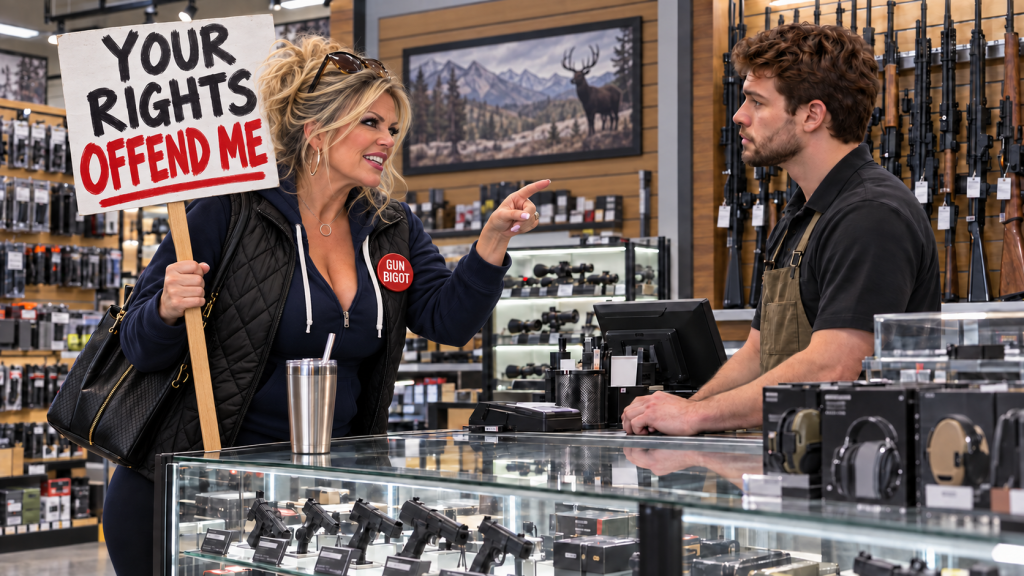
The complete DOJ opinion concerning young-adult handgun purchases concludes that 18-to-20-year-olds are members of “the people” protected by the Constitution. Handguns are common arms used for lawful self-defense, and the government failed to identify an adequate historical tradition of disarming lawful adults merely because they had not reached 21.
The Justice Department’s official September 18 announcement says 18 U.S.C. §§922(b)(1) and 922(c)(1) cannot be criminally enforced against dealers selling handguns to otherwise lawful adults ages 18 through 20.
Can an 18-Year-Old Buy a Handgun From an FFL Today?
Potentially, but the practical answer depends on the dealer, current ATF implementation and state law.
DOJ has declared that prosecuting an FFL for selling a handgun to an otherwise lawful 18-to-20-year-old would be unconstitutional. The Bureau of Alcohol, Tobacco, Firearms and Explosives is part of the Justice Department, so that conclusion carries enormous weight inside the federal executive branch.
However, the old ATF minimum-age guidance still states that an FFL may not sell a handgun or handgun ammunition to anyone under 21.
That contradiction will not inspire confidence at the average gun counter.
Until ATF publishes clear updated instructions, some dealers may complete handgun sales to lawful adults ages 18 through 20, while others may refuse the transaction or wait for additional guidance.
A young buyer should contact the dealer before traveling and ask:
- Does the store now sell handguns to lawful buyers ages 18 through 20?
- Has the dealer received updated ATF instructions?
- Will the transaction use the ordinary Form 4473 and NICS procedure?
- Does the state impose a separate handgun purchase age?
- Will the under-21 enhanced background check delay the transfer?
A constitutional right should not depend upon which compliance memo reached the gun store that morning, but that is where decades of badly written firearm law have left us.
Was the Under-21 Handgun Ban Repealed?
No. Congress has not repealed the federal handgun age-limit language.
The September 2026 DOJ decision is an Office of Legal Counsel opinion and executive-branch enforcement position. It is not a Supreme Court ruling, a nationwide injunction or a new federal statute.
The distinction matters:
- The disputed federal provisions remain printed in the United States Code.
- DOJ says they cannot constitutionally be enforced against otherwise lawful young adults buying handguns.
- Federal courts are not automatically bound by an OLC opinion.
- A future administration could attempt to reverse the position.
- State minimum-age laws remain separate and enforceable unless successfully challenged.
The immediate legal result is still important. A criminal restriction becomes largely useless when the department responsible for prosecution concludes that enforcing it would violate the Constitution.
Congress should remove the unconstitutional language instead of leaving another legal corpse inside the federal firearm code for bureaucrats to trip over.
Do Buyers Under 21 Still Face an Enhanced Background Check?
Yes, the separate enhanced background-check process for buyers under 21 may still apply.
The Bipartisan Safer Communities Act created additional records checks for firearm purchasers younger than 21. The system may examine available juvenile-justice and mental-health records and can delay a transfer for as long as ten business days.
The DOJ opinion addresses the age-based prohibition on dealer handgun sales contained in §§922(b)(1) and 922(c)(1). It does not announce that every federal provision affecting buyers under 21 has vanished.
An 18-to-20-year-old handgun buyer should still expect to:
- Complete ATF Form 4473
- Pass the applicable NICS background check
- Comply with the enhanced under-21 records-review process
- Satisfy state background-check and transfer requirements
- Comply with dealer policies while federal guidance develops
The decision means a lawful adult cannot be categorically denied a common defensive handgun merely because he is 18, 19 or 20. It does not exempt young buyers from the background checks applied by current law.
Can 18-Year-Olds Buy Handgun Ammunition?
DOJ’s announcement also addresses dealer sales of handgun ammunition to lawful adults ages 18 through 20.
Traditional federal policy prohibited an FFL from selling handgun ammunition to anyone under 21. Ammunition used in both rifles and handguns created additional confusion because the dealer sometimes had to determine the buyer’s intended use.
The DOJ decision undermines enforcement of that age-21 restriction against otherwise lawful young adults purchasing handgun ammunition.
Actual store policies may take time to change. Corporate retailers in particular may preserve a blanket age-21 rule as company policy even if federal prosecutors will no longer enforce the former statutory restriction.
A store may impose a policy stricter than federal law. That does not make the policy intelligent, fair or pro-Second Amendment.
Does the Decision Cover Frames, Receivers and Pistol-Grip Firearms?
Do not automatically assume it does.
Federal dealers traditionally treat a firearm frame, receiver and certain firearms classified as “other” as unavailable to buyers under 21 because those items are not completed rifles or shotguns.
The DOJ opinion specifically addresses young adults purchasing handguns and handgun ammunition under §§922(b)(1) and 922(c)(1). It should not be casually stretched into a claim that every firearm categorized as “other” is immediately available to an 18-year-old.
Buyers interested in stripped AR-15 receivers, pistol frames, Mossberg Shockwave-style firearms or other unusual classifications should wait for specific ATF guidance applicable to those products.
Firearm law is already full of traps created by definitions that contradict ordinary English. Guessing at how a new constitutional opinion applies to a stripped receiver is an excellent way to volunteer as an unpaid test case.
Can an 18-Year-Old Buy a Handgun in a Private Sale?
Federal law has long treated private handgun transfers differently from dealer sales.
An unlicensed person generally cannot transfer a handgun or handgun ammunition to someone the transferor knows or reasonably believes is under 18. State law may impose a higher minimum age, require dealer processing or prohibit private transfers.
Therefore, the federal minimum age for certain lawful private handgun transfers was already 18 rather than 21.
The absurdity was obvious: an 18-year-old could potentially acquire a handgun through a lawful private transaction but could not purchase one from an FFL with a federal license, permanent business records and a background-check system.
The federal government was steering young adults away from licensed dealers and pretending that was a safety policy.
Can an 18-Year-Old Buy a Handgun in Pennsylvania?
Pennsylvania generally prohibits firearm possession by people under 18, subject to exceptions listed in 18 Pa.C.S. §6110.1. Lawful adults ages 18 through 20 are not covered by that general minor-possession prohibition.
Pennsylvania handgun transfers ordinarily must be processed by an FFL or county sheriff unless a statutory exception applies. The transaction includes state paperwork and a Pennsylvania Instant Check System background check.
The DOJ decision may remove the federal criminal-enforcement barrier that prevented an FFL from selling a handgun to a lawful Pennsylvania resident between 18 and 20. Actual dealer practice will depend on updated instructions and the dealer’s willingness to rely upon the DOJ opinion.
Pennsylvania’s concealed-carry age has not changed. The Pennsylvania State Police states that an applicant must be at least 21 to receive a License to Carry Firearms.
Buying or possessing a handgun is not the same legal question as carrying it concealed or transporting it in a vehicle. An 18-year-old should not read “DOJ handgun decision” and assume Pennsylvania’s carry restrictions disappeared with it.
Why the Federal Handgun Age Ban Was Unconstitutional
An 18-year-old is a legal adult.
He may vote, serve on a jury, sign contracts, enlist in the military and face adult criminal punishment. The government cannot logically claim that he is responsible enough to defend the country but too immature to buy an ordinary handgun for protecting his own home.
At the Founding, militia obligations commonly began at 18. Those young adults were expected to appear with arms.
The federal government failed to identify a comparable historical tradition of categorically preventing lawful 18-to-20-year-olds from acquiring common defensive weapons. That failure is fatal under the Supreme Court’s history-and-tradition test.
The age-21 dealer ban was ideological discrimination against young gun owners. It burdened the peaceful buyer while criminals ignored it, as criminals generally do with gun-control laws.
The need for self-defense does not begin on a person’s twenty-first birthday.
Police are not waiting inside every apartment, workplace or parking garage. An armed citizen may be the only person present when an attack begins. That is why private gun ownership and the good guy with a gun remain important regardless of how desperately anti-gun bigots try to mock the idea.
My article about the CDC restoring defensive-gun-use information explains why evidence of armed self-defense remains inconvenient to organizations selling civilian helplessness as public policy.
What Happens Next With the Under-21 Handgun Law?
Gun owners and dealers should watch for:
- Updated ATF minimum-age guidance
- Written instructions sent to federal firearms licensees
- Changes to Form 4473 instructions
- New dealer policies concerning handgun buyers under 21
- State lawsuits challenging separate age-21 purchase bans
- Litigation over ammunition, frames and receivers
- Congressional efforts to repeal the unconstitutional statutory language
Expect anti-gun states to defend their own restrictions even after the federal government acknowledged the constitutional problem.
Government rarely surrenders power merely because the Constitution says it should never have possessed that power.
Final Verdict
The September 2026 DOJ handgun decision is a real victory for lawful adults ages 18 through 20.
It does not eliminate background checks, state handgun age restrictions, Pennsylvania transfer requirements or the Commonwealth’s age-21 carry-license rule. It also does not guarantee that every gun dealer has immediately changed its policy.
It does establish that the federal government cannot constitutionally prosecute an FFL merely for selling a common defensive handgun to an otherwise lawful adult between 18 and 20.
An adult is an adult.
Government does not get to demand taxes, military service, jury duty and adult accountability from an 18-year-old while treating him like a child when he wants the means to defend his life.
GarandThumb.com was established on May 4, 2012, to document my experiences trying to become a better marksman.