
The Civilian Marksmanship Program plans to sell surplus M14 rifles to American collectors after converting them to semiautomatic operation.
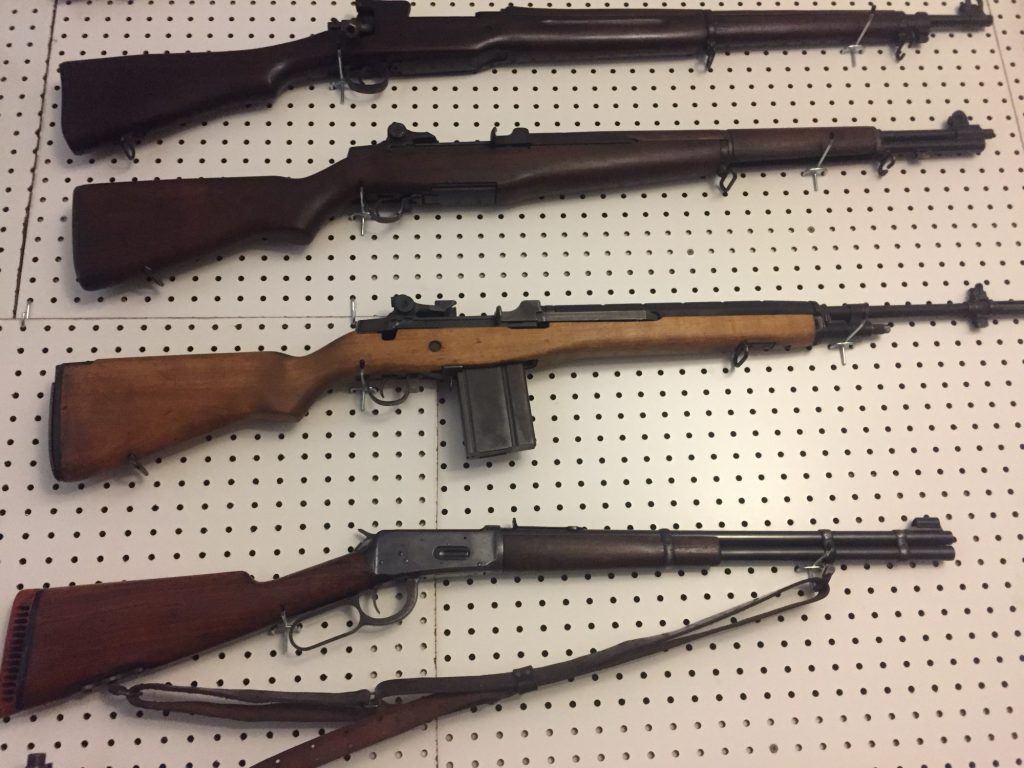
According to Firearms News, the CMP may eventually receive approximately 100,000 M14 rifles, with initial sales potentially beginning in late 2026 or early 2027. The expected price has been reported as less than $2,000.
That would make genuine military M14 rifles available to ordinary American shooters for the first time in decades.
It also raises the question everybody immediately asks:
Can a rifle that began life as a machine gun legally become a semiautomatic rifle?
The familiar answer is:
Once a machine gun, always a machine gun.
That phrase is not the exact wording of federal law, but it describes the concern accurately enough. The CMP needs to explain exactly what it is selling, exactly what will be modified and exactly why the resulting rifle is legally a semiautomatic firearm.
A press release saying “permanently converted” is not enough.
What Is the CMP M14 Sale?
The CMP has announced a future sale of surplus M14 rifles through special authorization.
The CMP’s official announcement confirms that the organization intends to sell surplus M14 rifles after they are converted to semiautomatic operation. The rifles will not be sold as transferable machine guns.
The reported plan involves:
- Surplus U.S. military M14 rifles
- Permanent semiautomatic conversion
- Sale through the Civilian Marksmanship Program
- A possible price below $2,000
- Initial availability potentially beginning in late 2026 or early 2027
- A large eventual inventory, reportedly around 100,000 rifles
Those details make the CMP M14 program extremely important to collectors.
They also leave several questions unanswered.
The CMP has not publicly explained every detail concerning:
- The exact conversion process
- Which receivers will be used
- Whether receivers will be welded, cut, altered or otherwise modified
- Whether the receivers will retain their original military identity
- Whether rifles will be graded by condition
- Whether manufacturers and markings will be disclosed
- Whether buyers will receive documentation about the conversion
- Whether there will be purchase limits
- What eligibility requirements will apply
- Whether the reported price is an estimate or a final figure
Those are not minor details.
The value of an M14 is not simply determined by whether it looks like an M14. The receiver, markings, manufacturer, history, condition and legal status are the entire reason collectors care about the rifle.
Why Does “Once a Machine Gun, Always a Machine Gun” Matter?
Federal law prohibits private possession and transfer of machine guns except under narrow exceptions.
18 U.S.C. § 922(o) generally prohibits possession or transfer of machine guns, with exceptions for government possession and machine guns lawfully possessed before May 19, 1986.
Federal law also defines a machine gun broadly. The definition includes a weapon that shoots, is designed to shoot or can be readily restored to shoot more than one round automatically with a single function of the trigger. It can also include certain parts or combinations of parts designed to convert a firearm into a machine gun.
That is why removing one part from an M14 is not automatically enough.
A selector that no longer moves may not be enough.
A removed automatic-fire component may not be enough.
A rifle that fires only semiautomatically during a demonstration may still raise legal questions if the automatic capability can be restored without permanently destroying or replacing the receiver.
The important question is not simply:
“Does this rifle fire one round per trigger pull today?”
The important question is:
“Has the rifle been permanently removed from the legal definition of a machine gun?”
That distinction is the entire issue.
The M14 Was Designed as a Select-Fire Rifle
The M14 was adopted by the U.S. military in the late 1950s as a replacement for the M1 Garand.
It retained several features of the Garand design but used the 7.62 NATO cartridge, detachable magazines and select-fire capability. The military M14 was designed from the beginning to fire either semiautomatically or automatically.
That makes a genuine M14 different from a commercial M1A.
A Springfield Armory M1A is a commercial semiautomatic rifle based on the M14 pattern. It was manufactured and sold as a semiautomatic rifle.
A military M14 began life differently.
That original design history is why genuine M14 receivers have been treated so differently from commercial M1A receivers. The receiver is not just another replaceable part. It is the serialized heart of the rifle and the part that determines much of its legal identity.
The CMP cannot simply take a military M14, remove the selector parts and tell buyers that it is now equivalent to an M1A.
The conversion must be permanent, legally sound and clearly documented.
Is a Semiautomatic M14 the Same as an M1A?
No.
A semiautomatic M14 made from a genuine military receiver would still be historically different from a commercial M1A.
The commercial M1A has value because it resembles the M14 and provides similar handling, operating characteristics and appearance. A CMP rifle made from an original military M14 receiver would have a different history.
That does not automatically make it more accurate.
It does not automatically make it more reliable.
It does not automatically make it worth whatever a seller claims.
But it does make the receiver’s history important.
The CMP should tell buyers whether they are receiving:
- An original military M14 receiver permanently modified for semiautomatic use
- A rebuilt rifle assembled from surplus parts
- A receiver altered through welding or another permanent process
- A demilled receiver reconstructed into a rifle
- A commercially manufactured semiautomatic receiver
- A rifle transferred under a unique statutory authorization
Those descriptions are not interchangeable.
A commercial M1A, a rebuilt M14 and a permanently modified military receiver may all look similar from across the gun shop. They are not the same collectible.
The CMP Needs To Explain the Conversion
The CMP has a responsibility to provide more information before accepting orders.
Buyers should not have to guess whether the M14 conversion is legally permanent. They should not have to rely on a YouTube video, a forum rumor or a photograph of a welded part.
The CMP should publish the basic technical and legal framework of the program.
That does not mean the organization needs to provide instructions for reversing the conversion. It should not publish details that make restoration easier.
It does mean the buyer deserves to know:
- What part of the rifle is being permanently modified
- Whether the receiver remains an original M14 receiver
- Whether the automatic-fire capability is permanently destroyed
- Whether the receiver has been reviewed or classified by ATF
- What documentation will accompany the rifle
- Whether the conversion affects future repair or service
- Whether the rifle can legally be transferred later
- Whether replacement parts will be available
“Trust us” is not adequate documentation for a $2,000 firearm.
The CMP is not an anonymous seller on a gun auction website. It is a federally chartered organization with a public mission and a large amount of institutional credibility.
That makes transparency more important, not less.
The CMP Should Make Money on the M14 Sale
Some buyers seem to believe the CMP should sell these rifles as cheaply as possible.
That is backwards.
The CMP’s mission includes marksmanship training, firearms safety and competition. Its programs require money. The organization uses firearm sales and other revenue to support ranges, matches, youth programs and marksmanship activities.
My earlier article on the CMP and America’s surplus rifles explains why those sales matter beyond the individual rifle being shipped to a customer.
The CMP should sell the M14 rifles at a price that reflects their market value and helps support the organization’s programs.
A price under $2,000 would still be attractive if the rifles are genuine, legally converted, properly documented and reasonably graded. The CMP does not need to create a bargain-bin feeding frenzy to prove that it supports American marksmanship.
There is nothing wrong with the CMP making money from historically important rifles.
The problem would be charging a collector-level price while providing mystery-box information about the receiver and conversion.
The CMP can fulfill its mission and operate responsibly at the same time.
What Will a CMP M14 Be Worth?
The final value will depend on what the CMP actually sells.
A rifle with a documented original receiver, identifiable manufacturer, clear military history and a properly documented permanent conversion could be highly desirable.
A rifle with vague markings, uncertain history, inconsistent modification quality and no meaningful documentation will be less attractive, regardless of what the catalog calls it.
Condition will also matter.
Some M14 rifles may have been heavily used, rebuilt several times or stored in conditions that affected the barrel, stock and metal finish. Others may retain desirable markings or parts.
Collectors will want to know:
- Receiver manufacturer
- Serial-number range
- Barrel condition
- Stock condition
- Originality of parts
- Arsenal rebuild history
- Finish condition
- Conversion markings
- Documentation
- Final grading categories
The CMP has experience selling surplus rifles, but M14 buyers will examine these details closely.
My guide on how to buy an M1 Garand from the CMP covers the basic eligibility and ordering issues that CMP customers already understand. The M14 program may use different rules, but buyers should expect strong demand and limited information during the first sales window.
If you want one, having CMP membership, documentation and eligibility requirements handled early would be sensible.
The M14 Still Matters to Service-Rifle Shooters
The M14 is not only a collector’s rifle.
The rifle remains part of the American service-rifle tradition and is still recognized in CMP competition rules alongside commercial M1A rifles.
My older article, The Blonde Bomber Visits the Poconos: WBRP M14 Match, covers shooting an M14-pattern rifle in competition. The M14 has always been demanding compared with the AR-15, but it remains capable of excellent performance in the hands of a disciplined shooter.
The rifle’s weight, recoil, magazine capacity and sight system make it a very different experience from an M1 Garand or AR-15.
That difference is part of the appeal.
A CMP M14 would give collectors the opportunity to own a genuine piece of Cold War American military history while also owning a functional semiautomatic rifle.
That is considerably more interesting than another commercial rifle with a fake “retro” finish and a marketing department pretending it has battlefield history.
Do Not Believe Every M14 YouTube Claim
The M14 sale will produce a predictable wave of YouTube videos.
Some will show a rifle and call it a machine gun.
Others will declare that every legal issue has been solved before the CMP publishes the conversion details.
Both approaches are lazy.
A dramatic YouTube thumbnail is not a legal analysis. A manufacturer demonstration is not a long-term reliability test. A video from a gun channel is not a substitute for the CMP publishing the actual facts.
People searching for:
- CMP M14 rifles
- CMP M14 sale
- CMP M14 price
- M14 machine gun
- M14 semiautomatic conversion
- M14 receiver legality
- once a machine gun always a machine gun
- CMP surplus rifles
- M14 versus M1A
deserve more than a man in tactical clothing pointing at a rifle while dramatic music plays in the background.
The CMP should provide the information first.
Then collectors can decide whether the rifles are worth buying.
What Buyers Should Ask Before Ordering
Before purchasing a CMP M14, buyers should look for clear answers to five basic questions.
First, what exactly is being modified?
Second, will the receiver remain identifiable as an original military M14 receiver?
Third, what legal authority permits the sale of the converted rifles?
Fourth, what documentation will prove that the automatic-fire capability has been permanently eliminated?
Fifth, what will the CMP disclose about the rifle’s history, condition, manufacturer and parts?
Those answers will matter more than the difference between a $1,900 price and a $2,200 price.
A properly documented rifle may be worth more than a cheaper rifle with an uncertain receiver and an unexplained conversion. Collectors routinely pay for provenance, originality and documentation. They should not be expected to abandon those standards simply because the rifle comes from the CMP.
Is the CMP M14 Sale a Good Idea?
Yes.
The CMP M14 sale could become one of the most important surplus-rifle releases in modern American firearms history.
A genuine military M14 represents the end of the M1 Garand era, the adoption of the 7.62 NATO cartridge and the beginning of the Cold War battle-rifle period. Giving American collectors a legal opportunity to own these rifles would be an extraordinary accomplishment.
But the CMP should not expect blind trust.
The phrase “once a machine gun, always a machine gun” may be an oversimplification, but it identifies the exact concern buyers have. The legal status of an M14 cannot be determined solely by removing a selector or demonstrating that the rifle fires semiautomatically.
The receiver, original design, modification and ability to restore automatic fire all matter.
If the CMP has developed a legally sound and genuinely permanent conversion, it should explain the process clearly enough for buyers to understand what they are purchasing.
The CMP M14 program deserves excitement.
It also deserves scrutiny.
Until the full details are released, the honest position is simple:
The rifles could be an incredible opportunity.
The CMP still has to prove exactly what it is selling.