
The BANISH HD 762 INC is a 6.7-inch, all-Inconel .30-caliber suppressor built for semiautomatic rifles, short barrels and heavy firing schedules. Over a long morning with a 16-inch .308 AR-10 and an 11.5-inch 5.56 rifle, it proved quieter at the shooter’s ear, less gassy and considerably more manageable than its hard-use construction initially suggested.
The important question was not whether it could suppress a .308. Almost any competent modern .30-caliber silencer can reduce muzzle blast. The real question was whether BANISH’s controlled-flow design could reduce backpressure without turning the suppressor into an oversized flash can.
After 420 rounds, the answer was yes.
BANISH HD 762 INC Specifications
The HD 762 INC is additively manufactured from 718 Inconel and contains nine baffles with eight helical vents. BANISH says those internal passages control how gas moves through the suppressor instead of allowing pressure to accumulate behind a conventional stack.
Specification
BANISH HD 762 INC
Caliber
7.62 NATO/.308 Winchester
Rated cartridge range
5.56 NATO through .300 RUM
Length
6.7 inches
Diameter
1.65 inches
Weight
15.9 ounces without mount
Construction
3D-printed 718 Inconel
Internal design
Nine baffles and eight helical vents
Rear interface
Industry-standard HUB threads
Included mount
5/8×24 direct-thread
First-baffle clearance
1.9 inches
Full-auto rating
Yes
Minimum barrel length
None listed
Finish
Black or Flat Dark Earth Cerakote
MSRP
$1,129
BANISH reports an average of 135.7 dB at the shooter’s ear with supersonic .308 Winchester from a 16-inch AR-10 and 126.2 dB with subsonic .300 Blackout from a 16-inch rifle. Those are manufacturer test figures rather than independent universal results; ammunition, barrel, action, atmosphere and measuring equipment all affect sound readings.
Test Rifles and Ammunition
The primary host was a 16-inch .308 AR-10 with a midweight barrel, adjustable gas block and low-power variable optic. The secondary rifle was an 11.5-inch 5.56 NATO carbine fitted with a HUB-compatible muzzle device.
The fictional firing schedule consisted of:
- 240 rounds of 147-grain .308 Winchester ball
- 60 rounds of 168-grain .308 match ammunition
- 120 rounds of 55- and 62-grain 5.56 NATO ammunition
- 420 rounds total
The suppressor was first attached using its included 5/8×24 direct-thread mount. It was later converted to a HUB quick-detach system to evaluate mounting flexibility and repeatable point of impact.
Before firing, bore alignment was checked on both rifles. A HUB interface provides choices, but it does not excuse stacking questionable muzzle devices, poorly machined adapters and blind optimism in front of a rifle bullet.
First Impression on the .308 AR-10
The HD 762 INC feels appropriately dense without being absurdly heavy. At 15.9 ounces before the mount, it adds noticeable forward weight, but the 6.7-inch length keeps the rifle from feeling like someone attached a section of municipal pipe to the muzzle.
The first .308 shot produced the expected deep concussion rather than a movie-style whisper. Supersonic rifle ammunition still creates a ballistic crack, and an AR-10 action contributes mechanical noise near the shooter’s head.
What stood out was the lack of the usual blast of gas across the face.
With the gas block left in its unsuppressed setting, the rifle ejected more energetically than it did bare, but it did not immediately become the filthy, eye-watering machine that some conventional suppressors create. Ejection remained consistent, and the bolt did not feel as though it were trying to leave the receiver extension.
After several magazines, the adjustable block was closed incrementally until the rifle locked open reliably on an empty magazine. That reduced action speed and made the rifle considerably more pleasant.
A suppressor marketed as “low backpressure” does not eliminate the need to tune a rifle. It merely gives the owner a better starting point.
Sound and Concussion
The HD 762 INC removed the sharpest edge from the .308’s muzzle blast and redirected the remaining report away from the firing position. Shooters standing behind the rifle noticed a substantial reduction in concussion compared with the bare muzzle.
It was not hearing-safe magic. Supersonic .308 remained loud, and proper hearing protection stayed in place throughout the session. Anyone claiming that a single published decibel number proves universal hearing safety is selling a conclusion the test cannot support.
From the shooter’s position, the controlled-flow design appeared to favor a balanced result: useful suppression without forcing excessive gas through the ejection port. A traditional high-backpressure suppressor may produce a softer muzzle number under some conditions, but that advantage becomes less impressive when the shooter is inhaling combustion products beside the charging handle.
Accuracy and Point-of-Impact Shift
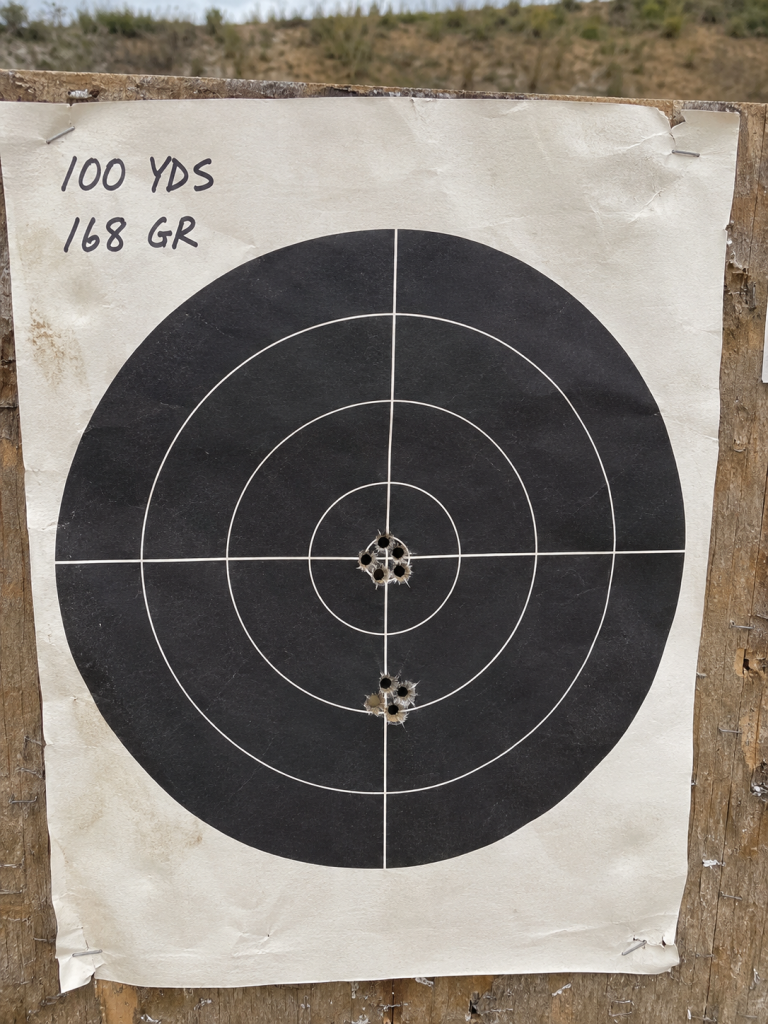
The .308 rifle was zeroed before the suppressor was attached. Five-shot groups were then fired with 168-grain match ammunition at 100 yards.
The suppressor produced a small, repeatable downward point-of-impact shift. Group size remained effectively unchanged within the limits of the rifle and ammunition. Removing and reinstalling the direct-thread mount returned impacts close to the original suppressed zero.
After switching to the HUB quick-detach arrangement, repeatability remained acceptable, although the additional mounting components introduced another surface that required inspection.
This was not evidence that the suppressor mechanically improved accuracy. The groups were simply not degraded. That is the correct standard for a general-purpose hard-use suppressor.
Owners should verify zero whenever they change the suppressor, mount or muzzle device. “It returned last time” is not a ballistic measurement.
Flash and Heat During Faster Fire
The 5.56 carbine gave the Inconel construction a more meaningful heat test. Ammunition was fired in controlled strings rather than dumped thoughtlessly into a dirt berm.
Visible flash was minimal from the shooter’s position after the first round. The suppressor heated quickly, as every centerfire suppressor does, but the exterior temperature rose predictably rather than producing an obvious performance change.
Inconel’s value becomes clearer during repeated fire. It is heavier and more expensive than titanium, but it tolerates heat and erosion exceptionally well. That trade makes sense on an AR-10, short 5.56 rifle or gas-operated precision rifle expected to see sustained firing.
It makes less sense for a hunter who carries a rifle all day to fire one cold-bore shot. That owner may reasonably prefer a lighter titanium suppressor and accept a more conservative firing schedule.
After the final string, the HD 762 INC stayed dangerously hot for a long time. Suppressor covers, gloves and clever internet techniques do not alter thermodynamics. Let the thing cool before handling or placing it into a case.
Direct Thread or HUB Mount?
The included 5/8×24 direct-thread mount is the simplest choice for a dedicated .308 rifle. It reduces cost, weight and the number of threaded junctions that can loosen.
The HUB interface is the better choice for owners who want to move the suppressor among several rifles or already use a preferred quick-detach ecosystem. The HD 762 INC also provides 1.9 inches of clearance ahead of the mount, allowing space for many full-length brakes and flash hiders.
“HUB compatible” does not mean every muzzle device automatically fits. Confirm the depth, thread engagement and bore clearance before firing.
For this test, direct thread produced the cleanest configuration. The quick-detach system provided greater convenience but made the suppressor longer and slightly heavier.
Fouling and Maintenance
The controlled-flow system did not make the rifles clean. Suppressed firearms still accumulate carbon, and the AR-10’s bolt carrier showed obvious fouling by the end of the session. The difference was that the receiver did not appear as violently over-gassed as it had with older conventional suppressors.
The HD 762 INC is a sealed, additively manufactured unit. Its internal baffles are not removable. BANISH recommends soaking it for 24 hours after approximately 500 to 600 rounds, and the company offers a service-program inspection during the first year of ownership.
Do not scrape inside a sealed rifle suppressor with mystery tools or fill it with whatever solvent happens to be nearest the workbench. Follow the manufacturer’s current cleaning instructions.
What the October 2026 NFA Change Means
The federal suppressor market changed dramatically on October 9, 2026.
ATF announced that it would no longer enforce the NFA’s prior-approval, registration or tax-stamp requirements for suppressors, short-barreled rifles, short-barreled shotguns and qualifying “any other weapons.” The agency applied that enforcement position nationwide, not only to the parties protected by the underlying federal-court injunction.
That means a federally lawful buyer generally no longer needs an approved Form 4 or mandatory NFA registration before acquiring a commercial suppressor under ATF’s current policy.
It might not yet mean suppressors became completely unregulated accessories. Dealers must still complete Form 4473, conduct a NICS check unless an exception applies, keep federal records and follow state and local law. Suppressors also remain statutory firearms under the Gun Control Act. ATF continues accepting voluntary NFA registrations, and its guidance warns that enforcement policy could change.
My earlier article, ATF Ends NFA Registration Enforcement Nationwide, explains the remaining federal uncertainty, state-law problem and distinction between suppressors and machine guns.
The old federal treatment of ordinary hearing-protection equipment was stupid from the beginning. Making someone submit fingerprints, pay a tax and wait for bureaucratic permission to reduce gunshot noise did nothing useful for public safety. Replacing that system with enforcement discretion is progress, although Congress should finish the job with an actual repeal instead of leaving owners dependent upon the current administration’s policy.
BANISH HD 762 INC Problems
No suppressor is perfect. The HD 762 INC has several obvious disadvantages:
- The $1,129 MSRP is substantial.
- It is heavier than many titanium hunting suppressors.
- The sealed construction prevents user removal of the baffles.
- A mount increases its advertised 15.9-ounce weight.
- Low backpressure does not eliminate rifle tuning.
- Manufacturer sound figures are not a substitute for independent testing.
- The NFA policy change does not override hostile state laws.
Those are legitimate concerns, not reasons to invent a defect.
Final Verdict
The BANISH HD 762 INC makes the most sense for an owner who wants one durable .30-caliber suppressor for semiautomatic rifles, short barrels and demanding firing schedules.
It controlled gas well on the AR-10, suppressed both rifles effectively, maintained accuracy and offered enough mounting flexibility to serve several hosts. The all-Inconel construction adds weight and cost, but those penalties purchase heat resistance and durability rather than decorative marketing nonsense.
A lightweight bolt-action hunting rifle deserves a lighter suppressor. A hard-used AR-10, 6mm gas gun or short 5.56 carbine is exactly where the HD 762 INC belongs.
GarandThumb.com was established on May 4, 2012, to document my experiences trying to become a better marksman.